वाक् स्वतंत्रता और वैधानिक प्रेस विनियामक तंत्र
स्रोत:इंडियन एक्सप्रेस ↗
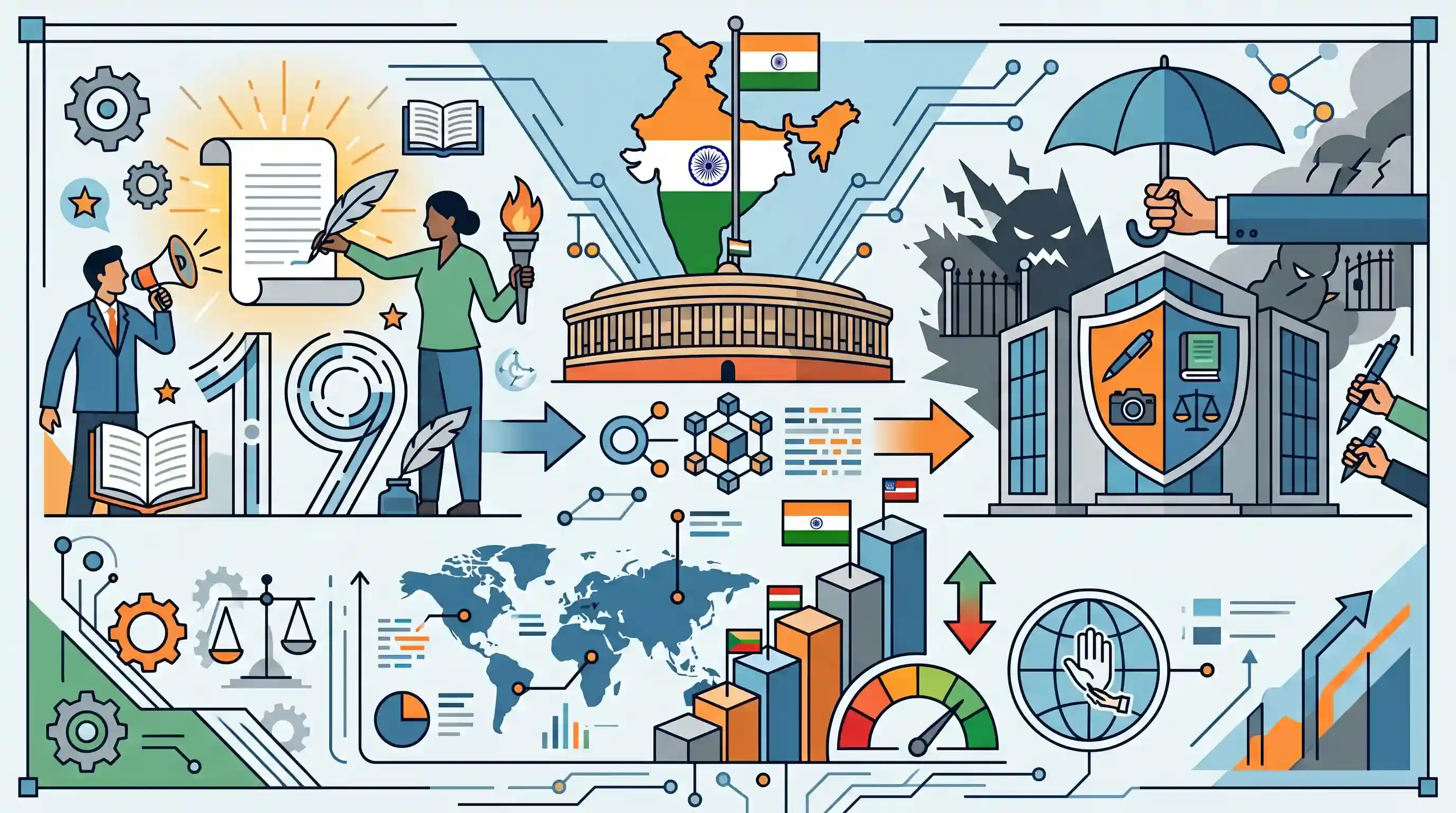
क्यों मायने रखता है
प्रेस की स्वतंत्रता लोकतंत्र का एक बुनियादी स्तंभ है जो सीधे तौर पर अनुच्छेद 19(1)(a) से जुड़ा है। भारतीय प्रेस परिषद की भूमिका और वैश्विक सूचकांकों में भारत के प्रदर्शन को समझना Prelims (सूचकांक जारीकर्ता और सांविधिक निकाय) और Mains (गवर्नेंस, मीडिया नैतिकता और अभिव्यक्ति की स्वतंत्रता) दोनों के लिए महत्वपूर्ण है।
सारांश
The article highlights the significance of National Press Day, which marks the establishment of the Press Council of India (PCI)—a statutory body designed to uphold journalistic ethics and protect media freedom. It contextualizes this against India's standing in the World Press Freedom Index, an annual report released by Reporters Without Borders (RSF). The piece serves as a primer for UPSC aspirants on the constitutional provisions safeguarding the press (Article 19) and the institutional mechanisms regulating media in the world's largest democracy, while addressing the contemporary challenges to free speech.
मुख्य बिंदु
- National Press Day is observed on November 16 to commemorate the establishment of the Press Council of India (PCI) in 1966, emphasizing the importance of an independent and responsible press.
- भारतीय प्रेस परिषद (Press Council of India) प्रेस परिषद अधिनियम के तहत गठित एक वैधानिक, अर्ध-न्यायिक प्रहरी है, जिसका कार्य प्रेस की स्वतंत्रता की रक्षा करना और पत्रकारिता के उच्च मानकों को बनाए रखना है।
- The World Press Freedom Index is published annually by the global NGO Reporters Without Borders (RSF), assessing the environment for journalism across 180 countries and territories.
- India's standing in press freedom indices reflects ongoing challenges surrounding media independence, regulatory pressures, and the protection of journalists.
- In India, the freedom of the press is not explicitly mentioned but is an implied fundamental right under Freedom of Speech and Expression in Article 19(1)(a), subject to reasonable restrictions.
महत्वपूर्ण शब्द
Press Council of India (PCI)

A statutory, quasi-judicial body established to safeguard the freedom of the press and maintain high journalistic ethics. It acts as a watchdog for print media in India.
UPSC context
GS Paper II: Statutory Bodies. Tests knowledge of media regulation and institutional mechanisms for democratic accountability.
Article 19(1)(a) of the Indian Constitution
वाक् और अभिव्यक्ति की स्वतंत्रता की गारंटी देने वाला एक मौलिक अधिकार। उच्चतम न्यायालय ने इसकी व्याख्या इस रूप में की है कि इसमें 'प्रेस की स्वतंत्रता' भी अंतर्निहित है, जो लोकतंत्र के लिए अनिवार्य है।
UPSC context
GS Paper II: Fundamental Rights. Crucial for understanding the scope of liberty and 'reasonable restrictions' under Article 19(2).
Reporters Without Borders (RSF)
An international non-profit (Reporters Sans Frontières) that monitors press freedom globally and publishes the annual World Press Freedom Index, ranking 180 countries.
UPSC context
GS पेपर II: महत्वपूर्ण अंतर्राष्ट्रीय संस्थान। मानवाधिकारों और लोकतांत्रिक सूचकांकों पर भारत की वैश्विक स्थिति के लिए प्रासंगिक।
Press Council Act, 1965
The original legislation enacted to establish India's first Press Council in 1966, following recommendations from the First Press Commission to maintain media standards.
UPSC context
GS Paper II: राजव्यवस्था। मीडिया कानूनों का ऐतिहासिक संदर्भ और भारत में सांविधिक निकायों का विकास।
प्रारंभिक ट्रैप
"The Constitution explicitly guarantees the freedom of the press under Article 19."
Freedom of the press is not explicitly mentioned in the Indian Constitution. The Supreme Court ruled it is implicitly protected under the broader Freedom of Speech and Expression in Article 19(1)(a).
संबंधित अवधारणाएँ
What are the grounds for restricting Freedom of Speech under Article 19(2)?
- राज्य की सुरक्षा: Restrictions apply to protect the sovereignty, integrity, and security of India, as well as friendly relations with foreign states.
- Public Order: सार्वजनिक व्यवस्था, शालीनता या नैतिकता बनाए रखने के लिए वाक् को प्रतिबंधित किया जा सकता है।
- विधिक अपवाद: It prevents contempt of court, defamation, or incitement to an offence.
How is the Press Council of India (PCI) structured and what is its jurisdiction?
- सांविधिक प्रकृति: यह प्रेस परिषद अधिनियम, 1978 के तहत स्थापित एक सांविधिक, अर्ध-न्यायिक निकाय है, जो पत्रकारिता की नैतिकता के लिए एक प्रहरी के रूप में कार्य करता है।
- Composition: Headed by a Chairman (conventionally a retired Supreme Court judge) and 28 members, including 5 Members of Parliament.
- Print Media Only: Its jurisdiction is strictly limited to print media and news agencies. It cannot penalize or regulate electronic or digital media.
अंतर-विषय पैटर्न
गैर-राज्य अभिनेता एवं वैश्विक सूचकांक
UPSC frequently tests the origin of global indices. Distinguishing NGO-led reports like RSF's Press Freedom Index from official UN or WEF reports is a recurring elimination tactic in Prelims.
Digital vs. Print Regulation Gap
जहाँ PCI वैधानिक रूप से प्रिंट मीडिया को विनियमित करता है, वहीं IT नियम 2021 और नए ब्रॉडकास्टिंग विधेयकों ने अपना ध्यान डिजिटल और OTT प्लेटफॉर्म की ओर स्थानांतरित कर दिया है, जिससे मीडिया विनियमन का एक खंडित परिदृश्य तैयार हो गया है।

PCI's limited print jurisdiction contrasted with IT Rules 2021 for digital media will likely form a comparative Prelims question in 2026.
संबद्ध PYQ · 3
संबद्ध PYQ · 3
- 2014MainsGS2
What do you understand by the concept "freedom of speech and expression"? Does it cover hate speech also ? Why do the films in India stand on a slightly different plane from other forms of expression ? Discuss.
- 2018PrelimsGS1
"Rule of Law Index" is released by which of the following?
- 2025MainsGS4
In the present digital age, social media has revolutionised our way of communication and interaction. However, it has raised several ethical issues and challenges. Describe the key ethical dilemmas in this regard.
