King Cobra Brought to Madhya Pradesh Dies After Animal Exchange
Source:Indian Express ↗
Why It Matters
The failure of a high-profile animal exchange highlights the ecological and administrative challenges in ex-situ wildlife conservation, a key topic under the Environment and Biodiversity section for UPSC. It emphasizes the importance of species adaptability and rigorous protocols in zoo management.
Summary
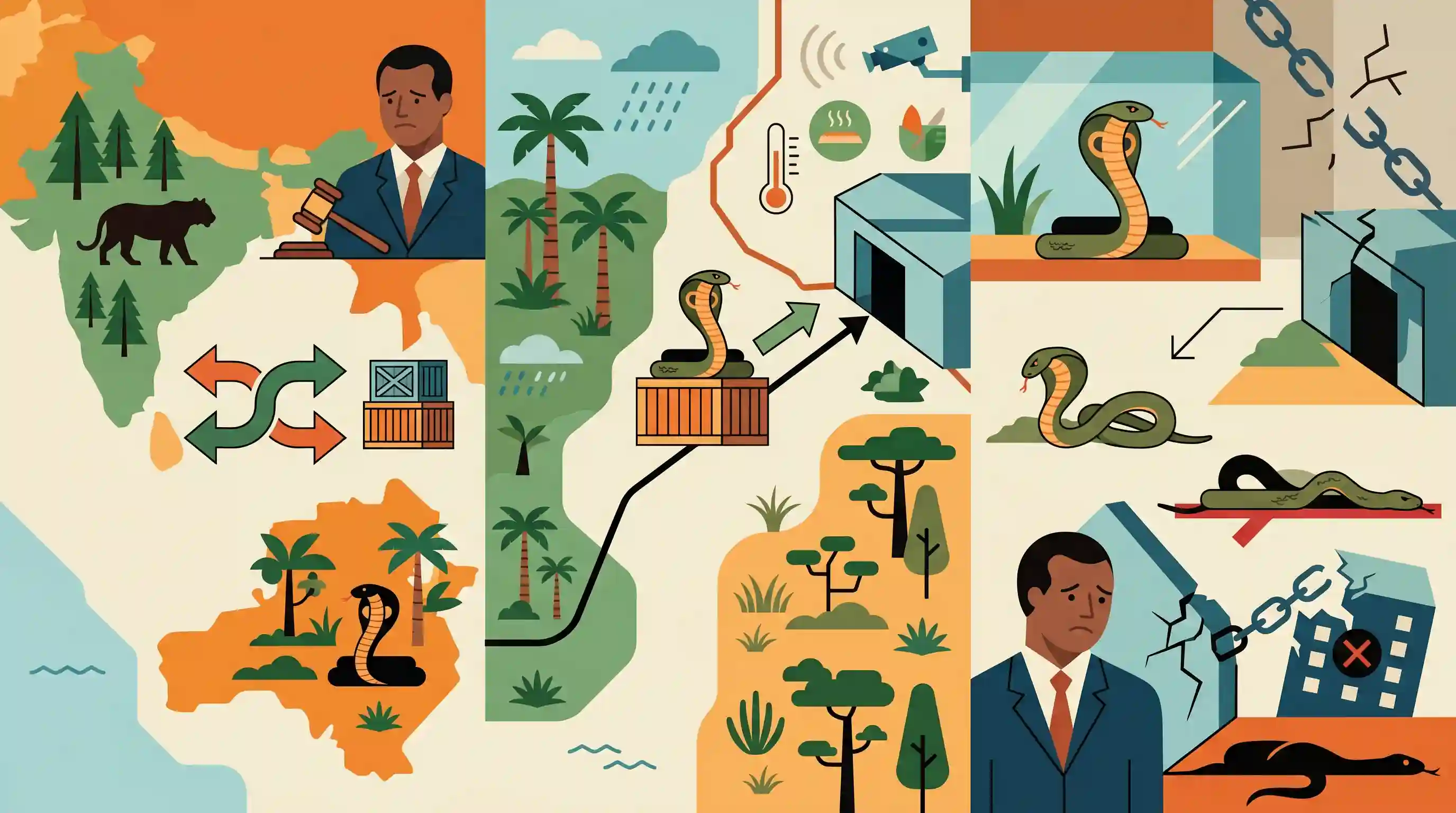
A king cobra, recently transferred to Madhya Pradesh in an animal exchange program for a tiger, has died. The incident, considered a setback to MP Chief Minister Mohan Yadav's wildlife initiative, highlights the ecological sensitivities and risks of translocating species out of their natural climatic conditions to new zoological environments.
Key Points
- A king cobra was brought to Madhya Pradesh as part of an inter-state wildlife exchange program, traded for a tiger.
- The king cobra died shortly after relocation, raising concerns about the climatic adaptability of sensitive species during translocations.
- The exchange was considered a high-profile initiative or "pet project" of Madhya Pradesh Chief Minister Mohan Yadav.
- The incident highlights the challenges of ex-situ conservation and the need for strict protocols by zoological authorities when exchanging animals outside their native habitats.
Prelims Trap
"The Central Zoo Authority (CZA) is a statutory body chaired by the Prime Minister of India."
Aspirants often confuse the CZA with the National Board for Wildlife (NBWL). While the PM chairs the NBWL, the CZA is chaired by the Union Environment Minister.
Static Concepts Connected
What is the statutory mandate of the Central Zoo Authority (CZA)?
- Statutory basis: Established in 1992 under the Wildlife (Protection) Act, 1972 to oversee functioning of zoos in India.
- Chairmanship: It is chaired by the Union Minister for Environment, Forest and Climate Change.
- Core functions: Approves the exchange of animals between zoos, enforces standards for animal housing, and coordinates captive breeding of endangered species.
What are the unique ecological characteristics of the King Cobra?
- Nesting behavior: It is the only snake species globally that builds a physical nest using leaves and guards it to incubate its eggs.
- Specialized diet: Its diet is primarily ophiophagous, meaning it preys predominantly on other snakes.
- Habitat preference: Prefers humid climates like dense rainforests, mangrove swamps, and bamboo thickets (e.g., Western Ghats, Terai, Northeast India).
Cross-Topic Patterns
Limits of Ex-situ Conservation
The mortality of translocated sensitive species exposes the climatic constraints of zoo exchanges, contrasting sharply with in-situ landscape approaches like Project Tiger or Project Elephant.
Climatic Zones & Wildlife Relocation
Shifting a rainforest-adapted Western Ghats species to Central India's dry, extreme heat highlights the critical role of biogeographic zones and micro-climates in animal translocation protocols.

Expect 2026 Prelims to link statutory bodies like CZA (often confused with NBWL) to species-specific survival traits like snake nesting.
Linked PYQs · 3
Linked PYQs · 3
- 2020PrelimsGS1
Among the following Tiger Reserves, which one has the largest area under "Critical Tiger Habitat"?
- 2017PrelimsGS1
The term 'M-STRIPES' is sometimes seen in the news in the context of
- 2022PrelimsGS1
With reference to Indian laws about wildlife protection, consider the following statements : 1. Wild animals are the sole property of the government. 2. When a wild animal is declared protected, such animal is entitled for equal protection whether it is found in protected areas or outside. 3. Apprehension of a protected wild animal becoming a danger to human life is sufficient ground for its capture or killing. Which of the statements given above is/are correct?
