Kashmir Iran Ties and Historical Socio Cultural Connections
Source:Indian Express ↗
Why It Matters
It provides a perfect case study of how medieval historical events (the arrival of Iranian Sufis in Kashmir) have a lasting impact on India's modern socio-political landscape, directly linking Art & Culture/History (GS1) with International Relations and internal security dynamics (GS2/GS3).
Summary
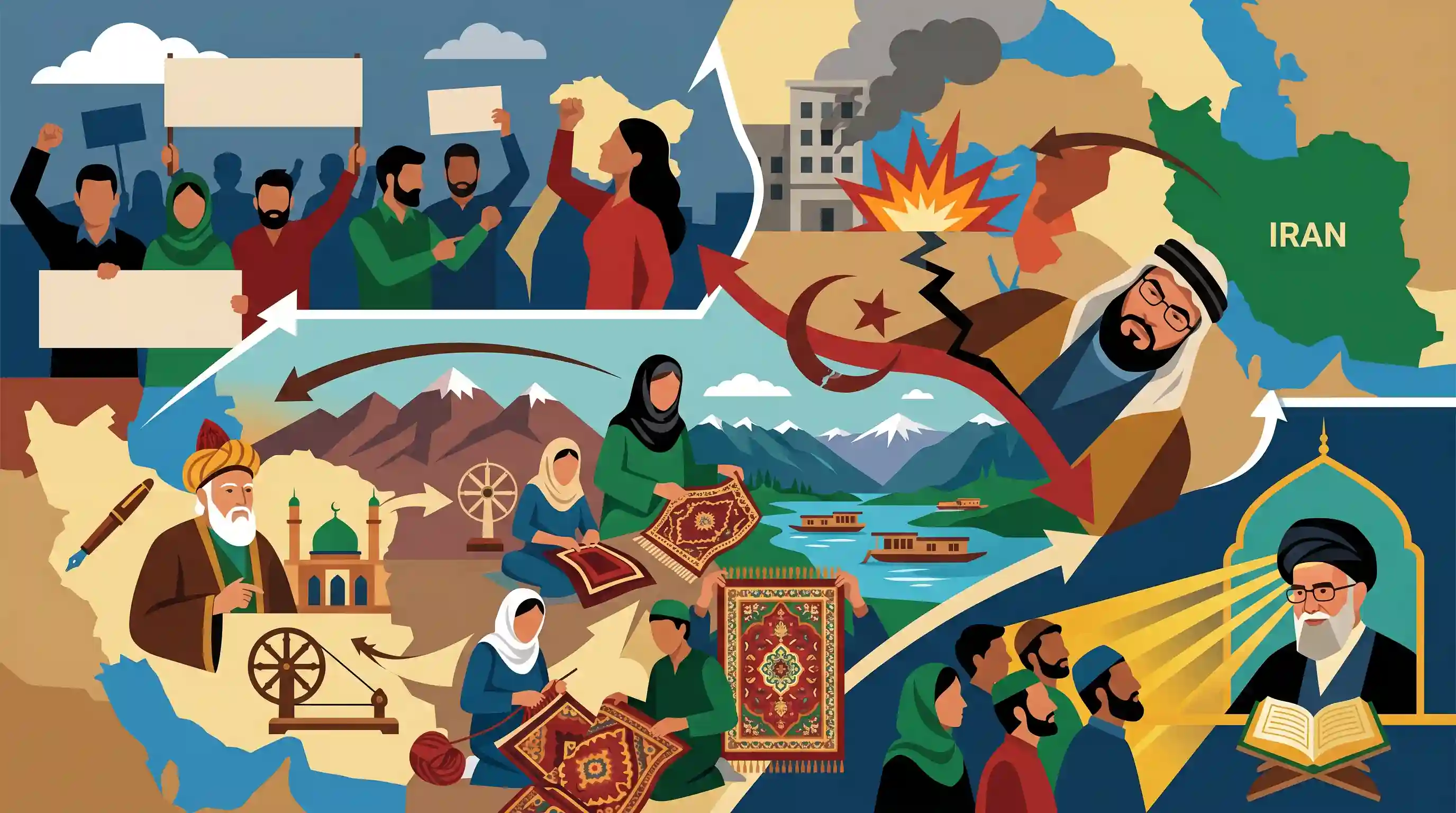
The article unpacks the underlying reasons for recent protests in Kashmir triggered by the assassination of Iran-backed figures like Hezbollah leader Hassan Nasrallah. It traces the reaction to the deep historical, cultural, and religious ties between Kashmir and Iran. Known as 'Iran-e-Sagheer' (Little Iran), Kashmir was profoundly shaped by Persian influence starting in the 14th century, primarily through Iranian Sufi saints like Mir Sayyid Ali Hamadani, who introduced Islam along with Persian arts and crafts. Today, the significant Shia population in Kashmir continues to share a strong transnational religious allegiance to Iran's Supreme Leader, illustrating how medieval cultural exchanges continue to shape contemporary socio-political dynamics and domestic responses to Middle Eastern geopolitics.
Key Points
- Protests erupted in Kashmir following the assassination of key figures in the Iran-aligned Axis of Resistance, such as Hezbollah's Hassan Nasrallah.
- The Kashmiri Shia community maintains deep transnational religious and emotional ties to Iran and its Supreme Leader, Ayatollah Ali Khamenei.
- Kashmir is historically known as 'Iran-e-Sagheer' (Little Iran) due to centuries of profound Persian cultural, linguistic, and architectural influence.
- In the 14th century, Iranian Sufi saint Mir Sayyid Ali Hamadani played a pivotal role in bringing Islam to the Kashmir Valley, alongside Persian arts and crafts like Pashmina and papier-mâché.
- The events demonstrate how geopolitical conflicts in the Middle East can trigger localized domestic reactions in India due to deep-seated historical and religious linkages.
Important Terms
Mir Sayyid Ali Hamadani

A 14th-century Persian Sufi saint of the Kubrawiya order, credited with the large-scale spread of Islam in Kashmir and the introduction of Persian arts and crafts.
UPSC context
GS Paper I: Medieval History and Art & Culture; tests understanding of Sufism and its socio-economic impact.
Iran-e-Sagheer
Meaning 'Little Iran', it is a historical moniker for Kashmir, signifying its deep-rooted cultural, linguistic, and religious synthesis with Persian civilization since the medieval period.
UPSC context
GS Paper I: Indian Society/Culture; tests knowledge of regional cultural identities and historical transnational links.
Axis of Resistance
An informal anti-Western, anti-Israeli geopolitical alliance led by Iran, comprising various state and non-state actors like Hezbollah, Hamas, and the Houthi movement.
UPSC context
GS Paper II: International Relations; essential for analyzing West Asia geopolitics and Iran's regional influence.
Hezbollah
A Lebanon-based Shia Islamist political and militant group backed by Iran; it acts as a significant regional proxy and a key member of the Axis of Resistance.
UPSC context
GS Paper II: International Relations; tests knowledge of non-state actors and their role in Middle East conflicts.
Wilayat al-Faqih
The 'Guardianship of the Jurist', an Islamic political framework by Ayatollah Khomeini that provides the ideological foundation for Iran's governance and its transnational religious-political allegiances.
UPSC context
GS Paper II: International Relations/Political Science; tests understanding of ideological drivers in West Asian politics.
Kubrawiya Order
The specific Sufi silsila (order) of Mir Sayyid Ali Hamadani, which played a pivotal role in the religious and spiritual transformation of the Kashmir Valley.
UPSC context
GS Paper I: Art and Culture/History; tests knowledge of Sufi orders and their regional influences in India.
Pashmina (Persian Influence)
The iconic Kashmiri shawl industry, which was revitalized and technologically refined in the 14th century through the introduction of Persian weaving techniques and artisans.
UPSC context
GS Paper I: Art and Culture/Economic History; tests knowledge of traditional industries and their historical origins.
Prelims Trap
Persian crafts and Islamic architecture were introduced to the Kashmir Valley during the Mughal period under Emperor Akbar.
Persian crafts and the widespread introduction of Islam to Kashmir predate Mughal rule. They were significantly driven by 14th-century Iranian Sufi saints like Mir Sayyid Ali Hamadani.
Static Concepts Connected
Who was Mir Sayyid Ali Hamadani and what is his legacy in Kashmir?
- Kubrawiya Sufi Saint: He was a 14th-century Persian scholar and Sufi saint of the Kubrawiya order who played a major role in spreading Islam in Kashmir.
- Crafts and Culture: He is credited with introducing Persian arts, Pashmina weaving, carpet making, and papier-mâché to the valley.
- Architectural Legacy: His followers built the Khanqah-e-Moula in Srinagar in his memory, which remains a prime example of Kashmir's traditional wooden architecture.
What constitutes the Iranian-led 'Axis of Resistance'?
- Anti-Western Coalition: An informal geopolitical and military coalition led by Iran aimed at countering US and Israeli influence in the Middle East.
- Non-state Proxies: It relies heavily on militant non-state actors, prominently including Hezbollah (Lebanon), Hamas (Gaza), the Houthis (Yemen), and various Iraqi/Syrian militias.
Cross-Topic Patterns
Sufi origins of Kashmiri GI tags
The linkage of 14th-century Sufi movements to modern economic assets like GI-tagged Kashmiri papier-mâché bridges medieval history with contemporary intellectual property rights.
Geopolitical spillovers into domestic society
Protests in Kashmir over West Asian conflicts highlight how transnational religious allegiances can act as socio-political spillovers, presenting unique internal security and public order dynamics for India.

Expect a Prelims match-the-following on medieval Sufi saints, their regions (e.g., Hamadani in Kashmir), and associated traditional crafts.
Linked PYQs · 4
Linked PYQs · 4
- 2020MainsGS1
Persian literary sources of medieval India reflect the spirit of the age. Comment.
- 2022MainsGS1
Are tolerance, assimilation and pluralism the key elements in the making of an Indian form of secularism? Justify your answer.
- 2018MainsGS2
In what ways would the ongoing US-Iran Nuclear Pact Controversy affect the national interest of India? How should India respond to this situation?
- 2025MainsGS2
"Energy security constitutes the dominant kingpin of India's foreign policy, and is linked with India's overarching influence in Middle Eastern countries.” How would you integrate energy security with India's foreign policy trajectories in the coming years?
