Kerala Extreme Poverty Eradication Model and Policy Critique
Source:Indian Express ↗
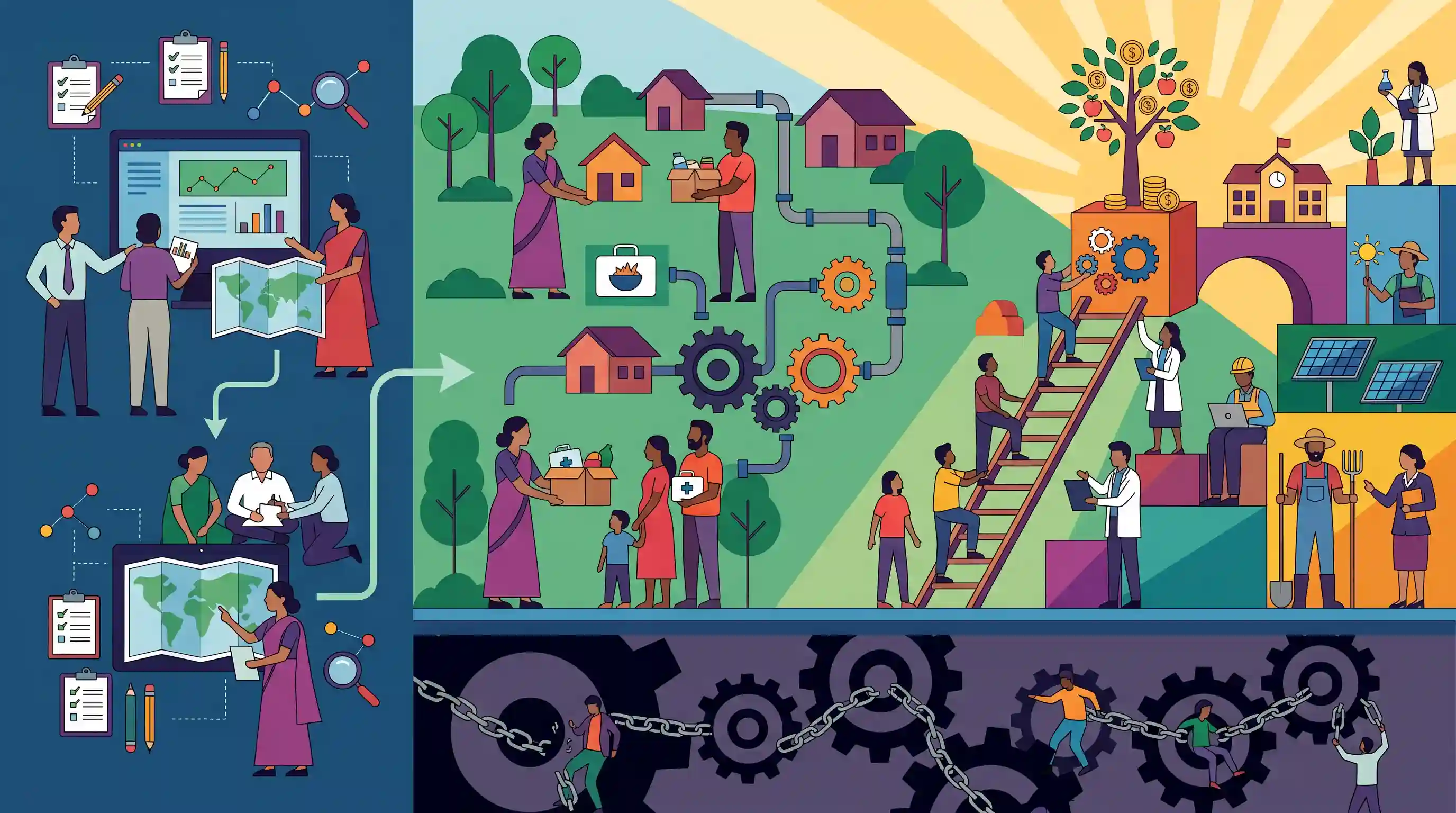
Why It Matters
The distinction between 'managerial' welfare delivery and 'transformative' socio-economic reform is a core debate in poverty alleviation. Kerala’s model serves as a critical case study for evaluating the effectiveness of decentralised administration, Self-Help Groups (like Kudumbashree), and targeted vs. structural approaches to development.
Summary
The article critically examines Kerala’s ongoing efforts to eradicate extreme poverty. It argues that the state's strategy—driven by granular data collection, local self-government targeting, and the Kudumbashree SHG network—is predominantly "managerial" rather than "transformative." While this decentralized administrative approach successfully delivers targeted, immediate relief (like food and housing) to destitute households, it largely sidesteps structural economic reforms. True socio-economic transformation requires moving beyond mere welfare management to address deeper systemic inequalities, generate sustainable employment, and foster long-term structural empowerment for vulnerable populations.
Key Points
- Kerala's strategy to eradicate extreme poverty relies heavily on administrative identification and micro-targeted interventions managed by local bodies and the Kudumbashree network.
- The article critiques this approach as "managerial," noting that it focuses on immediate welfare metrics (e.g., providing food, housing, or basic pensions to identified households) rather than tackling structural economic issues.
- A "transformative" model would necessitate systemic changes, such as broader asset redistribution, sustainable employment generation, and addressing the root socio-economic causes of marginalization.
- While effective for achieving statistical goals and providing critical immediate relief, the managerial approach may fall short of ensuring the long-term, self-sustaining empowerment of the state's poorest populations.
Important Terms
Extreme Poverty Eradication Programme (EPEP)

A 2021 data-driven initiative by the Kerala government to eliminate extreme poverty by 2025 through targeted identification and household-specific micro-plans for the state's most vulnerable families.
UPSC context
GS Paper 2/3: Welfare schemes for vulnerable sections; tests understanding of targeted intervention models and "last-mile" poverty alleviation strategies.
Kudumbashree
Kerala’s community-driven mission for poverty eradication and women's empowerment, organized into a three-tiered network of neighborhood groups (NHGs) that partners with local governments for welfare delivery.
UPSC context
GS Paper 2: Role of Self-Help Groups (SHGs) and NGOs in development; tests knowledge of social capital and participatory governance.
Local Self-Government Institutions (LSGIs)
Elected rural and urban local bodies (Panchayats and Municipalities) constitutionalized via the 73rd and 74th Amendments, serving as the primary agents for identifying the poor and implementing welfare micro-plans.
UPSC context
GS Paper 2: Devolution of powers and finances to local levels; tests the efficacy of decentralized governance in human development.
Micro-plans
Tailored, household-level action plans developed by local bodies to address specific deprivations (food, health, housing) of identified extremely poor families, ensuring individualized welfare delivery.
UPSC context
GS Paper 2: Governance; tests the "managerial" versus "structural" debate in public policy and the precision of beneficiary targeting.
Multidimensional Poverty Index (MPI)
An international and national index (adopted by NITI Aayog) that measures poverty through overlapping deprivations in health, education, and living standards rather than income alone.
UPSC context
GS Paper 3: Issues relating to poverty and hunger; tests familiarity with data-driven metrics for assessing inclusive growth.
People’s Plan Campaign (Janakeeya Aasuthranam)
A landmark 1996 initiative that devolved significant budgetary powers to Kerala's local bodies, forming the backbone of the state's decentralized and participatory development model.
UPSC context
GS Paper 2: Democratic decentralization; tests historical understanding of the "Kerala Model" and its evolution toward bottom-up planning.
Prelims Trap
Kerala has achieved a zero score on NITI Aayog's Multidimensional Poverty Index (MPI).
Kerala has the lowest MPI (0.55%), not zero. State-level grassroots surveys still identified over 64,000 extreme-poor households, demonstrating the gap between macro-indices and micro-reality.
Static Concepts Connected
How is the Multidimensional Poverty Index (MPI) measured by NITI Aayog?
- Three dimensions: Health, Education, and Standard of Living. India's national MPI adds maternal health and bank accounts to the standard global indicators.
- Alkire-Foster Method: It uses the Alkire-Foster methodology to calculate the dual cutoff of poverty: incidence (how many) and intensity (how poor).
How do the 73rd/74th Constitutional Amendments address poverty alleviation?
- 11th Schedule: Article 243G devolves 29 subjects to Panchayats, explicitly including poverty alleviation programs and rural housing.
- Participatory planning: Gram Sabhas are constitutionally empowered to identify and approve beneficiaries for state welfare schemes, enabling decentralized micro-planning.
Cross-Topic Patterns
SHGs as Governance Partners
Kudumbashree shifts the traditional SHG narrative from micro-finance (credit linkage) to state capacity building, acting as grassroots service providers, data gatherers, and governance partners.
Macro-data vs. Micro-vulnerabilities
Kerala's 0.55% MPI highlights how macro-statistical success can mask extreme localized destitution, a recurring theme in GS-2 debates on universal vs. targeted welfare.

Expect a GS-2 Mains question analyzing the 'managerial vs transformative' debate in poverty schemes, focusing on SHG-led micro-targeting.
Linked PYQs · 5
Linked PYQs · 5
- 2017MainsGS2
Poverty alleviation programmes in India remain mere showpieces until and unless they are backed up by political will." Discuss with reference to the performance of the major poverty alleviation programmes in India.
- 2021MainsGS2
Can the vicious cycle of gender inequality, poverty and malnutrition be broken through microfinancing of women SHGs? Explain with examples.
- 2025MainsGS2
"In contemporary development models, decision-making and problem-solving responsibilities are not located close to the source of information and execution defeating the objectives of development." Critically evaluate.
- 2012PrelimsGS1
The Multi-dimensional Poverty Index developed by Oxford Poverty and Human Development Initiative with UNDP support covers which of the following? 1. Deprivation of education, health, assets and services at household level 2. Purchasing power parity at national level 3. Extent of budget deficit and GDP growth rate at national level Select the correct answer using the codes given below:
- 2019PrelimsGS1
In a given year in India, official poverty lines are higher in some States than in others because
