Energy Policy Criticisms and Domestic Cooking Gas Shortage
Source:The Hindu ↗
Why It Matters
This article illustrates the direct intersection of foreign policy (such as alignment with the US, relations with Iran/Russia) with domestic energy security and macroeconomic stability, which are core themes in both GS-2 (International Relations) and GS-3 (Economy).
Summary
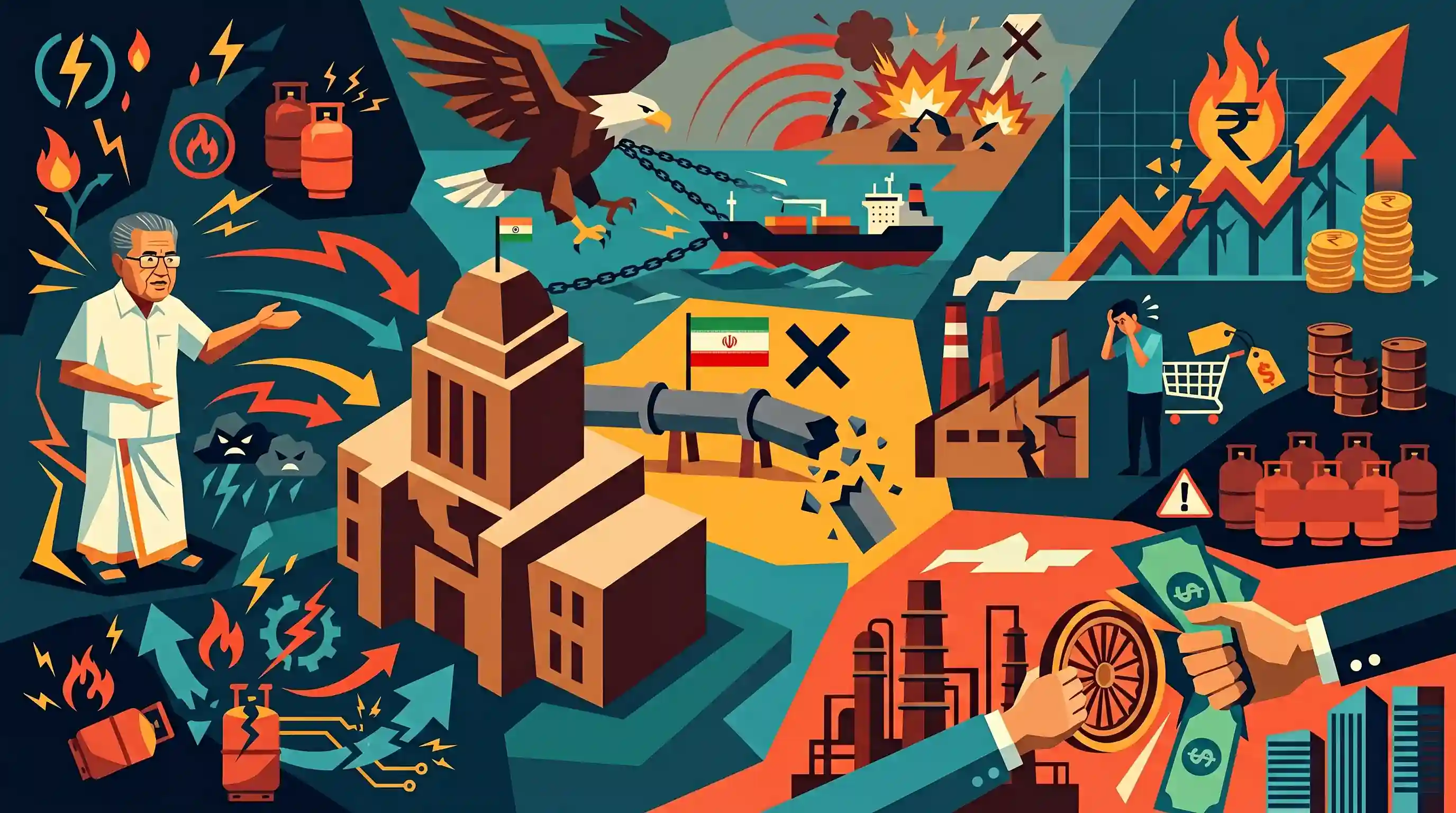
Kerala Chief Minister Pinarayi Vijayan has strongly criticized the Central government for a looming cooking gas shortage and an unprecedented energy crisis, attributing the situation to flawed foreign and macroeconomic policies. He argued that successive governments compromised India's energy security by abandoning the proposed India-Iran gas pipeline and curtailing oil imports from Russia under US pressure. Highlighting the inflationary impact of the West Asian conflict, he warned of severe consequences for domestic industries and the cost of living, while also condemning the systemic privatization of oil refineries at the expense of public sector companies.
Key Points
- Kerala CM Pinarayi Vijayan blamed successive Congress and BJP central governments for India's current cooking gas shortage and surging energy prices.
- He cited the abandonment of the India-Iran gas pipeline and the halt in Russian oil purchases as foreign policy failures driven by US pressure.
- The CM warned that the ongoing West Asia conflict and resulting oil shocks are exacerbating domestic inflation and a severe cost-of-living crisis.
- He also criticized the Centre for favoring private oil monopolies over public sector companies, which has led to economic fallout such as layoffs and shutdowns in the hotel industry.
Important Terms
India-Iran-Pakistan (IPI) Pipeline

A proposed 2,775 km gas pipeline (the "Peace Pipeline") designed to transport Iranian natural gas to Pakistan and India. India withdrew in 2008 due to security risks and US sanctions.
UPSC context
GS II (International Relations) and GS III (Energy); tested in contexts of energy diplomacy and regional geopolitical challenges.
Energy Security
A nation's ability to maintain a reliable, affordable, and uninterrupted supply of energy. India imports ~85% of its crude oil, making this a critical macroeconomic and national security priority.
UPSC context
GS III (Economy/Energy); core topic for infrastructure, import dependency, and sustainable development.
Strategic Autonomy
India's foreign policy doctrine of making sovereign decisions based on national interests without being constrained by external pressures, alliance obligations, or coercion from major global powers.
UPSC context
GS II (International Relations); essential for understanding India's balancing act between the US, Russia, and the Global South.
Strategic Disinvestment
The sale of a substantial portion of government shareholding in a Public Sector Undertaking (PSU), up to 50% or more, along with the transfer of management control to a private entity.
UPSC context
GS III (Economy); relevant to debates on privatization of strategic sectors like oil refineries and fiscal deficit management.
Secondary Sanctions
Penalties imposed by one country (e.g., the US) on entities from third-party nations (e.g., India) to prevent them from trading with a sanctioned country like Iran or Russia.
UPSC context
GS II (International Relations); critical for understanding the impact of US legislation like CAATSA on India's energy trade.
Prelims Trap
The Iran-Pakistan-India (IPI) gas pipeline is an operational project actively supplying energy to India.
India abandoned the IPI pipeline years ago due to transit security risks involving Pakistan, pricing disputes, and the threat of US sanctions on Iran.
Static Concepts Connected
What is the status of India's Strategic Petroleum Reserves (SPR)?
- Locations and Capacity: Phase-I facilities in Visakhapatnam, Mangaluru, and Padur hold 5.33 MMT, providing roughly 9.5 days of crude oil coverage against global supply shocks.
- Management: Managed by the Indian Strategic Petroleum Reserves Limited (ISPRL), a wholly owned subsidiary of the Oil Industry Development Board (OIDB) under the Ministry of Petroleum.
- Phase-II Expansion: The government is expanding capacity with Phase-II facilities planned at Chandikhol (Odisha) and a new pad in Padur under a Public-Private Partnership model.
How does 'imported inflation' from global oil prices affect the Indian economy?
- Current Account Deficit: Since India imports over 85% of its crude, rising global prices inflate the import bill, directly widening the Current Account Deficit (CAD) and depreciating the Rupee.
- Cost-Push Inflation: Higher fuel costs cascade into elevated transport and manufacturing costs, raising the general Consumer Price Index (CPI) across all essential commodities.
- Fiscal Strain: To shield consumers, the government often cuts excise duties or forces Public Sector OMCs to absorb losses, which heavily strains fiscal deficit targets.
Cross-Topic Patterns
Energy Security + Strategic Autonomy
Balancing Russian crude imports and Iranian sanctions connects GS-2 foreign policy independence with GS-3 macroeconomic stability and inflation targeting.
Gas-Based Economy Transition
The push to increase natural gas in the energy mix from 6% to 15% by 2030 ties global pipeline geopolitics directly to India's climate commitments and industrial transition.

Expect a 2026 mains question evaluating India's 'Strategic Autonomy' specifically through the lens of shifting crude oil and gas imports.
Linked PYQs · 4
Linked PYQs · 4
- 2025MainsGS2
"Energy security constitutes the dominant kingpin of India's foreign policy, and is linked with India's overarching influence in Middle Eastern countries.” How would you integrate energy security with India's foreign policy trajectories in the coming years?
- 2017MainsGS2
The question of India's Energy Security constitutes the most important part of India's economic progress. Analyze India's energy policy cooperation with West Asian countries.
- 2018MainsGS2
In what ways would the ongoing US-Iran Nuclear Pact Controversy affect the national interest of India? How should India respond to this situation?
- 2018MainsGS3
“Access to affordable, reliable, sustainable and modern energy is the sine qua non to achieve Sustainable Development Goals (SDGs).” Comment on the progress made in India in this regard.
