Nobel Prize in Medicine for regulatory T-cells and immune restraint
Source:The Hindu ↗
Why It Matters
Nobel Prizes are heavily emphasized in UPSC Prelims current affairs. The underlying science—functions of T-cells, immunity, and cell-based therapies—ties directly into the GS3 Biotechnology and Health syllabus, having been previously tested in both Prelims and Mains.
Summary
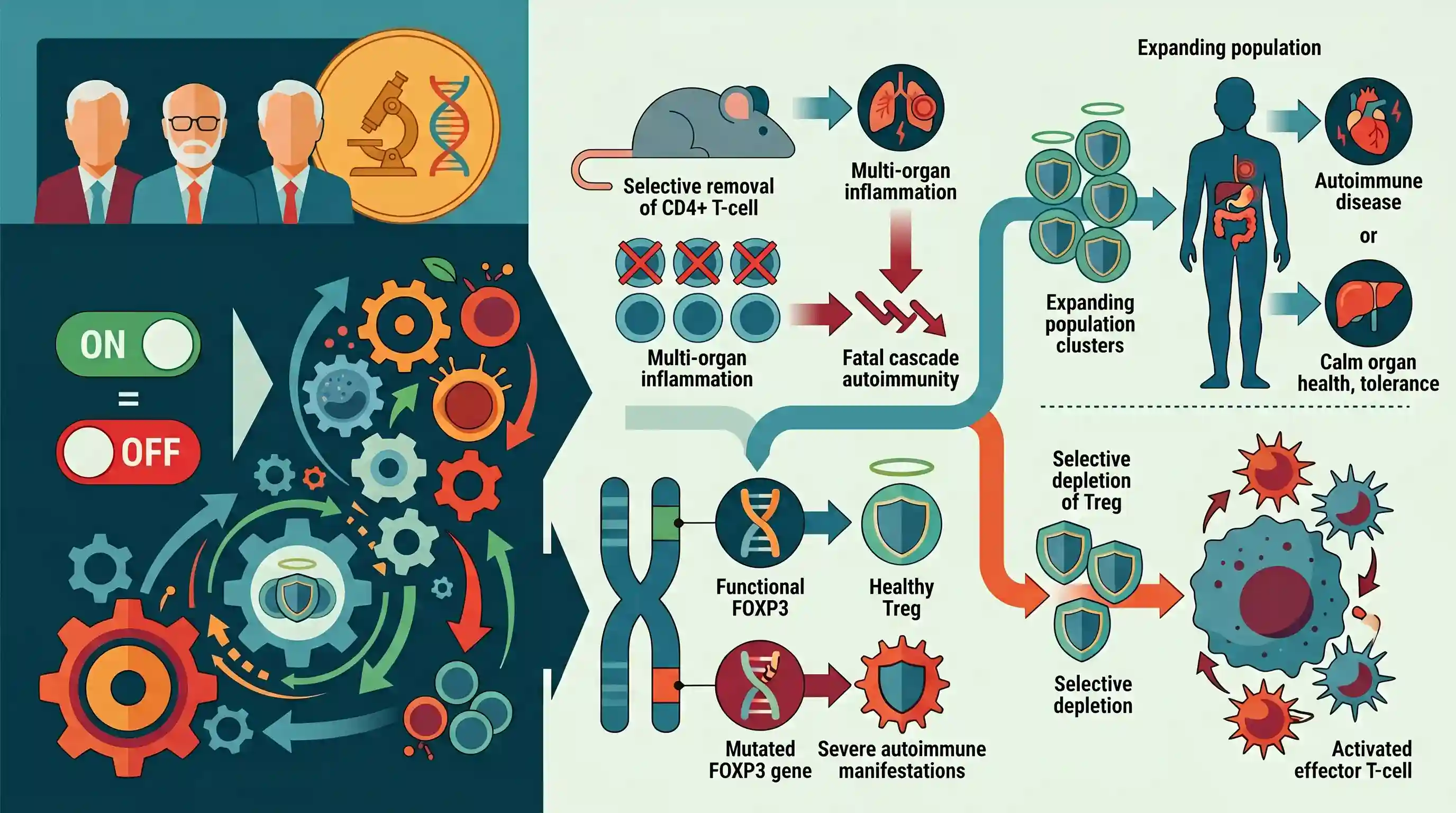
The 2025 Nobel Prize in Physiology or Medicine was awarded to Mary Brunkow, Fred Ramsdell, and Shimon Sakaguchi for their groundbreaking discoveries regarding regulatory T-cells (Tregs) and the transcription factor FOXP3. Their work transformed the understanding of autoimmune regulation, demonstrating that the immune system relies on a dynamic ecosystem of active restraint rather than a simple on/off mechanism. Sakaguchi established that removing a specific subset of CD4⁺ T-cells in mice led to autoimmune disorders, while Brunkow and Ramsdell identified the FOXP3 gene, showing that its mutation causes severe, fatal autoimmunity. This foundational research is now driving innovative cell-based therapies: expanding Tregs to treat autoimmune diseases and aid in transplant graft acceptance, or selectively depleting them to boost the immune response against cancer.
Key Points
- The 2025 Nobel Prize in Physiology or Medicine was awarded to Mary Brunkow, Fred Ramsdell, and Shimon Sakaguchi for defining the role of regulatory T-cells (Tregs) and the FOXP3 gene in immune regulation.
- Sakaguchi identified that a specific subset of CD4⁺ T-cells actively functions as a 'brake' on the immune system; their absence leads to severe autoimmune diseases.
- Brunkow and Ramsdell discovered the FOXP3 gene, establishing it as a master molecular switch for Tregs; mutations in FOXP3 result in fatal immune collapse and multiorgan autoimmunity.
- These discoveries shifted the understanding of the immune system from a simple on/off apparatus to a dynamic ecosystem of activation and active restraint to maintain self-tolerance.
- The research paves the way for new cell-based clinical therapies, such as expanding Tregs to treat autoimmunity and improve organ graft acceptance, or depleting tumor-associated Tregs to boost immunity against cancer.
Important Terms
Regulatory T-cells (Tregs)

A specialized subset of immune cells that suppress excessive immune responses and maintain self-tolerance. They act as a 'brake' to prevent the immune system from attacking the body's own healthy tissues.
UPSC context
GS Paper III (Health); tests knowledge of immunology and recent medical breakthroughs in autoimmune and cancer treatments.
FOXP3 Gene
A master regulator gene essential for the development and function of regulatory T-cells. Mutations in this gene can lead to severe, often fatal, autoimmune conditions like IPEX syndrome.
UPSC context
GS Paper III (Biotechnology); relevant for questions on genetic regulation and the molecular basis of inherited diseases.
Peripheral Immune Tolerance
The biological processes that restrain self-reactive immune cells outside the primary lymphoid organs (like the thymus) to prevent the immune system from causing collateral damage to the body's tissues.
UPSC context
GS Paper III (Science & Technology); tests understanding of how the body maintains homeostasis and prevents internal immune-mediated destruction.
Autoimmune Disorders
A group of conditions where the immune system mistakenly identifies the body's own cells as foreign invaders, leading to inflammation and tissue damage (e.g., Lupus, Type 1 diabetes).
UPSC context
GS Paper III (Health); important for understanding chronic non-communicable diseases and recent clinical research into their causes.
Immunotherapy
A type of medical treatment that uses the body's own immune system to prevent, control, or eliminate disease, including the use of cell-based therapies like Treg expansion.
UPSC context
GS Paper III (Science & Tech); relevant for questions on emerging technologies and advancements in precision medicine and oncology.
CD4+ T-cells
A type of white blood cell (helper T cell) that plays a central role in coordinating the immune response. Regulatory T-cells are a specialized sub-population of these cells.
UPSC context
GS Paper III (Biology); fundamental cell biology concept often tested in the context of infectious diseases and immune regulation.
Prelims Trap
Regulatory T-cells (Tregs) are responsible for actively destroying pathogens and cancer cells.
Tregs act as an immune 'brake' to prevent autoimmunity. To fight cancer, scientists selectively deplete Tregs to boost immunity; Tregs themselves do not destroy tumors.
Static Concepts Connected
What are the primary lymphocytes of the adaptive immune system?
- B-cells: Produce specific antibodies that bind to and neutralize foreign pathogens like viruses and bacteria.
- T-cells: Directly destroy infected or cancerous cells (Killer T-cells) and orchestrate or suppress the immune response (Helper and Regulatory T-cells).
- Origin & Maturation: Both originate in the bone marrow, but T-cells migrate to and mature in the thymus gland.
What is the biological basis of Autoimmune Diseases?
- Definition: A condition where the immune system loses "self-tolerance" and mistakenly attacks the body's own healthy organs and tissues.
- Mechanism: Often linked to the failure or absence of regulatory mechanisms (like Tregs) that normally suppress overactive immune responses.
- Common Examples: Rheumatoid arthritis, Type 1 diabetes, systemic lupus erythematosus (SLE), and multiple sclerosis.
Cross-Topic Patterns
Applied Biotech + Cell Therapies
Recent UPSC prelims focus heavily on applied biotechnology like CAR-T cell therapy. The application of Tregs for cancer and organ transplants directly extends this theme of targeted cellular medicine.
Organ Transplantation + Immuno-suppressants
The use of Tregs to improve graft acceptance connects to India's organ donation ecosystem (THOA Act) and the chronic challenges of life-long immunosuppressant dependency for transplant patients.

Expect a Prelims question comparing the functions of B-cells, Killer T-cells, and Regulatory T-cells, likely linked to cancer therapies.
Linked PYQs · 5
Linked PYQs · 5
- 2022PrelimsGS1
Which one of the following statements best describes the role of B cells and T cells in the human body?
- 2025PrelimsGS1
With reference to monoclonal antibodies, often mentioned in news, consider the following statements : I. They are man-made proteins. II. They stimulate immunological function due to their ability to bind to specific antigens. III. They are used in treating viral infections like that of Nipah virus. Which of the statements given above are correct?
- 2024PrelimsGS1
With reference to monoclonal antibodies, often mentioned in news, consider the following statements : I. They are man-made proteins. II. They stimulate immunological function due to their ability to bind to specific antigens. III. They are used in treating viral infections like that of Nipah virus. Which of the statements given above are correct?
- 2017MainsGS3
Stem cell therapy is gaining popularity in India to treat a wide variety of medical conditions including Leukaemia, Thalassemia, damaged cornea and severe burns. Describe briefly what stem cell therapy is and what advantages it has over other treatments?
- 2023MainsGS3
Introduce the concept of Artificial Intelligence (AI). How does Al help clinical diagnosis? Do you perceive any threat to privacy of the individual in the use of Al in healthcare?
