Climate Shock Events Demand Proactive Disaster Resilience Policies
Source:The Hindu ↗
Why It Matters
It addresses the critical policy shift required in disaster management and climate adaptation as extreme weather events become more frequent and severe, aligning directly with GS3 syllabus requirements on disaster management and environmental degradation.
Summary
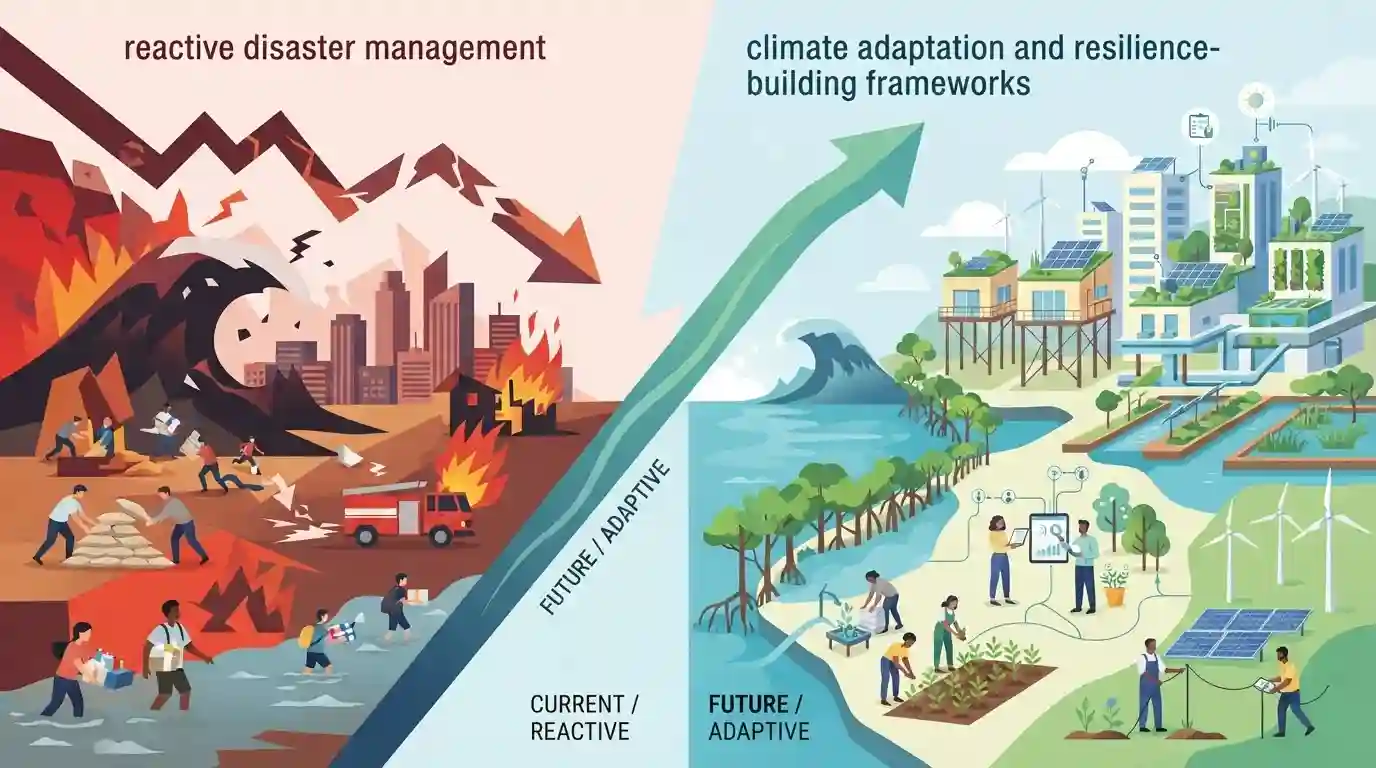
The article discusses the pressing need to keep pace with escalating climate shock events, emphasizing that global and national policies must transition from reactive disaster management to comprehensive, forward-looking climate adaptation and resilience-building frameworks.
Key Points
- Climate shock events are increasing in frequency and intensity, requiring a paradigm shift from reactive relief to proactive resilience and disaster preparedness.
- Traditional disaster management frameworks need to keep pace with rapid climatic changes, emphasizing hazard zonation, vulnerability mapping, and institutional capacity building.
- Integrating climate adaptation strategies into local and national development planning is essential to protect vulnerable populations and economic infrastructure.
Prelims Trap
Disaster management financing in India is restricted exclusively to post-disaster relief operations and immediate rescue work.
Aspirants often assume SDRF and NDRF can be used exclusively for post-disaster relief, missing that recent policy reforms allocate specific windows for pre-disaster mitigation.
Static Concepts Connected
What are the key institutional mechanisms under India's Disaster Management Act, 2005?
- NDMA Formation: Apex body chaired by the Prime Minister for laying down policies, plans, and guidelines for disaster management.
- State & District Authorities: Mandated at state and district levels (DDMAs chaired by District Collectors/Magistrates) to formulate district disaster management plans.
- Disaster Response Funds: Statutory funds created under Section 48 of the Act for response, mitigation, and preparedness at national and state levels.
Cross-Topic Patterns
Disaster Financing + Fiscal Federalism
National Disaster Management Authority guidelines intersect with fiscal federalism when funding mitigation versus post-disaster relief under the 15th Finance Commission frameworks.
Urban Resilience + Municipal Governance
Urban heat islands and flash floods link climate adaptation directly to sustainable city planning under Smart Cities and AMRUT missions.

Climate adaptation shifting from post-disaster relief to pre-disaster mitigation funds (SDRF/NDRF) is a high-yield prelims & essay theme.
Linked PYQs · 3
Linked PYQs · 3
- 2024MainsGS3
Flooding in urban areas is an emerging climate-induced disaster. Discuss the causes of this disaster. Mention the features of two such major floods in the last two decades in India. Describe the policies and frameworks in India that aim at tackling such floods.
- 2020MainsGS3
Discuss the recent measures initiated in disaster management by the Government of India departing from the earlier reactive approach.
- 2025PrelimsGS1
The World Bank warned that India could become one of the first places where wet-bulb temperatures routinely exceed 35 °C. Which of the following statements best reflect(s) the implication of the above-said report? I. Peninsular India will most likely suffer from flooding, tropical cyclones and droughts. II. The survival of animals including humans will be affected as shedding of their body heat through perspiration becomes difficult. Select the correct answer using the code given below.
