Central Vista Seva Teerth inauguration and administrative ethos
Source:Indian Express ↗
Why It Matters
It underscores the ongoing physical and philosophical transformation of India's top executive structures. The shift from power-centric colonial architecture to service-oriented indigenous nomenclature is highly relevant to GS2 topics concerning the executive branch and public administration ethos.
Summary
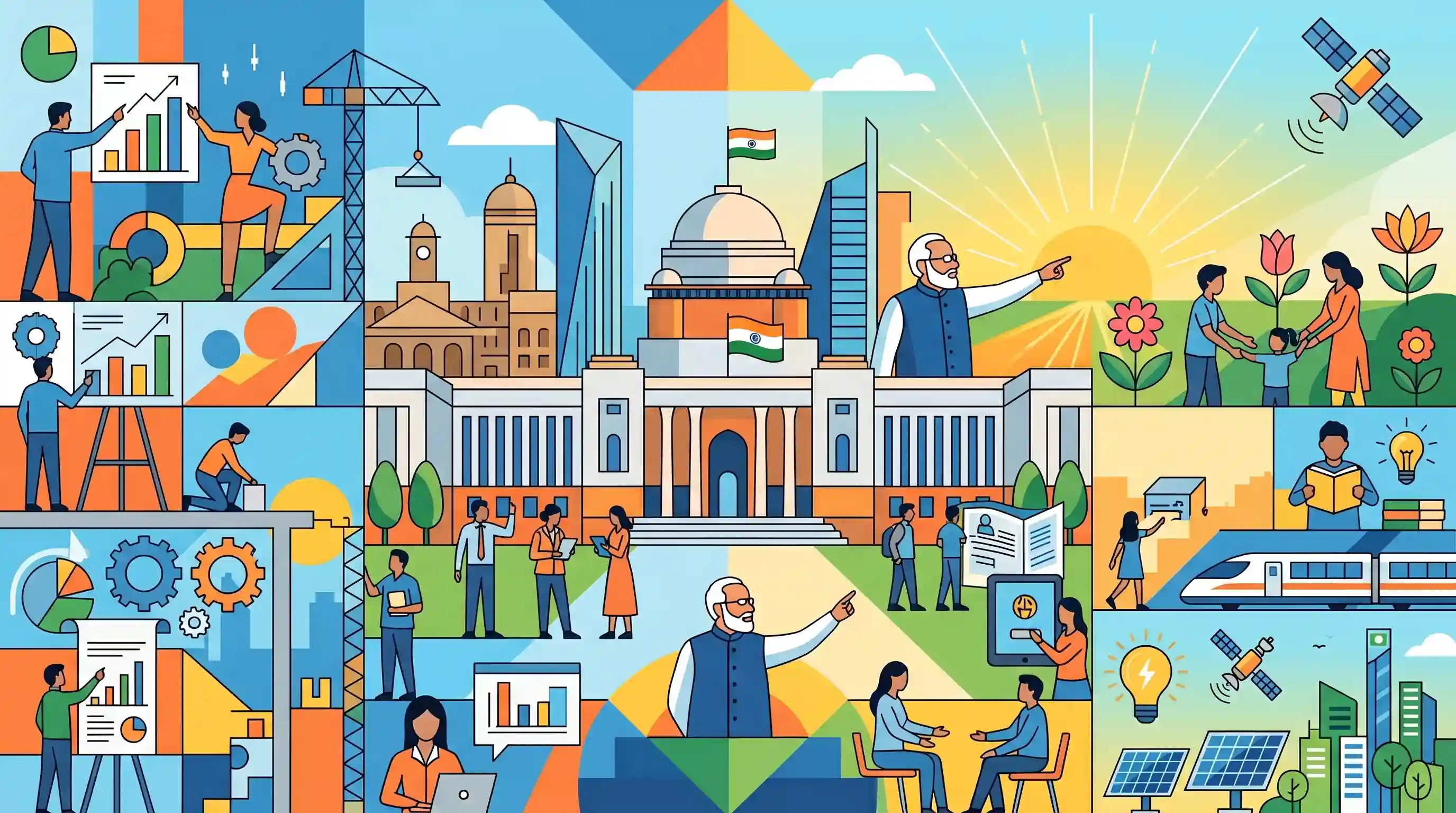
Prime Minister Narendra Modi recently discussed the significance of the new Prime Minister's Office (PMO), christened 'Seva Teerth', located in 'Kartavya Bhavan'. This state-of-the-art building is part of the broader Central Vista Redevelopment Project, which seeks to modernize the administrative heart of New Delhi and replace colonial-era government blocks. By employing terms like "Kartavya" (Duty) and "Seva" (Service), the Prime Minister emphasized a philosophical shift in public administration, positioning the executive branch as an instrument of service designed to meet the aspirations of modern India.
Key Points
- The new Prime Minister's Office (PMO) has been designated as 'Seva Teerth' and is located within the newly constructed 'Kartavya Bhavan'.
- The naming convention emphasizes the ethos of duty (Kartavya) and service (Seva) over power, aligning with the government's broader narrative of shedding colonial mindsets.
- The development is a prominent component of the Central Vista Redevelopment Project, aimed at modernizing India's administrative infrastructure.
- PM Modi highlighted that the new facility is built to fulfill the aspirations of a modern, forward-looking India.
Important Terms
Central Vista Redevelopment Project

A comprehensive project to modernize India's administrative hub in New Delhi, including a new Parliament, Central Secretariat, and official residences, replacing colonial-era infrastructure with future-ready facilities.
UPSC context
GS Paper II (Governance) and GS Paper I (Indian Heritage/Architecture); tests knowledge of administrative reforms and symbolic decolonization.
Seva Teerth
The newly inaugurated (2026) Prime Minister’s Office complex within the Executive Enclave, housing the PMO, Cabinet Secretariat, and National Security Council Secretariat to improve coordination and service.
UPSC context
GS Paper II (Executive/Governance); represents the modern administrative shift and rebranding of power centers into service-oriented hubs.
Kartavya Bhavan
The modern Central Secretariat buildings under the Central Vista project housing Union Ministries; the name symbolizes a shift from colonial authority to "Kartavya" (duty) in public administration.
UPSC context
GS Paper II (Structure and functioning of the Executive); tests understanding of institutional reorganization and citizen-centric governance themes.
Prime Minister's Office (PMO)
An extra-constitutional body providing secretarial and policy assistance to the Prime Minister, acting as a nerve center for inter-ministerial coordination and high-level decision-making.
UPSC context
GS Paper II (Governance/Executive); core topic for understanding the hierarchy and functioning of the Union Government.
Cabinet Secretariat
The administrative department responsible for the secretarial assistance to the Union Cabinet and the administration of Government of India (Allocation of Business) Rules, 1961.
UPSC context
GS Paper II (Executive); critical for understanding the mechanics of the Union Cabinet and inter-departmental synergy.
Prelims Trap
"The Prime Minister's Office (PMO) is a constitutional body mentioned in Article 74."
The PMO is an extra-constitutional, non-statutory body. It only acquired the status of a department under the Government of India (Allocation of Business) Rules, 1961.
Static Concepts Connected
What is the legal and administrative status of the PMO?
- Non-constitutional: It is an extra-constitutional, non-statutory body providing secretarial assistance and advice to the Prime Minister.
- Department status: It was given the status of a department under the Government of India (Allocation of Business) Rules, 1961.
- Evolution: Originally called the Prime Minister's Secretariat (PMS), it was renamed the PMO in 1977 during the Morarji Desai government.
What are the core pillars of citizen-centric administration per the 2nd ARC?
- Accountability: Making public servants answerable for actual outcomes and service delivery, rather than merely following procedures.
- Transparency: Proactive disclosure of information and robust implementation of the Right to Information Act.
- Participation: Involving citizens directly in decision-making processes and decentralized local planning.
Cross-Topic Patterns
Heritage vs. Urban Redevelopment
Central Vista bridges GS-1 heritage preservation and GS-2 administrative efficiency, highlighting the ongoing debate over modernizing government workspaces versus conserving Lutyens' Delhi.
Panch Pran and GS-4 Ethics
The naming shift towards 'Kartavya' directly links current affairs to the GS-4 syllabus on public service values and the 'Panch Pran' goal of shedding colonial mindsets.

PMO's legal evolution and status under the Allocation of Business Rules is a prime target for a multi-statement prelims Q in 2026.
Linked PYQs · 2
Linked PYQs · 2
- 2024MainsGS2
“The growth of cabinet system has practically resulted in the marginalisation of the parliamentary supremacy.” Elucidate.
- 2014MainsGS2
The size of the cabinet should be as big as governmental work justifies and as big as the Prime Minister can manage as a team. How far is the efficacy of a government then inversely related to the size of the cabinet? Discuss.
