Patriarchal Mindsets and Son Preference in Indian Society
Source:Indian Express ↗
આ શા માટે મહત્વનું છે
This incident serves as a tragic, real-world case study of the ongoing challenge of son meta-preference and female infanticide in India. It is highly relevant for GS1 (Society/Role of Women) and GS2 (Social Justice/Vulnerable Sections) to discuss the failure of societal morality, the need for gender sensitization, and the effectiveness of welfare schemes for the girl child.
સારાંશ
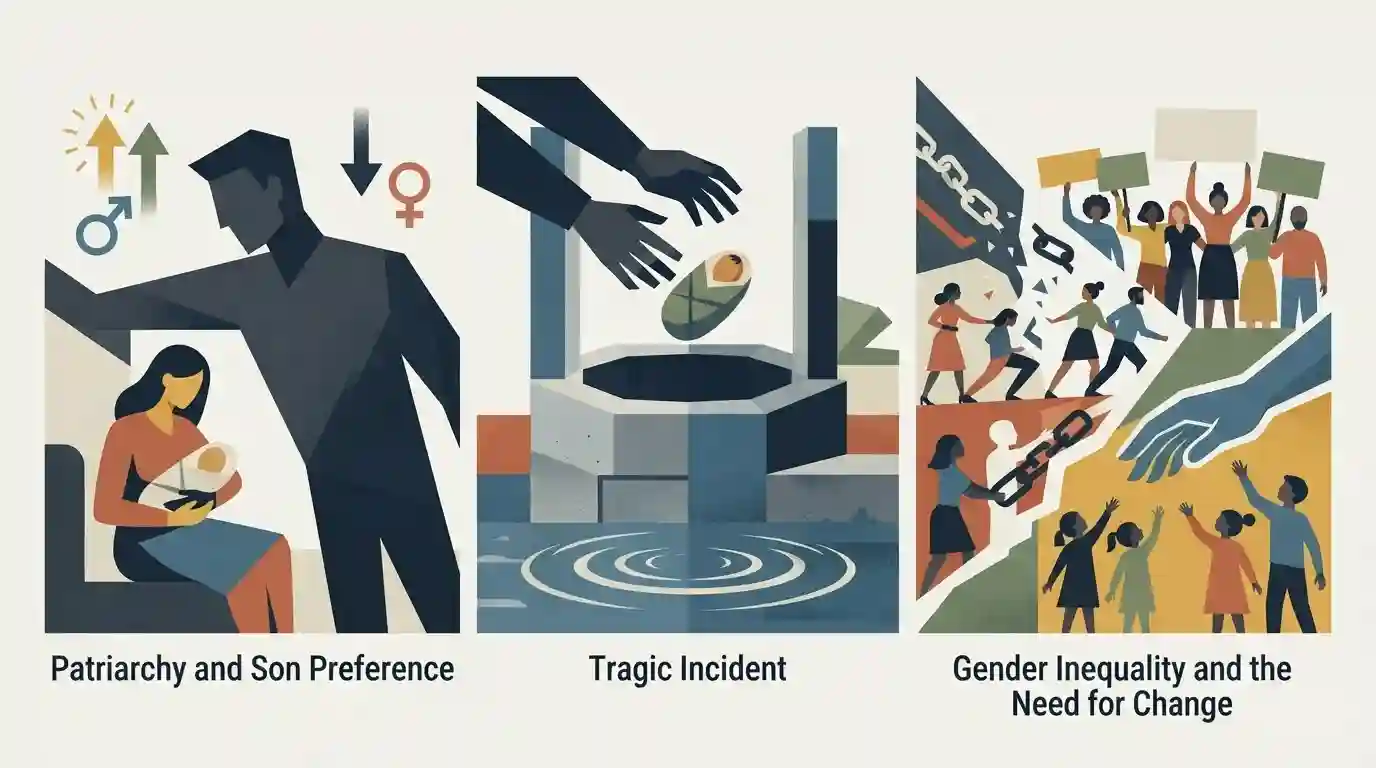
In a grim reflection of ingrained gender bias, a 28-year-old man from Karnataka's Chikkaballapura district was arrested for murdering his 13-day-old daughter by throwing her into a water sump. The father was reportedly angry that his second child was also a girl. Having previously demanded that his wife kill the infant, he committed the act himself while she was resting. The tragic incident highlights the enduring social evils of female infanticide, extreme son preference, and patriarchal mindsets in India, emphasizing the critical need for robust social awareness campaigns and strict enforcement of child rights mechanisms.
મુખ્ય મુદ્દા
- A 28-year-old man in Karnataka's Chikkaballapura was arrested for allegedly murdering his 13-day-old daughter by throwing her into a water sump.
- The father was reportedly upset over the birth of a second girl child, highlighting the persistent societal issue of 'son preference' and patriarchal bias.
- The couple's first child, a three-year-old daughter, is visually impaired, but the primary motive cited was the father's resentment toward having another girl.
- The husband had previously pressured his wife to kill the newborn, executing the act himself when she refused and was resting.
- The incident underscores the urgent need for social interventions, strict enforcement of child protection laws, and campaigns like Beti Bachao Beti Padhao to combat female infanticide.
મહત્વપૂર્ણ શબ્દો
Female Infanticide

The deliberate and illegal killing of a newborn female child, typically driven by deeply ingrained social biases, economic pressures like dowry, and a strong cultural preference for sons.
UPSC context
GS Paper I (Social Issues) & GS II (Social Justice); tests understanding of gender discrimination and socio-demographic challenges in India.
Patriarchy
A social system in which men hold primary power, moral authority, and control over property, reinforcing male dominance and perpetuating gender inequality within households and public spaces.
UPSC context
GS Paper I (Indian Society); tests comprehension of societal structures, gender-based division of labor, and barriers to women's empowerment.
Son Preference
A socio-cultural bias where families favor male heirs over female children, viewing sons as economic assets, lineage continuers, and social security providers, while daughters are perceived as liabilities.
UPSC context
GS Paper I (Social Issues) & GS II (Social Justice); tests knowledge of demographic disparities, gender bias, and cultural bottlenecks.
PCPNDT Act
An Indian federal law enacted to prohibit sex selection before or after conception and ban the misuse of prenatal diagnostic techniques for sex-selective abortions to arrest the declining child sex ratio.
UPSC context
GS Paper II (Government Policies & Interventions); tests understanding of legal frameworks addressing social evils, gender equality, and implementation challenges.
Child Sex Ratio
The number of female children per 1,000 male children in the 0–6 year age group, serving as a critical demographic indicator of gender bias, female infanticide, and sex-selective practices.
UPSC context
GS Paper I (Demographics) & GS Paper II; tests understanding of population dynamics, social trends, and policy interventions.
પ્રિલિમ્સ ટ્રેપ
Beti Bachao Beti Padhao is an exclusive initiative of the Ministry of Women and Child Development.
It is a joint tri-ministerial initiative also involving the Ministry of Health and Family Welfare and the Ministry of Education.
સંલગ્ન સ્થિર ખ્યાલો
What is the distinction between 'Son Preference' and 'Son Meta-Preference'?
- Son Preference: Active bias favoring male offspring, often manifesting as sex-selective abortion or infanticide, which directly distorts the biological Sex Ratio at Birth.
- Son Meta-Preference: The practice of continuing childbearing until a male child is born, leading to 'unwanted girls' but not necessarily distorting the sex ratio.
- Missing Women: Amartya Sen's concept denoting the cumulative deficit of women resulting from gender-biased mortality, prenatal sex determination, and post-natal survival neglect.
What are the core pillars of the PCPNDT Act, 1994?
- Sex Selection Ban: Prohibits sex selection techniques both pre-conception and post-conception, ensuring diagnostic tools are not misused to determine fetal gender.
- Mandatory Registration: Requires all ultrasound clinics, genetic counseling centres, and laboratories to register, maintaining strict logs of all scans performed.
- Strict Penalties: Prescribes imprisonment and heavy fines for medical professionals and family members seeking or conducting illegal sex determination.
આંતર-વિષય પેટર્ન
Demography + Behavioral Economics
Addressing deep-seated patriarchy requires shifting focus from mere legal prohibitions to behavioral 'nudge' interventions under social empowerment schemes.
Reproductive Rights + Criminal Law
Balancing maternal reproductive choice under the MTP Act with state vigilance against female feticide under the PCPNDT Act remains a delicate legal challenge.

GS1/GS2 2026 may ask why rising female literacy and per-capita income have failed to organically eliminate 'son meta-preference' in India.
સંલગ્ન PYQ · 3
સંલગ્ન PYQ · 3
- 2019MainsGS1
“Empowering women is the key to control population growth.” Discuss.
- 2023MainsGS2
Explain the constitutional perspectives of Gender Justice with the help of relevant Constitutional Provisions and case laws.
- 2025MainsGS2
The National Commission for Protection of Child Rights has to address the challenges faced by children in the digital era. Examine the existing policies and suggest measures the Commission can initiate to tackle the issue.
