Karnataka School Adolescent Health and Gynaecological Policy
Source:The Hindu ↗
Why It Matters
It represents a progressive policy shift towards institutionalizing adolescent reproductive healthcare and preventive medicine within state educational frameworks, directly aligning with public health and human capital development goals.
Summary
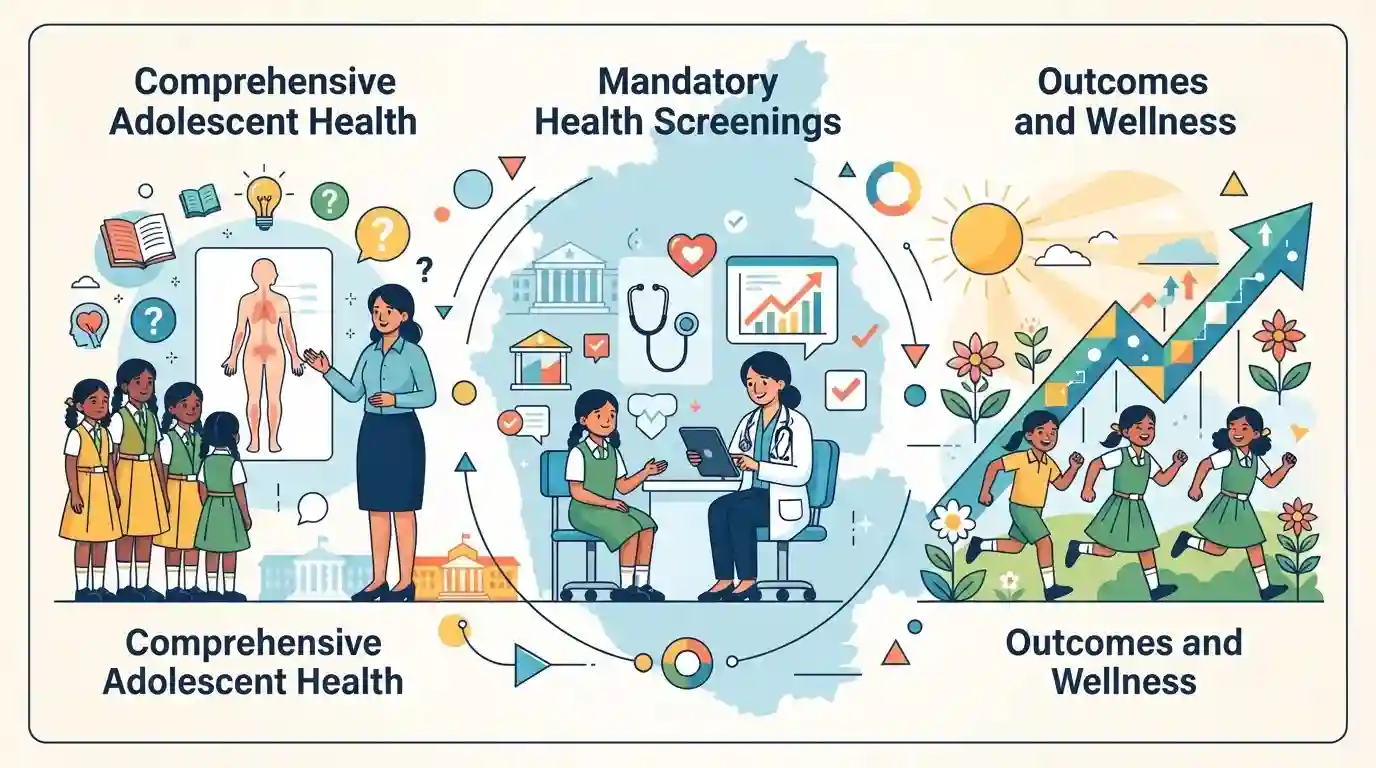
The Karnataka government has introduced mandatory gynaecological health check-ups for school-aged girls alongside structured sex education curricula. The policy aims to address adolescent health concerns, reduce nutritional and reproductive morbidities, and foster health literacy early in life.
Key Points
- Karnataka has mandated routine gynaecological check-ups for adolescent girls and integrated sex education in schools to improve adolescent reproductive health.
- The policy seeks to address issues like menstrual health problems, early detection of reproductive tract infections, and nutritional deficiencies among young girls.
- It highlights the importance of institutionalizing school health programmes and preventative adolescent healthcare interventions to bridge gaps in public healthcare delivery.
Important Terms
Protection of Children from Sexual Offences (POCSO) Act, 2012

The Protection of Children from Sexual Offences Act, 2012 is a comprehensive Indian legislation designed to protect children from offences of sexual assault, sexual harassment, and pornography while safeguarding their interests through child-friendly judicial processes.
UPSC context
UPSC GS Paper II (Social Sector/Vulnerable Sections) and GS Paper IV (Ethics/Child Rights). Tests knowledge of child safety laws and institutional safeguards.
Rashtriya Kishor Swasthya Karyakram (RKSK)
A holistic adolescent health strategy under India's National Health Mission that targets the health and development needs of adolescents aged 10-19 years, focusing on nutrition, reproductive health, and mental well-being.
UPSC context
UPSC GS Paper II (Issues Relating to Development and Management of Social Sector/Health). Evaluates public health policies for adolescents and demographic dividends.
Prelims Trap
Mandated routine gynaecological check-ups for adolescent girls is a central statutory requirement applicable to all Indian states.
Aspirants may confuse state-level policy announcements with central statutory mandates across all states, ignoring that health is a State List subject under the 7th Schedule.
Static Concepts Connected
What are the key pillars of the Rashtriya Kishor Swasthya Karyakram (RKSK)?
- Nutritional support: Nutrition focus addressing iron deficiency anaemia and malnutrition among adolescents.
- Sexual health: Reproductive health promoting delayed marriage and awareness on reproductive tract infections.
- Counseling services: Mental health and substance abuse counseling for adolescent well-being.
Cross-Topic Patterns
Adolescent Health Policies vs. National Frameworks
State-level public health interventions like school health programmes intersect with the National Health Mission's Rashtriya Kishor Swasthya Karyakram (RKSyk) framework.
POCSO and Preventive Social Welfare Integration
Integrating POCSO legal awareness into school health policies bridges criminal law enforcement with institutional preventive social welfare for minors.

Adolescent health mandates and legal frameworks like POCSO Act are frequent high-yield matches for multi-statement prelims questions.
Linked PYQs · 2
Linked PYQs · 2
- 2020MainsGS2
In order to enhance the prospects of social development, sound and adequate health care policies are needed particularly in the fields of geriatric and maternal health care. Discuss.
- 2018MainsGS2
Appropriate local community-level healthcare intervention is a prerequisite to achieve 'Health for All' in India. Explain.
