Karnataka High Court Stays FSSAI Advisory on Ashwagandha Leaves
Source:Indian Express ↗
Why It Matters
This development illustrates the tension between regulatory enforcement and statutory procedures, highlighting how statutory bodies (like FSSAI) must adhere to formal rule-making processes (delegated legislation) rather than relying on executive advisories. It also touches on public health administration and the scientific validation of traditional medicine (Ayush).
Summary
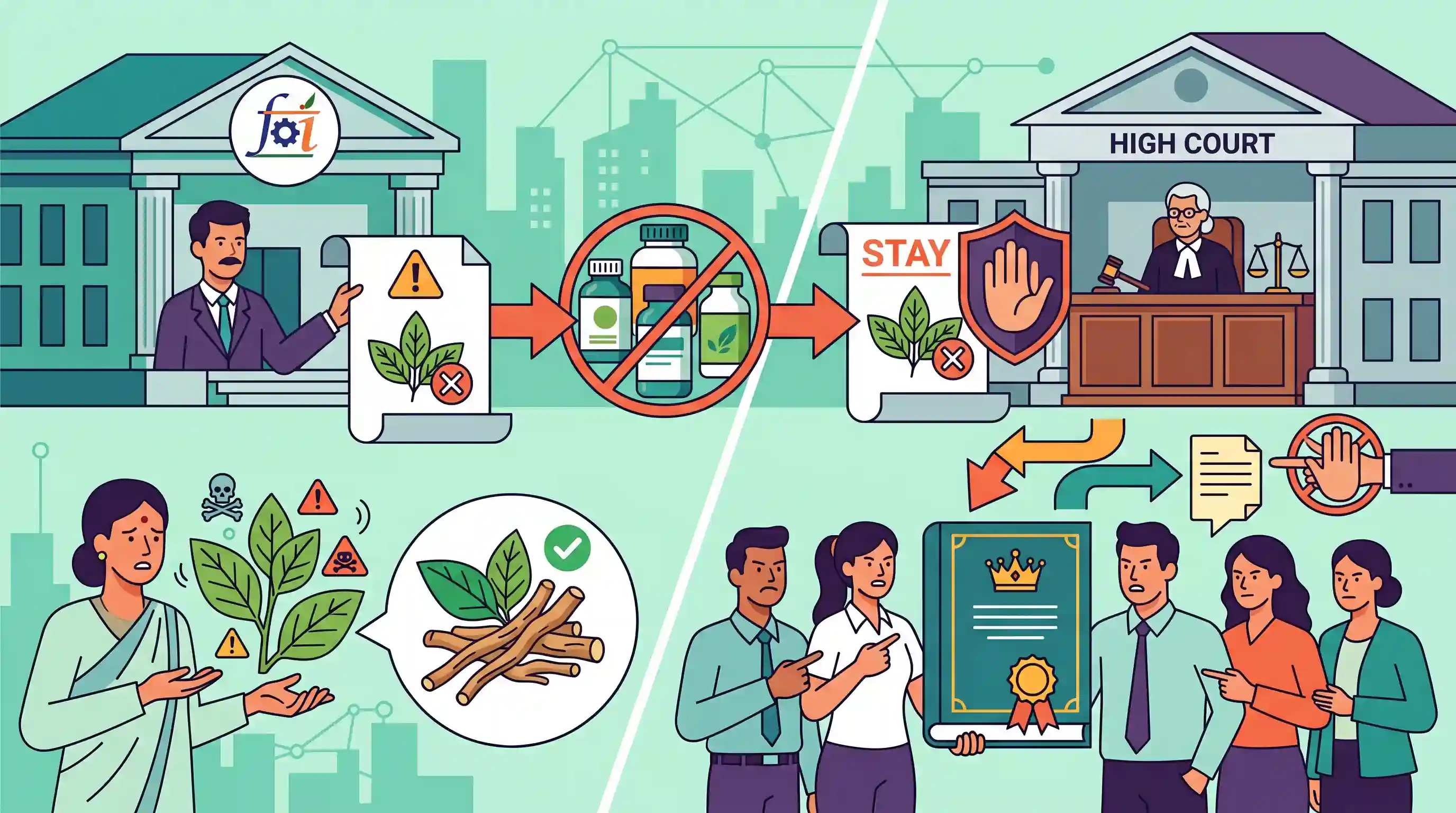
The Karnataka High Court has temporarily stayed an advisory issued by the Food Safety and Standards Authority of India (FSSAI) that banned the use of Ashwagandha leaves in health supplements. The FSSAI's decision was initially guided by concerns from the Ministry of Ayush over the potential toxicity of reactive withanolides found in the leaves, contrasting with the traditionally safe use of the plant's roots in Ayurveda. However, supplement manufacturers challenged the ban on procedural grounds, arguing that the FSSAI engaged in administrative overreach by attempting to enforce a prohibition via an advisory rather than formally amending the statutory 2016 Food Safety regulations.
Key Points
- The Karnataka High Court stayed an FSSAI advisory that prohibited the use of Ashwagandha leaves or their extracts in health supplements and nutraceuticals.
- The FSSAI ban was prompted by the Ministry of Ayush, which highlighted safety concerns—including liver toxicity and gastrointestinal distress—caused by reactive withanolides present in Ashwagandha leaves.
- Traditional Ayurvedic practices predominantly use Ashwagandha roots rather than leaves for internal medicinal use.
- Petitioners successfully argued that a ban requires a formal amendment to the 2016 Food Safety and Standards regulations, and cannot be enforced through a mere administrative advisory.
Important Terms
FSSAI (Food Safety and Standards Authority of India)

An autonomous statutory body under the Ministry of Health and Family Welfare. It establishes science-based food safety standards and regulates the manufacture, storage, and distribution of food products in India.
UPSC context
GS II: Statutory and Regulatory Bodies; GS III: Food safety and processing sector management.
Food Safety and Standards Act, 2006
The primary legislation consolidating various food laws in India. It established FSSAI and empowers it to create regulations that must undergo legislative oversight by being laid before Parliament.
UPSC context
GS II: Important Acts and Policies; tests the legal framework governing public health and consumer protection.
Ministry of Ayush
The Union ministry governing traditional medicine systems (Ayurveda, Yoga, Unani, Siddha, and Homeopathy). It provides expert safety dossiers to FSSAI regarding the traditional use of botanical ingredients.
UPSC context
GS II: Health and Social Sector issues; governance of traditional medicinal knowledge and public health.
Delegated Legislation
Rules or regulations made by the executive/administrative bodies under authority granted by the Legislature. The High Court's stay tests whether "advisories" can legally bypass formal rule-making procedures.
UPSC context
GS II: Executive vs. Legislature; Judicial review of administrative actions and procedural fairness.
Food Safety and Standards (Health Supplements, Nutraceuticals...) Regulations, 2016
Statutory rules governing the composition and sale of health supplements and nutraceuticals. Schedule IV of these regulations specifically lists plant parts (like Ashwagandha roots) permitted for use.
UPSC context
GS II: Regulatory framework; tests understanding of administrative rules vs. statutory amendments.
Withanolides
Naturally occurring compounds in Ashwagandha. The Ministry of Ayush flagged "Withaferin-A" found in leaves for potential toxicity, contrasting with the safety profile of traditional root extracts.
UPSC context
GS III: Science & Technology; understanding safety protocols in traditional medicine and functional foods.
Prelims Trap
Ashwagandha leaves are a widely prescribed traditional Ayurvedic remedy for internal consumption.
Ayurveda explicitly uses the roots for internal rejuvenation. Leaves contain high concentrations of reactive withanolides that cause liver toxicity and are historically avoided for internal use.
Static Concepts Connected
What is the statutory mandate and nodal ministry of the FSSAI?
- Statutory Origin: Established under the Food Safety and Standards Act, 2006, which consolidated older laws like the Prevention of Food Adulteration Act, 1954.
- Nodal Ministry: Operates autonomously under the Ministry of Health & Family Welfare, NOT the Ministry of Ayush or Agriculture.
- Mandate: Regulates the manufacture, storage, distribution, sale, and import of food articles, including nutraceuticals, health supplements, and dietary foods.
How does an 'Advisory' differ from 'Subordinate Legislation' in administrative law?
- Subordinate Legislation: Rules or regulations framed under parent acts (like the 2016 FSSAI regulations) have statutory force. Altering them requires formal, notified amendment procedures.
- Executive Advisory: These are mere administrative instructions. While they can clarify or supplement gaps, they cannot legally override, bypass, or amend established statutory regulations.
Cross-Topic Patterns
Medicinal plant chemistry in Prelims
Similar to past questions on Neem or Giloy, the distinction between Ashwagandha root (safe) and leaf (toxic withanolides) merges botanical science with traditional medicine.
Inter-ministerial overlapping mandates
The Ayush Ministry identified the health risk, but enforcement fell to FSSAI (Health Ministry), underscoring the fragmented regulatory architecture for nutraceuticals in India.

A 2026 Prelims question will likely combine FSSAI's nodal ministry/powers with the botanical specifics of Ashwagandha (roots vs leaves).
Linked PYQs · 3
Linked PYQs · 3
- 2018PrelimsGS1
Consider the following statements: 1. The Food Safety and Standards Act, 2006 replaced the Prevention of Food Adulteration Act, 1954. 2. The Food Safety and Standards Authority of India (FSSAI) is under the charge of Director General of Health Services in the Union Ministry of Health and Family Welfare. Which of the statements given above is/are correct?
- 2015PrelimsGS1
The Genetic Engineering Appraisal Committee is constituted under the
- 2020MainsGS2
Judicial Legislation is antithetical to the doctrine of separation of powers as envisaged in the Indian Constitution. In this context justify the filing of large number of public interest petitions praying for issuing guidelines to executive authorities.
