Karnataka Automatic Land Mutation Scheme for Fast Khata Transfers
Source:Indian Express ↗
Why It Matters
The article illustrates a practical, successful application of e-governance to solve chronic administrative delays and petty corruption at the grassroots level. It provides excellent fodder for GS2 and GS4 answers discussing the role of technology in enhancing transparency, removing human bias, and shifting towards citizen-centric governance models.
Summary
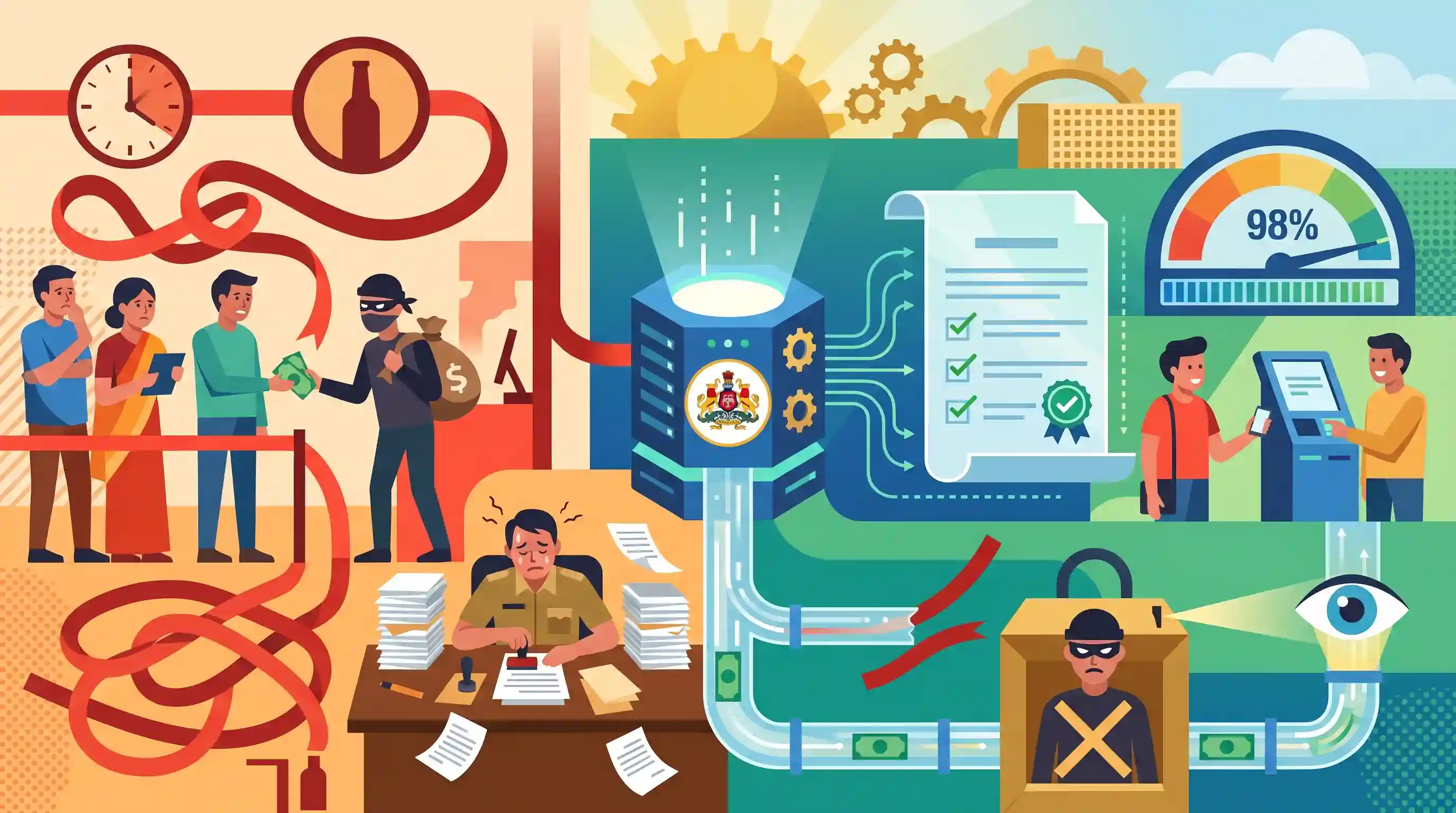
The Karnataka government has introduced a fully automated property mutation system powered by the Bhoomi software, designed to clear 98% of uncontested khata transfers without manual intervention. By automatically granting approvals after the mandatory notice period expires, the state has removed a significant bureaucratic bottleneck that previously required revenue inspectors to manually sign off on files. The initiative is a substantial step in e-governance, intending to make public service delivery user-centric, eliminate rent-seeking by middlemen, and minimize the physical interface between citizens and the Revenue Department.
Key Points
- Karnataka has launched an automatic property mutation service integrated with the Bhoomi software to expedite khata transfers and streamline land records management.
- The system automatically approves mutation requests once the statutory public notice period (7 or 15 days) concludes, eliminating the need for manual digital signatures from revenue inspectors.
- If objections are raised during the notice period, the software pauses the mutation and automatically refers the dispute to the tahsildar’s court via the revenue court case management system.
- By removing manual checkpoints and the need for physical office visits, the initiative aims to drastically cut red tape, curb rent-seeking by middlemen, and foster a more citizen-centric and transparent administrative process.
Important Terms
Bhoomi software

A pioneering e-governance project by the Karnataka government for the digitisation and management of land records, enabling online access to ownership documents like RTC.
UPSC context
GS Paper II (E-Governance/Citizen Charters); tests knowledge of successful digital service delivery models in India.
Property Mutation
The process of updating ownership or title details in revenue records after a property is transferred via sale, gift, or inheritance.
UPSC context
GS Paper II/III (Land Reforms/Governance); crucial for understanding land administration and administrative reforms to reduce corruption.
Revenue Court Case Management System
A digital platform (RCCMS) to track and manage disputes in revenue courts, integrated with land records to prevent fraudulent transactions on contested properties.
UPSC context
GS Paper II (E-Governance); highlights integration of judiciary/quasi-judicial processes with digital administration for transparency.
Khata Transfer
The legal process of updating a property's tax assessment record (Khata) to a new owner's name in urban or rural local body registers.
UPSC context
GS Paper II (Public Service Delivery); relevant for urban governance and ease of doing business reforms.
Record of Rights, Tenancy, and Crops (RTC)
The primary land record in Karnataka providing details of ownership, tenancy, land use, and crops grown, essential for loans and legal verification.
UPSC context
GS Paper III (Agriculture/Land Reforms); fundamental for understanding rural credit and property rights.
E-Governance
The application of information technology to deliver government services, exchange information, and integrate various stand-alone systems between government and citizens.
UPSC context
GS Paper II (Governance); a core syllabus topic testing the impact of technology on transparency and accountability.
Prelims Trap
DILRMP has established a conclusive land titling system across India, where the State guarantees property ownership.
India currently follows a 'presumptive' titling system based on the Registration Act of 1908. Conclusive titling is DILRMP's end goal, not yet fully achieved.
Static Concepts Connected
What is the difference between Presumptive and Conclusive Land Titling?
- Presumptive Titling: The current Indian system where registration of a sale deed only records the transaction, not guaranteed ownership. It is subject to legal challenge.
- Conclusive Titling: The State guarantees the title and provides compensation if a dispute arises. This eliminates the need to trace past ownership history.
What are the core components of the DILRMP?
- Primary Objective: To develop a modern, comprehensive, and transparent land records management system nationwide.
- Key Components: Computerization of land records, cadastral survey/re-survey, and integration of Sub-Registrar offices with revenue offices.
- Ultimate Goal: Transitioning the country from a presumptive property title system to a Torrens-style conclusive title system.
Cross-Topic Patterns
E-Governance vs. Rent-Seeking
Minimizing physical interface in property mutation connects to GS-4 concepts of systemic administrative reforms designed to eliminate discretionary powers and rent-seeking behavior.
Land Titling & Agrarian Credit
Clear digital titles reduce friction in formal credit access, directly tying GS-2 land record modernization (DILRMP) to GS-3 agricultural financial inclusion and crop insurance.

Prelims 2026 will likely test the distinction between presumptive and conclusive land titling alongside DILRMP's objectives.
Linked PYQs · 4
Linked PYQs · 4
- 2024MainsGS2
e-governance is not just about the routine application of digital technology in service delivery process. It is as much about multifarious interactions for ensuring transparency and accountability. In this context evaluate the role of the 'Interactive Service Model' of e-governance.
- 2023MainsGS2
e-governance, as a critical tool of governance, has ushered in effectiveness, transparency and accountability in governments. What inadequacies hamper the enhancement of these features ?
- 2025MainsGS2
e-governance projects have a built-in bias towards technology and back-end integration than user-centric designs. Examine.
- 2022MainsGS4
Discuss the challenges of 'Digitalization' in the context of public service delivery.
