Civil Service Compulsory Retirement Rules And Administrative Action
Source:indianmasterminds ↗
Why It Matters
It pertains to civil service accountability, ethics, and the legal framework governing premature or compulsory retirement of bureaucrats in India.
Summary
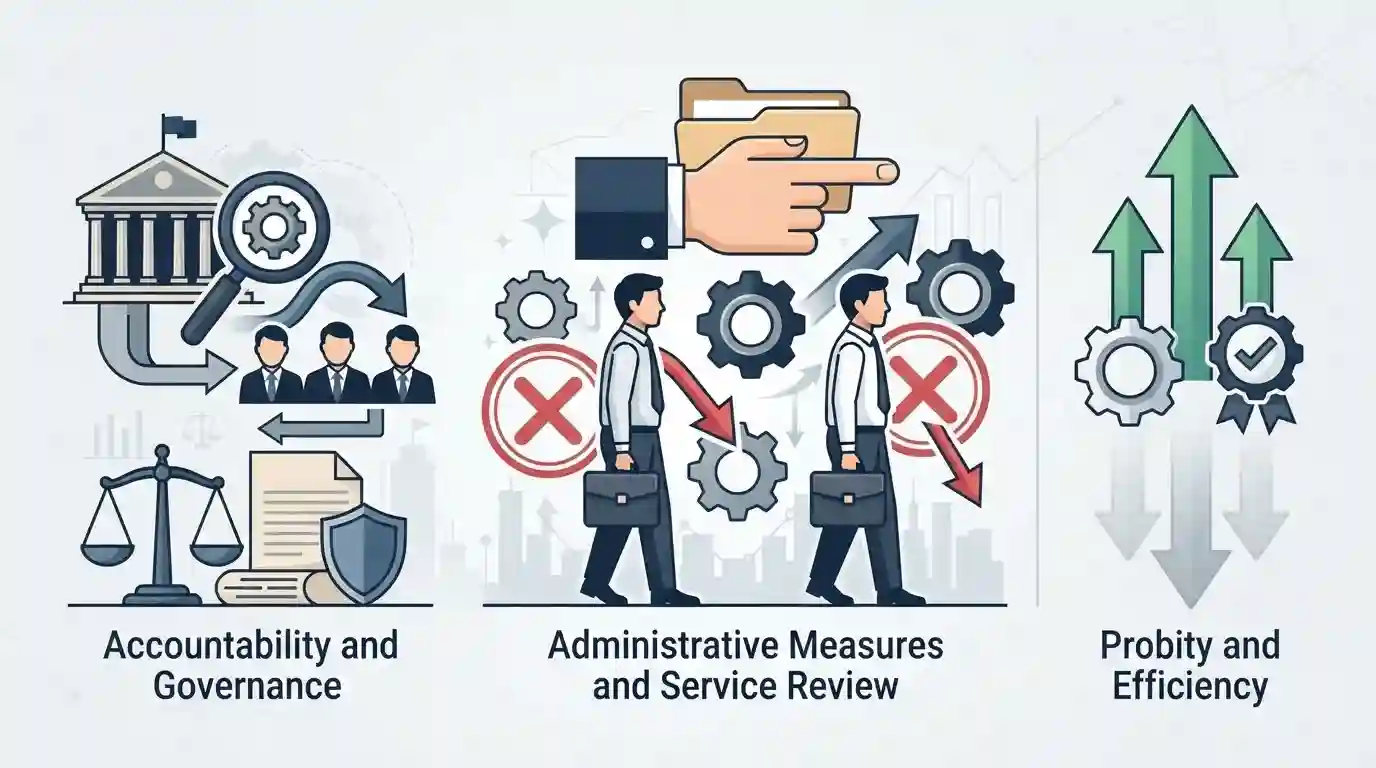
Senior bureaucrats K Rajesh and Gaurav Dahiya have been handed compulsory retirement by the government following service reviews, highlighting administrative measures under civil service rules to maintain probity and efficiency.
Key Points
- Senior bureaucrats K Rajesh and Gaurav Dahiya faced compulsory retirement under government service review rules.
- Compulsory retirement is utilized as a tool by the administration to weed out non-performing or integrity-compromised officers.
- Under service rules (like All India Services Rules), the government retains the absolute right to prematurely retire officers in public interest after they attain a certain age or qualifying service.
Important Terms
All India Services Rules

Statutory rules governing the recruitment, service conditions, discipline, and conduct of members belonging to All India Services like the IAS and IPS.
UPSC context
Relevant for GS Paper II (Civil Services in a Democracy, Accountability and Governance). Tests understanding of civil service regulations and administrative accountability.
Government of India
The central executive machinery of the nation responsible for formulating public policies, administering laws, and exercising supreme control over civil service personnel administration.
UPSC context
Relevant for GS Paper II (Indian Constitution - Features, Structure and Functioning of the Executive). Tests knowledge of administrative authority and governance mechanisms.
Static Concepts Connected
What are the provisions governing compulsory retirement of All India Services officers in India?
- Rule 16(3):: Empowered under Rule 16(3) of the AIS (Death-Cum-Retirement-Benefits) Rules, 1958, allowing retirement in the public interest.
- Threshold:: Applies after an officer completes 30 years of qualifying service or attains 50 years of age, subject to review.
- Notice Period:: Requires a three-month notice period or three months' pay and allowances in lieu of notice.
Cross-Topic Patterns
Civil Service Tenure vs. Article 311 Protections
Administrative accountability mechanisms like compulsory retirement under AIS rules directly balance Article 311 constitutional protections with executive efficiency.

AIS Rule 16(3) provisions and service review timelines are frequently tested in governance and constitutional law multi-statement MCQs.
Linked PYQs · 1
Linked PYQs · 1
- 2026GPSC_PRELIMSGS1
Examine the following statements regarding 'Article 311' of the Constitution and protection granted to Civil Servants: 1. No civil servant shall be dismissed by an authority subordinate to the one by which they were appointed. 2. No officer shall be removed without informing them of the charges and giving them an opportunity for inquiry. 3. In the interest of national security, the President or Governor can remove an officer without an inquiry. 4. This protection is available only to All India Services officers and not to state service officers. Which of the above statements are correct?
