NEET Protesters Meet Union Ministers Over Exam Leaks
Source:Indian Express ↗
ఇది ఎందుకు ముఖ్యం
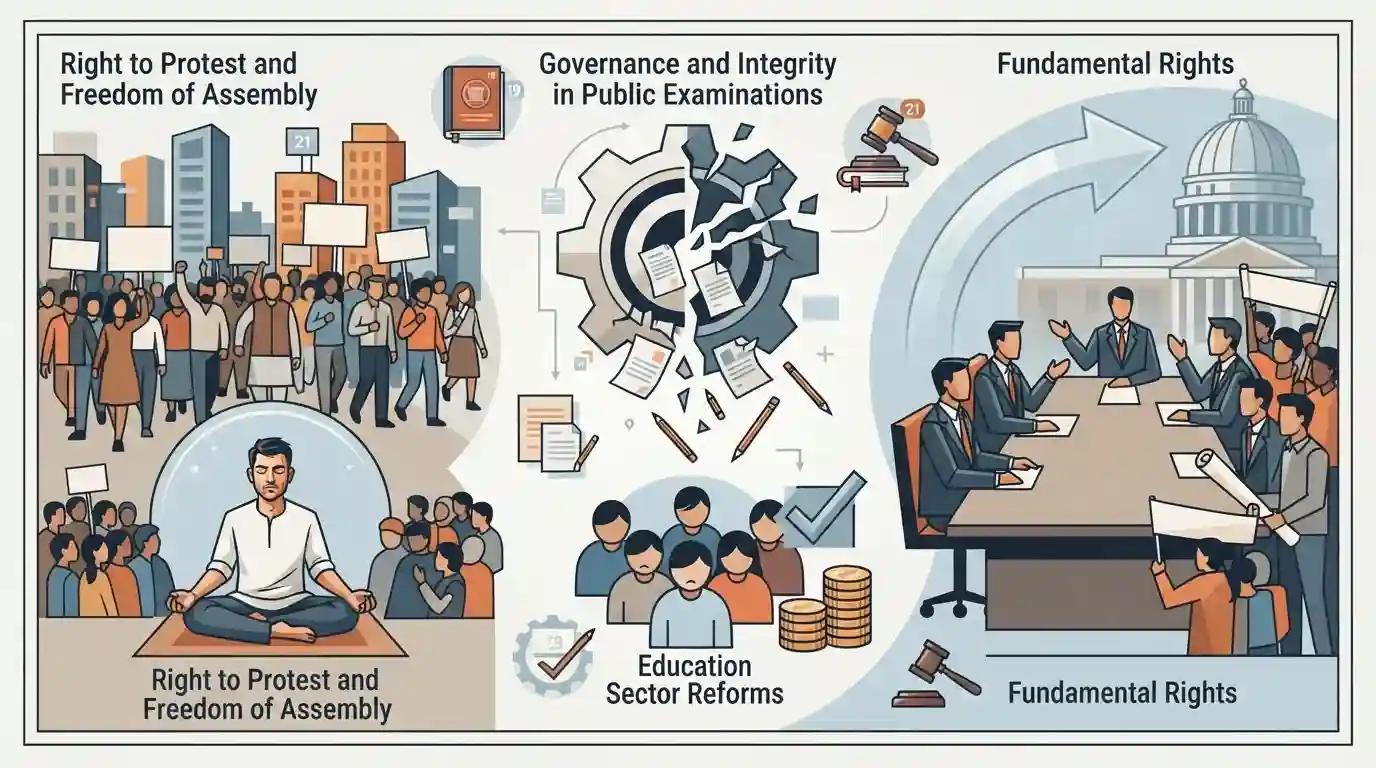
The NEET-UG leak and subsequent protests bring two critical UPSC GS2 topics to the forefront: the systemic governance issues in conducting fair public examinations across the country, and the constitutional friction surrounding the fundamental right to protest (Article 19) versus state-imposed preventive detentions and restrictions (Article 21).
సారాంశం
Union Minister JP Nadda met with representatives of the Cockroach Janta Party (CJP) amid their ongoing protests and march toward Parliament. The activists, whose demonstrations were highlighted by Sonam Wangchuk's hunger strike, demanded Wangchuk's release from alleged detention at Safdarjung hospital. They also called for the dismissal of Education Minister Dharmendra Pradhan due to the NEET-UG examination leak, along with financial compensation for the families of students who committed suicide as a result of the exam lapses. While the government provided a hearing, no firm commitments were made, though compensation demands are reportedly under consideration. The protests highlight ongoing UPSC-relevant themes surrounding public examination integrity and the constitutional right to protest.
ముఖ్య అంశాలు
- Protesters from the Cockroach Janta Party (CJP) marched toward Parliament demanding action over the NEET-UG examination leaks and lapses.
- The activists demanded the release of Sonam Wangchuk, who was holding a hunger strike and was allegedly detained at Safdarjung hospital.
- CJP spokespersons met with Union Minister JP Nadda, seeking the dismissal of Education Minister Dharmendra Pradhan over the NEET-UG controversy.
- Protesters also demanded Rs 1 crore as financial compensation for the families of students who died by suicide due to the exam leak.
- While the government gave the activists a hearing, no concrete commitments were made regarding the demands, although the issue of compensation is reportedly under consideration.
ప్రిలిమ్స్ ఉచ్చు
The Right to Protest under Article 19 includes a fundamental right to strike for public employees during peaceful demonstrations.
While peaceful assembly is protected under Article 19(1)(b), the Supreme Court has consistently held that the right to strike is not a fundamental right.
అనుసంధానమైన స్థిర భావనలు
What are the constitutional limits on the Right to Assemble under Article 19?
- Reasonable Restrictions: Under Article 19(3), assembly can be restricted on grounds of the sovereignty and integrity of India, or public order.
- Without Arms: The assembly must be peaceful and strictly without arms; violent or disorderly assembly is not protected.
- No Right to Strike: The Supreme Court has clarified that public employees have no fundamental or statutory right to strike.
What are the key provisions of The Public Examinations (Prevention of Unfair Means) Act, 2024?
- Objective: Aims to prevent unfair means in public examinations conducted by central authorities like NTA, UPSC, SSC, and RRBs.
- Offences: Defines paper leaks, tampering, and collusion as cognizable, non-bailable, and non-compoundable offences.
- Punishment: Mandates imprisonment of 3 to 5 years (up to 10 years for organized crime) and heavy fines up to Rs 1 crore.
అంతర-అంశ నమూనాలు
Public exam leaks & youth demography
Exam integrity directly impacts India's demographic dividend. Frequent leaks lead to 'demographic anxiety,' structural unemployment, and mental health crises, transforming a demographic asset into a socio-economic liability.
Federalism and education governance
Education sits on the Concurrent List. Centralized exams like NEET face pushback from states, highlighting the federal friction between centralized standardisation and local administrative autonomy.

Expect a GS-2 question analyzing the efficacy of the Public Examinations Act, 2024 in securing exam integrity vs. state autonomy.
అనుసంధాన PYQలు · 3
అనుసంధాన PYQలు · 3
- 2024MainsGS2
What are the aims and objects of recently passed and enforced, The Public Examination (Prevention of Unfair Means) Act, 2024? Whether University/State Education Board examinations, too, are covered under the Act ?
- 2022MainsGS2
“Right of movement and residence throughout the territory of India are freely available to the Indian citizens, but these rights are not absolute.” Comment.
- 2023MainsGS2
“The Constitution of India is a living instrument with capabilities of enormous dynamism. It is a constitution made for a progressive society.” Illustrate with special reference to the expanding horizons of the right to life and personal liberty.
