Decline of American Soft Power Under Transactional Foreign Policy
Source:Indian Express ↗
Why It Matters
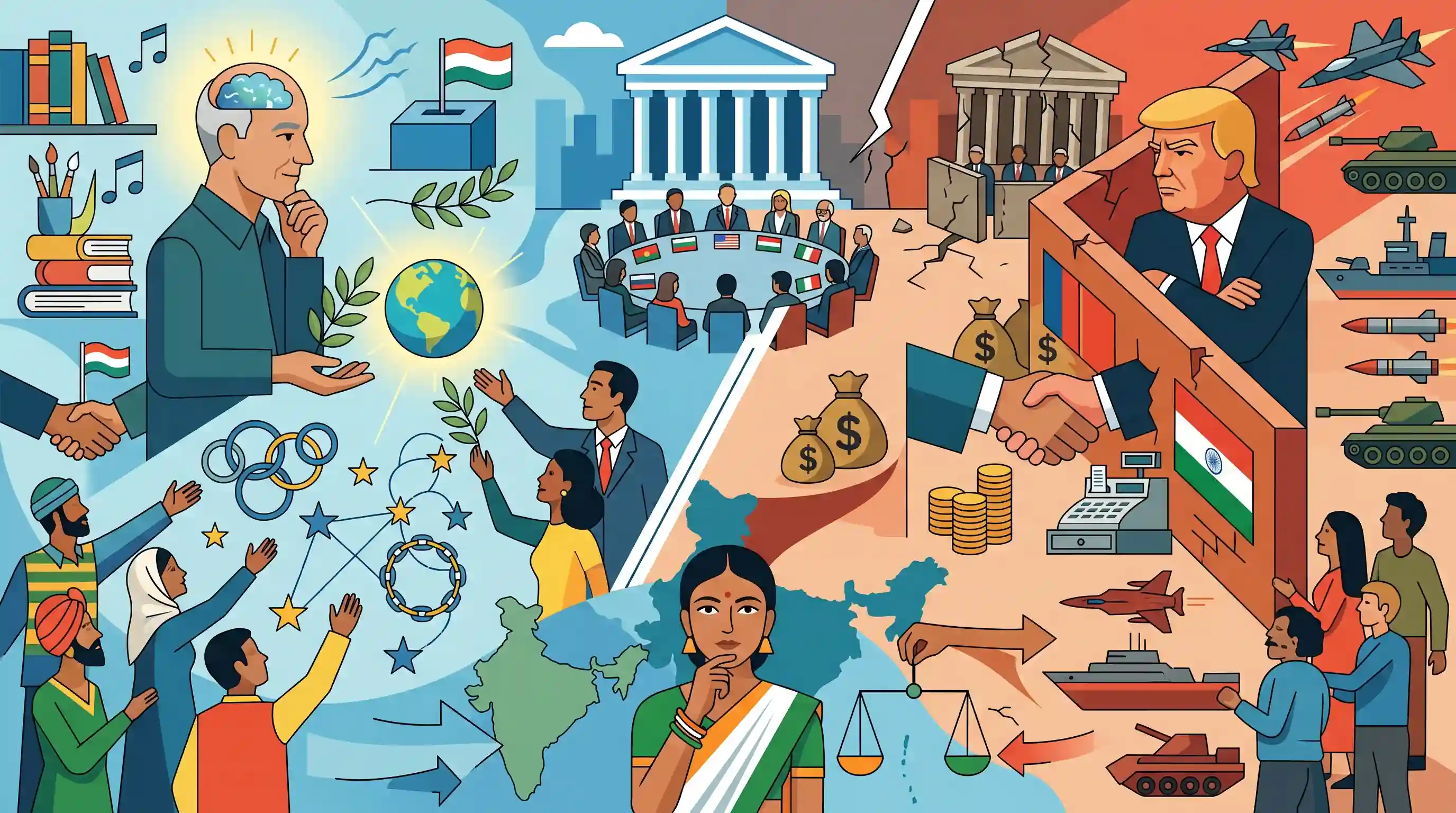
The debate between soft power and hard power is foundational to International Relations (GS Paper 2). Understanding this shift in US foreign policy provides crucial context for analyzing the changing global order, the rise of sovereign nationalism, and how nations build geopolitical influence beyond military and economic coercion.
Summary
The article discusses the concept of 'soft power,' coined by political scientist Joseph Nye, and contrasts it with the foreign policy approach of former US President Donald Trump. While Nye emphasized that a nation's strength comes from its ability to attract and co-opt through culture, political values, and diplomacy, Trump’s 'America First' doctrine prioritized transactional relationships and hard power. This shift highlights a departure from the traditional US strategy of leveraging global alliances and democratic ideals, reflecting a broader trend towards sovereign nationalism and raising questions about the long-term sustainability of American global leadership without soft power.
Key Points
- Joseph Nye introduced the concept of 'soft power,' defining it as the ability of a country to persuade and attract others through its culture, political values, and foreign policies, rather than using coercion.
- The United States has historically relied on a combination of hard power (military/economic strength) and soft power (democratic ideals, global institutional leadership) to maintain global influence.
- President Donald Trump's 'America First' policy largely sidelined soft power in favour of transactional diplomacy, unilateralism, and hard power tactics.
- Neglecting soft power risks alienating traditional allies and undermining long-term trust, demonstrating that military and economic might alone are insufficient for sustained global leadership.
- The changing dynamics of American diplomacy reflect a broader global shift towards sovereign nationalism and a waning reliance on the post-Cold War multilateral consensus.
Important Terms
Soft Power

Ability to influence others through attraction and persuasion—using culture, political values, and foreign policy—rather than coercion or payments.
UPSC context
GS Paper 2 (International Relations); tests understanding of non-coercive influence and India’s cultural diplomacy (e.g., Yoga, Diaspora).
Hard Power
The use of military or economic might (the 'carrot and stick' approach) to coerce states into compliance or desired behavior.
UPSC context
GS Paper 2 (International Relations); tests ability to analyze traditional tools of statecraft and comparative foreign policy.
Smart Power
The strategic combination of both hard and soft power resources to achieve national foreign policy objectives effectively and with political legitimacy.
UPSC context
GS Paper 2 (International Relations); relevant for Mains answer writing regarding balanced diplomatic and security strategies.
America First
A nationalist foreign policy doctrine prioritizing unilateral U.S. interests over international cooperation, characterized by protectionism and withdrawal from multilateral agreements.
UPSC context
GS Paper 2 (Effect of policies of developed countries); tests impact on India’s trade, H1-B visas, and strategic autonomy.
Transactional Diplomacy
A diplomatic approach treating international relationships as short-term 'deals' or quid pro quo exchanges rather than permanent, value-based strategic alliances.
UPSC context
GS Paper 2 (International Relations); tests understanding of shifting global diplomatic norms and the decline of the rules-based order.
Multilateralism
The process of multiple countries working together on a given issue, typically through international organizations like the UN, WTO, or G20.
UPSC context
GS Paper 2 (International institutions); tests knowledge of collective global governance versus the rise of sovereign nationalism.
Prelims Trap
"Economic aid, infrastructure investments, and financial sanctions are key instruments of a nation's soft power."
Joseph Nye categorizes economic payments (foreign aid) and sanctions as "carrots and sticks" of Hard Power. Soft power relies strictly on intangible attraction and persuasion.
Static Concepts Connected
What differentiates Hard, Soft, and Smart Power in IR?
- Hard Power: Relies on coercion or material inducements (e.g., military force, economic sanctions, foreign aid).
- Soft Power: Relies on attraction and co-option without force (e.g., cultural appeal, democratic values, moral foreign policy).
- Smart Power: The strategic integration of both military/economic might and diplomatic partnerships to effectively achieve national objectives.
What are the key pillars of India's Soft Power diplomacy?
- Cultural Appeal: Global spread of Yoga (International Day of Yoga), Ayurveda, Bollywood, and historical Buddhist linkages.
- Political Values: International standing as the world's largest pluralistic democracy with secular ideals.
- Foreign Policy: Initiatives like Vaccine Maitri, SAGAR, International Solar Alliance, and championing Global South interests.
Cross-Topic Patterns
Sovereign Nationalism vs Multilateralism
'America First' policies reflect a global protectionist trend, paralyzing dispute resolution at the WTO and forcing India to hedge via bilateral FTAs and regional groupings.
India's Smart Power evolution
India actively pairs its cultural soft power (Vaccine Maitri, Yoga) with hard power realities (border infrastructure, banning Chinese apps) to project 'Smart Power' regionally.

GS2 Mains 2026 may ask how the US shift toward transactional hard power impacts India's multi-alignment strategy and multilateralism.
Linked PYQs · 2
Linked PYQs · 2
- 2015MainsGS2
Terrorist activities and mutual distrust have clouded India-Pakistan relations. To what extent the use of soft power like sports and cultural exchanges could help generate goodwill between the two countries? Discuss with suitable examples.
- 2025MainsGS2
"With the waning of globalization, post-Cold War world is becoming a site of sovereign nationalism.” Elucidate.
