Jan Vishwas Bill Decriminalisation and Ease of Doing Business
Source:Indian Express ↗
हे का महत्त्वाचे आहे
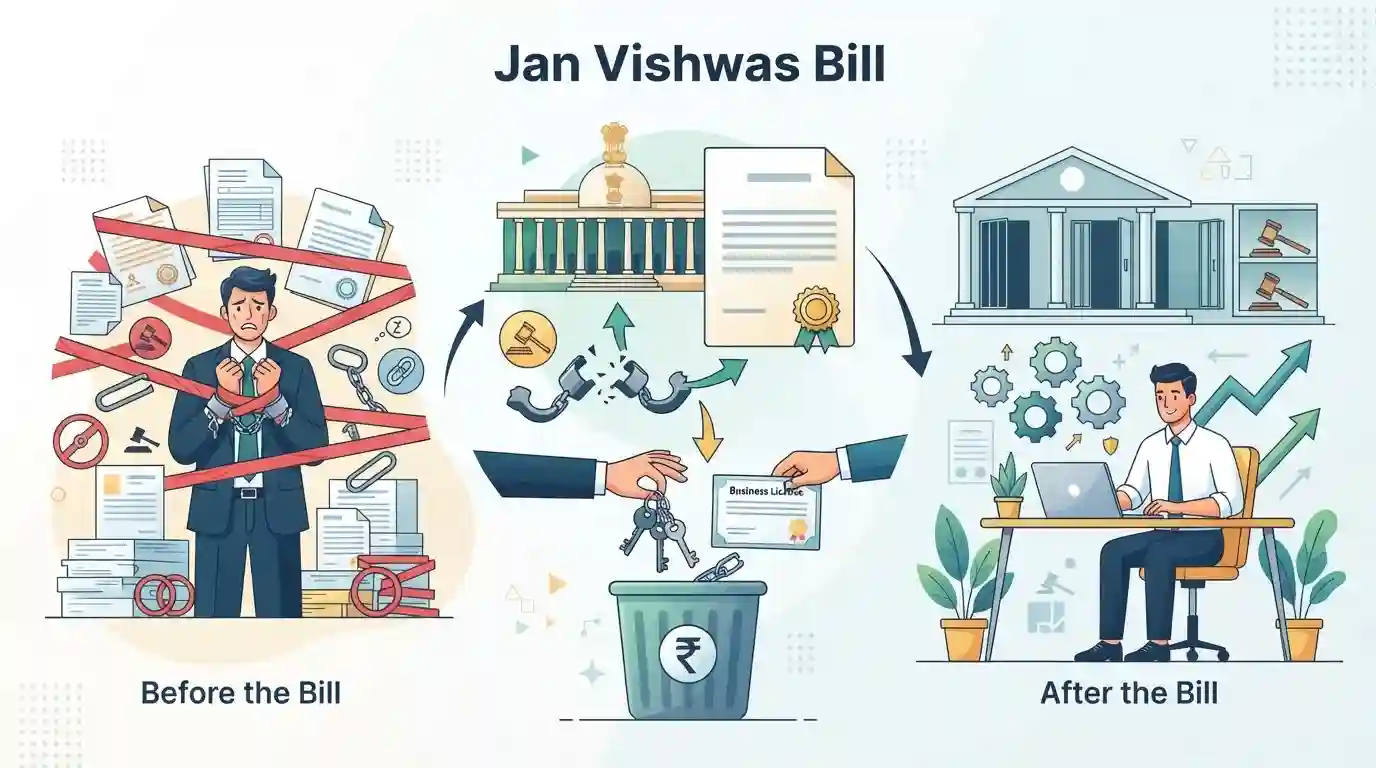
It represents a major administrative and legal shift toward trust-based governance, reducing compliance friction for businesses and lowering pendency in courts.
सारांश
The Jan Vishwas Bill focuses on decriminalising minor offences to improve ease of doing business, reduce regulatory compliance burdens, and ease the pressure on India's judicial system by replacing jail terms with fines for technical defaults.
मुख्य मुद्दे
- The Jan Vishwas Bill aims to decriminalize minor offences to reduce the compliance burden and promote ease of doing business in India.
- It replaces imprisonment clauses for technical or minor defaults with monetary penalties or administrative actions.
- The legislative initiative intends to unclog the judicial system by reducing the burden on courts for petty compliance failures.
- It reflects a shift in regulatory philosophy from punitive deterrence to trust-based governance.
महत्त्वाच्या संज्ञा
Jan Vishwas Bill

A legislative reform in India aimed at improving the ease of doing business and living by decriminalising minor technical or procedural offences and replacing jail terms with monetary fines.
UPSC context
GS Paper II / Governance & Government Policies; tests understanding of regulatory reforms, ease of doing business, and judicial pendency reduction.
Jan Vishwas (Provisions of Amendments) Bill
The formal legislative title for acts introduced to amend multiple central laws simultaneously, replacing minor criminal liabilities with civil penalties or administrative fines across various ministries.
UPSC context
GS Paper II / Polity & Governance; tests knowledge of omnibus legislation, regulatory compliance burdens, and statutory reform mechanisms.
संबंधित स्थिर संकल्पना
What are the core pillars and mechanisms of the Jan Vishwas (Amendment) Act for ease of doing business?
- Decriminalisation: Replaces imprisonment clauses for minor, technical defaults with monetary penalties, compounding of offences, or administrative warnings.
- Trust-Based Governance: Shifts state mindset from punitive deterrence to trust-based governance, boosting investor confidence and reducing compliance burdens.
- Administrative Adjudication: Empowers designated administrative adjudication officers instead of courts, directly reducing judicial pendency for petty non-compliances.
आंतर-विषय नमुने
Ease of Doing Business & Judicial Backlog
Decriminalising minor statutory defaults links regulatory governance with criminal jurisprudence reforms like the Bharatiya Nagarik Suraksha Sanhita, shifting from punitive state control to trust-based administration.

Jan Vishwas trust-based governance model vs criminal deterrence likely in Mains GS-2 or Prelims statement-based Qs.
संबंधित PYQ · 1
संबंधित PYQ · 1
- 2023MainsGS2
e-governance, as a critical tool of governance, has ushered in effectiveness, transparency and accountability in governments. What inadequacies hamper the enhancement of these features ?
