Diplomatic Engagement on Ukraine Conflict and Global Security
Source:The Hindu ↗
Why It Matters
The article is relevant for understanding India's active diplomatic role and its balanced foreign policy approach toward the ongoing Ukraine conflict. It highlights how India engages with European and American leadership regarding geopolitical flashpoints and its support for dialogue and diplomacy over military escalation.
Summary
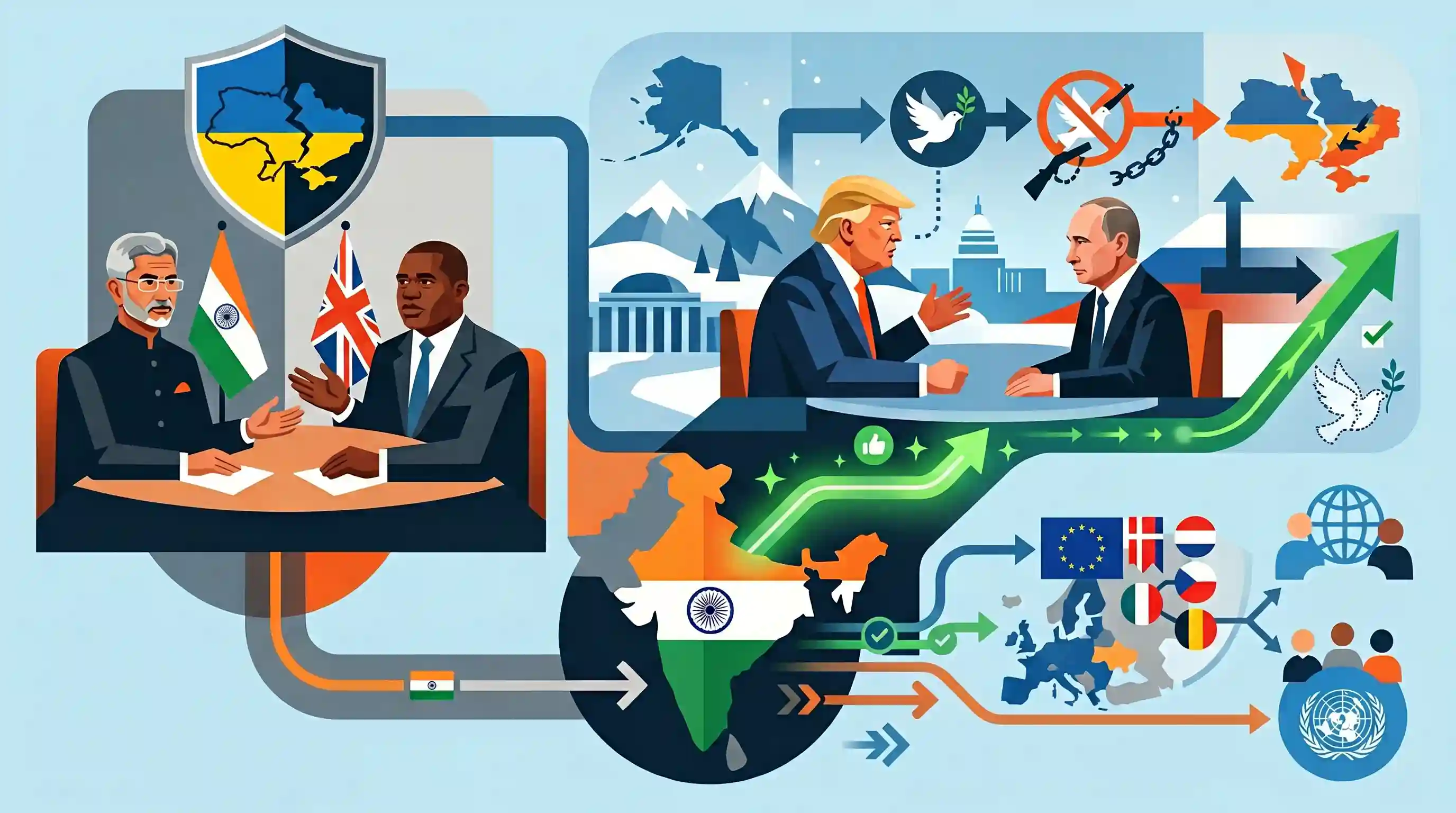
External Affairs Minister S. Jaishankar and UK Foreign Secretary David Lammy recently discussed the ongoing Ukraine conflict and the outcomes of the U.S.-Russia summit in Alaska. The summit, involving U.S. President Donald Trump and Russian President Vladimir Putin, focused on the Ukraine crisis but failed to yield a ceasefire agreement. Despite the lack of a breakthrough, India has appreciated the diplomatic progress made during the Alaska talks. The interaction underscores India's continuing diplomatic engagement with Western powers on global security issues.
Key Points
- External Affairs Minister S. Jaishankar held a phone conversation with UK Foreign Secretary David Lammy regarding the Ukraine conflict.
- The discussion was initiated by the British side and covered recent developments in Ukraine alongside other bilateral and global issues.
- A key focus of their talks was the recent summit meeting between U.S. President Donald Trump and Russian President Vladimir Putin in Alaska.
- The U.S.-Russia summit aimed to address the Ukraine conflict but concluded without reaching a ceasefire agreement.
- India officially expressed appreciation for the progress made at the Alaska summit toward ending the conflict.
Prelims Trap
"The US-Russia Alaska summit concluded with a ceasefire agreement, which was formally mediated by India."
India neither mediated the Alaska summit nor was a ceasefire achieved. India merely discussed the outcomes with the UK and expressed appreciation for the diplomatic progress.
Static Concepts Connected
What are the key pillars of the India-UK Roadmap 2030?
- Strategic framework: It elevates ties to a Comprehensive Strategic Partnership, focusing on five pillars: political/security, trade/investment, climate/energy, health, and people-to-people connections.
- Defense & Security: Includes deeper maritime cooperation in the Indo-Pacific, joint exercises, and collaboration on advanced defense technologies and manufacturing.
How does 'Multi-alignment' differ from traditional 'Non-alignment'?
- Non-alignment: Historically focused on maintaining equidistant neutrality and avoiding formal geopolitical alliances or blocs during the bipolar Cold War era.
- Multi-alignment: A proactive, transactional approach where India engages simultaneously in multiple overlapping (and sometimes opposing) partnerships based on issue-specific national interests.
Cross-Topic Patterns
Defense diversification vs legacy imports
India's diplomatic tightrope on Ukraine stems from navigating its heavy historical reliance on Russian defense platforms alongside deepening military tech partnerships with the US and UK.
Global South advocacy in East-West conflicts
India's consistent advocacy for diplomacy over military escalation aligns with the broader Global South's concerns regarding the severe economic and supply-chain fallout of Western-Russian geopolitical deadlocks.

Expect a GS-2 Mains question evaluating India's 'multi-alignment' strategy and strategic autonomy in the context of prolonged East-West deadlocks.
Linked PYQs · 3
Linked PYQs · 3
- 2025MainsGS2
"The reform process in the United Nations remains unresolved, because of the delicate imbalance of East and West and entanglement of the USA vs. Russo-Chinese alliance.” Examine and critically evaluate the East-West policy confrontations in this regard.
- 2020MainsGS2
What is the significance of Indo-US defence deals over Indo-Russian defence deals? Discuss with reference to stability in the Indo-Pacific region.
- 2024MainsGS2
‘Terrorism has become a significant threat to global peace and security.’ Evaluate the effectiveness of the United Nations Security Council's Counter Terrorism Committee (CTC) and its associated bodies in addressing and mitigating this threat at the international level.
