Israeli Strikes in Southern Lebanon and Regional Hostilities
Source:The Hindu ↗
Why It Matters
The ongoing Israel-Lebanon conflict is a pivotal element of West Asian geopolitical instability. It frequently features in UPSC mapping questions (Places in News like Tyre, Sidon, the Levant region) and is critical for GS2 Mains regarding regional conflicts, proxy warfare (Hezbollah/Iran), and their overarching impact on global security and India's strategic/economic interests in the Middle East.
Summary
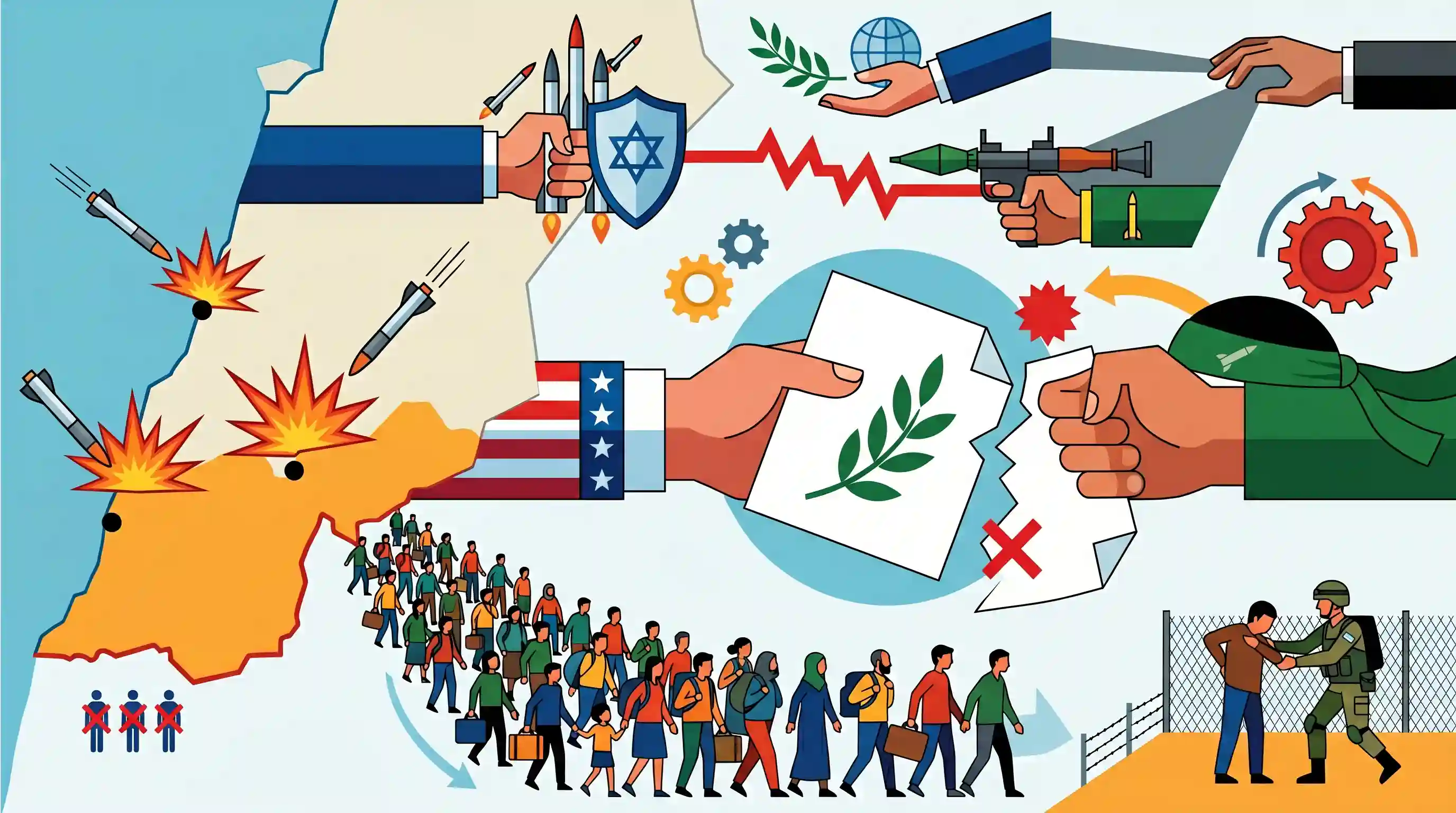
Twelve people were killed in recent Israeli airstrikes across southern Lebanon, including the coastal city of Sidon, as hostilities with Hezbollah continue unabated. Despite previous mediation efforts and US-brokered talks, a proposed ceasefire was rejected by Hezbollah, prolonging a conflict that has displaced over a million Lebanese citizens. The strikes, which also targeted areas near Tyre and Nabatieh, are occurring against the backdrop of a wider West Asia geopolitical crisis involving Iran and the US. Ground tensions have also intensified, with Israeli forces reportedly apprehending individuals in the Lebanese border town of Kfarshuba.
Key Points
- Israeli airstrikes in southern Lebanon, including the coastal city of Sidon and towns like Tayr Dibba, killed at least 12 people amidst ongoing hostilities.
- A proposed ceasefire following US-brokered talks in Washington was rejected by the militant group Hezbollah, leading to continued cross-border fire.
- The conflict has severely exacerbated the humanitarian situation in Lebanon, with over 3,700 deaths and more than one million people displaced since March.
- The hostilities are part of the broader West Asia geopolitical crisis, featuring Iranian involvement and retaliatory strikes on US bases in Jordan, Bahrain, and Kuwait.
- Israeli forces reportedly crossed into the border town of Kfarshuba, detaining two individuals, further escalating ground-level tensions.
- Lebanese cities like Tyre and Nabatieh face intense strikes and evacuation orders, threatening crucial medical and humanitarian corridors.
Important Terms
Hezbollah

A Lebanese Shia Islamist political party and militant group founded in 1982 with Iranian support. It operates as a powerful non-state actor and is a central member of the "Axis of Resistance" opposing Israel.
UPSC context
GS II: International Relations and GS III: Security. Critical for understanding West Asian geopolitical dynamics and India’s energy/security interests.
Israeli Defense Forces (IDF)
The unified military forces of the State of Israel, responsible for the country's defense. They conduct high-intensity ground and air operations in response to threats from regional militant groups like Hezbollah.
UPSC context
GS II: International Relations. Relevant for studying the military aspects of the West Asia crisis and its implications for global stability.
Sidon (Saida)
Lebanon's third-largest city and a historic Phoenician port on the Mediterranean coast. It is a major commercial center and administrative capital of the South Governorate, frequently impacted by regional military hostilities.
UPSC context
Prelims: Mapping. Significant as a "Place in News" within the West Asian conflict zone and its impact on maritime trade.
Tyre (Sour)
An ancient Phoenician coastal city and UNESCO World Heritage site in southern Lebanon. Historically a maritime powerhouse, it is now a strategic location near the Israeli border and a frequent target in military escalations.
UPSC context
Prelims: Mapping and History. Important for World Heritage sites in news and geographical awareness of the Mediterranean coast.
Nabatieh
A strategic city in southern Lebanon and capital of the Nabatieh Governorate. It serves as a vital economic and transport link between the Lebanese interior and the sensitive southern border regions.
UPSC context
Prelims: Mapping. Relevant for tracking geopolitical developments and the humanitarian impact of conflict in the Levant region.
Kfarshuba
A strategic Lebanese border town overlooking the disputed Shebaa Farms and Golan Heights. It is a persistent flashpoint for cross-border skirmishes and territory disputes involving Israel, Lebanon, and UN peacekeepers.
UPSC context
GS II: International Relations. Essential for understanding territorial disputes, the UN "Blue Line," and regional security architecture.
Prelims Trap
Lebanon shares a land border with Syria, Israel, and Jordan.
Lebanon only borders Syria to the north and east, and Israel to the south. It does not border Jordan or Iraq. This is a classic UPSC map-reading trap.
Static Concepts Connected
What is the geographical significance of the Levant and the Blue Line?
- The Levant: A historical geographical term referring to the eastern Mediterranean shores, generally encompassing modern-day Lebanon, Syria, Jordan, Israel, and Palestine.
- Blue Line: A withdrawal demarcation line published by the UN in 2000 separating Lebanon from Israel and the Golan Heights. It is a temporary boundary, not a recognized international border.
- UNIFIL: The UN peacekeeping mission (United Nations Interim Force in Lebanon) deployed to monitor the Blue Line. India is a major troop-contributing nation to this force.
How does the Levant crisis threaten India's strategic imperatives?
- Strategic Connectivity: Prolonged hostilities jeopardize the physical and diplomatic viability of the proposed India-Middle East-Europe Economic Corridor (IMEC), intended to bypass traditional maritime chokepoints.
- Diaspora & Remittances: Over 8 million Indians reside in the broader West Asia region. Conflict necessitates complex evacuation operations (e.g., Operation Ajay) and threatens critical remittance inflows.
- Energy Security: Regional spillover involving Iranian proxies threatens stability in the Strait of Hormuz and Red Sea, directly destabilizing India's crude oil supply chain.
Cross-Topic Patterns
IMEC viability amidst Levant crisis
The escalation directly threatens the geoeconomic assumptions underpinning the India-Middle East-Europe Economic Corridor (IMEC), forcing India to recalibrate its reliance on this route and hedge via the INSTC.
UN Peacekeeping mandates under fire
As UNIFIL (with Indian troops) faces kinetic risks, it links to the static IR theme of UN Peacekeeping limitations and the erosion of international mandates in active conflict zones.

Expect a 2026 Prelims pairs-matching question on West Asian cities (Sidon, Tyre) or UN demarcation lines (Blue Line vs Green Line).
Linked PYQs · 4
Linked PYQs · 4
- 2018MainsGS2
“India’s relations with Israel have, of late, acquired a depth and diversity, which cannot be rolled back.” Discuss.
- 2023PrelimsGS1
Consider the following pairs: Regions often mentioned in news Reason for being in news 1. North Kivu and Ituri : War between Armenia and Azerbaijan 2. Nagorno-Karabakh : Insurgency in Mozambique 3. Kherson and Zaporizhzhia : Dispute between Israel and Lebanon How many of the above pairs are correctly matched?
- 2017PrelimsGS1
Mediterranean Sea is a border of which of the following countries? 1. Jordan 2. Iraq 3. Lebanon 4. Syria Select the correct answer using the code given below:
- 2022PrelimsGS1
The term "Levant" often heard in the news roughly corresponds to which of the following regions?
