Israeli Airstrikes Hit Lebanon Amid Stalled Ceasefire Talks
Source:The Hindu ↗
Why It Matters
The Israel-Hezbollah conflict is a focal point of Middle East geopolitics, directly affecting regional stability, global energy markets, and international diplomacy. For UPSC, the geography of the Levant (Lebanon, Israel, Mediterranean borders) is highly relevant for Prelims, while the broader implications of West Asian instability are critical for Mains GS2.
Summary
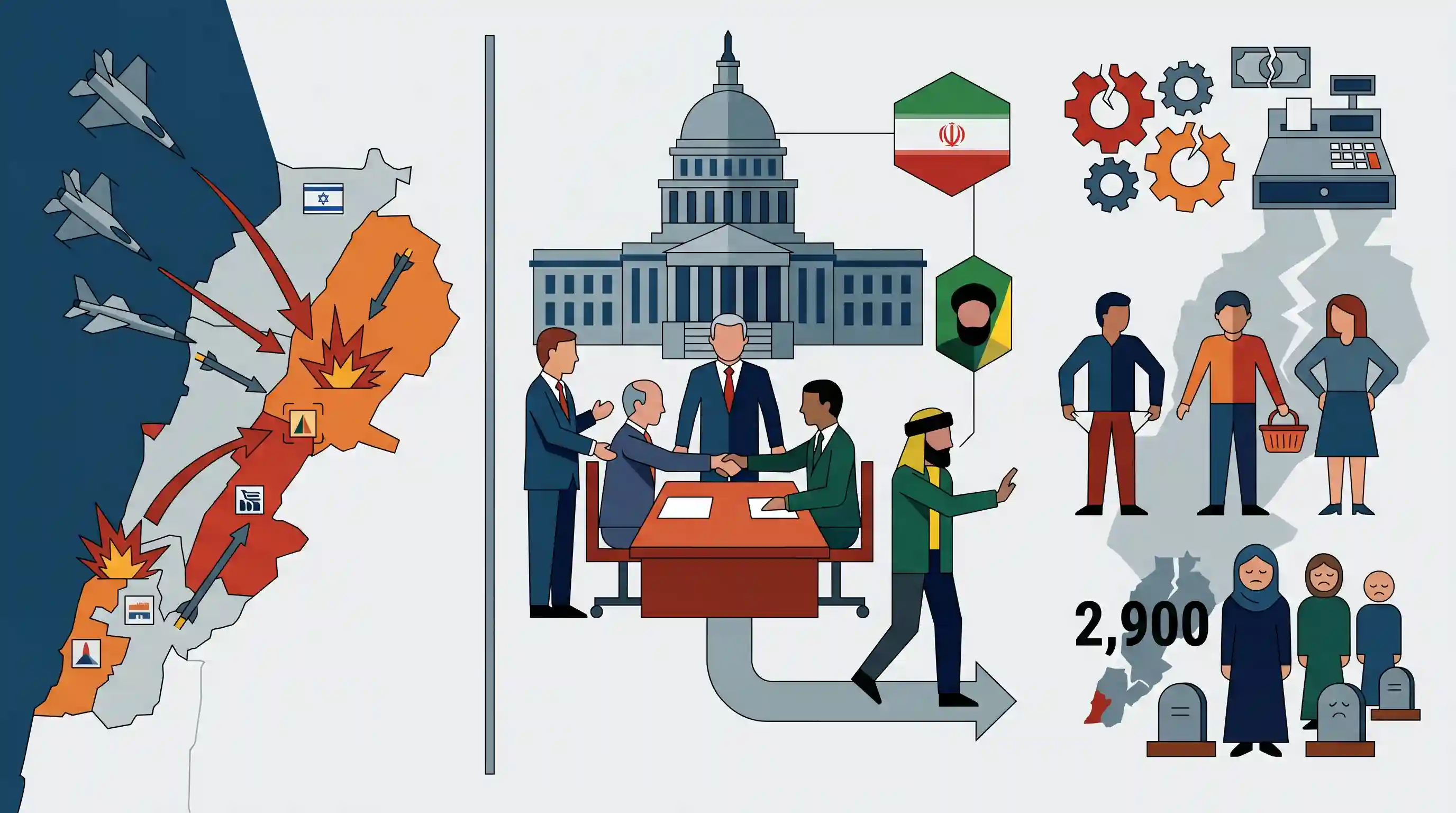
Israel carried out targeted airstrikes in eastern and southern Lebanon, striking areas such as the Bekaa Valley and Tyre, amidst fragile US-brokered ceasefire negotiations. Hezbollah, the Iran-backed militant group, dismissed the talks happening in Washington as a 'dead-end path,' asserting that they would not agree to concessions involving the disarmament of their resistance forces. The ongoing hostilities have significantly deepened Lebanon's economic and humanitarian crises, resulting in widespread job losses, surging prices, and over 2,900 casualties.
Key Points
- Israel launched airstrikes on eastern and southern Lebanon, including the Bekaa Valley and Tyre, despite ongoing ceasefire negotiations.
- Iran-backed Hezbollah condemned the US-brokered diplomatic talks in Washington as a 'dead-end path,' refusing to accept any deal that demands disarming the resistance.
- The persistent conflict has led to severe humanitarian and economic crises in Lebanon, claiming over 2,900 lives and worsening economic instability.
- The escalating tensions highlight the fragile security dynamics in the Middle East, particularly concerning non-state actors like Hezbollah and regional powers.
Important Terms
Hezbollah

A Lebanese Shia Islamist political party and militant group founded in 1982 with Iranian support. It is a major regional paramilitary force and part of Iran's 'Axis of Resistance.'
UPSC context
GS Paper II (International Relations); West Asia geopolitics, non-state actors, and impacts on India's energy security and diaspora.
Bekaa Valley
A fertile, strategic valley in eastern Lebanon between the Mount Lebanon and Anti-Lebanon ranges. It is Lebanon's agricultural heartland and a key base for Hezbollah operations.
UPSC context
Prelims (Places in News/Mapping); GS Paper I (World Geography); focus on conflict-affected regions and strategic topography.
Tyre
A historic Phoenician coastal city in southern Lebanon and a UNESCO World Heritage site. It is significant for its ancient ruins and proximity to the ongoing Israel-Lebanon conflict.
UPSC context
Prelims (Places in News/Art & Culture); identification of UNESCO sites and historical maritime centers under threat in West Asia.
Blue Line
A 120-km demarcation line established by the UN in 2000 to verify the withdrawal of Israeli forces from Lebanon. It serves as a de facto but unofficial border.
UPSC context
Prelims (International Borders/Mapping); GS Paper II (International Relations); UN-led conflict resolution and territorial disputes.
UNIFIL
The UN peacekeeping mission established in 1978 to oversee Israeli withdrawal from Lebanon. India is a major troop contributor to this mission (INDBATT).
UPSC context
GS Paper II (International Relations/UN); India's role in UN Peacekeeping and global security leadership.
UNSC Resolution 1701
The 2006 UN Security Council resolution ending the Israel-Hezbollah war. It mandated that only the Lebanese army and UNIFIL carry arms between the Blue Line and Litani River.
UPSC context
GS Paper II (International Relations); international law, ceasefire mechanisms, and the mandate of global multilateral organizations.
Prelims Trap
UNSC Resolution 1701 established a demilitarized zone in the Gaza Strip.
Resolution 1701 applies exclusively to southern Lebanon, mandating a buffer zone between the Blue Line and the Litani River, not Gaza or the West Bank.
Static Concepts Connected
Which countries form the Levant and border the Eastern Mediterranean?
- Levant Coastline: Lebanon, Syria, and Israel border the Eastern Mediterranean Sea in the Levant region.
- Jordan Exception: Jordan is often confused as a Mediterranean state but is landlocked except for a small coastline on the Red Sea (Gulf of Aqaba).
What is the UN's Blue Line and UNIFIL's mandate?
- Blue Line: A border demarcation published by the UN in 2000 to determine whether Israel had fully withdrawn from southern Lebanon. It is not an official international border.
- UNIFIL Mandate: United Nations Interim Force in Lebanon (UNIFIL) monitors the cessation of hostilities and supports Lebanese armed forces south of the Litani River.
Cross-Topic Patterns
Axis of Resistance & Global Security
The role of non-state actors like Hezbollah ties into Mains syllabus on how regional proxies disrupt global trade, energy security, and international diplomacy.
IMEC vs Regional Conflict
Escalating Israel-Lebanon hostilities directly threaten the viability of the India-Middle East-Europe Economic Corridor (IMEC), affecting India's strategic connectivity goals.

Map-based matching of Middle East conflict zones (Bekaa Valley, Tyre, Litani River, Blue Line) is highly probable in 2026 Prelims.
Linked PYQs · 4
Linked PYQs · 4
- 2022PrelimsGS1
The term "Levant" often heard in the news roughly corresponds to which of the following regions?
- 2017PrelimsGS1
Mediterranean Sea is a border of which of the following countries? 1. Jordan 2. Iraq 3. Lebanon 4. Syria Select the correct answer using the code given below:
- 2003PrelimsGS1
Israel has common borders with
- 2018MainsGS2
“India’s relations with Israel have, of late, acquired a depth and diversity, which cannot be rolled back.” Discuss.
