Strategic assessment of direct military strikes in West Asia
Source:Indian Express ↗
Why It Matters
The direct confrontation between Israel and Iran marks a major shift in Middle Eastern geopolitics. It directly impacts global energy markets, trade routes (like the Red Sea), and regional stability, which are critical to India's energy security, economic interests, and diaspora welfare. Understanding these dynamics is essential for Mains GS2 (IR) and Prelims mapping questions.
Summary
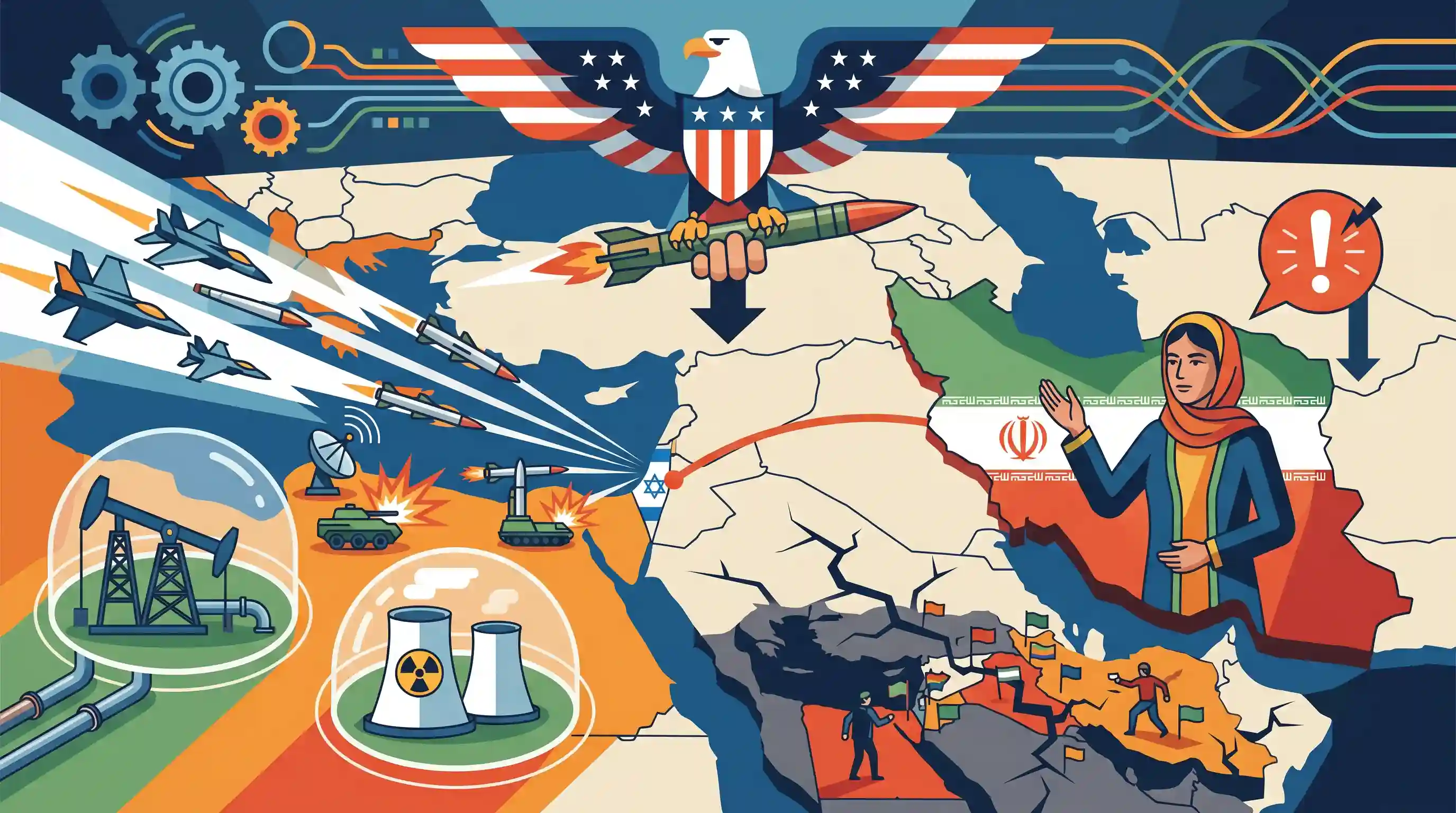
The article analyzes the recent direct military confrontation between Israel and Iran, highlighting three major takeaways from Israel's retaliatory strikes. First, Israel's decision to target only military sites while sparing nuclear and oil facilities demonstrates a calibrated approach aimed at restoring deterrence without sparking an all-out war. Second, the restraint reflects significant diplomatic pressure from the United States, which seeks to avoid a broader regional conflict. Finally, Iran's initial downplaying of the strikes suggests a window for de-escalation, although the underlying proxy conflicts and shifting security architecture in West Asia keep the region highly volatile.
Key Points
- Israel launched retaliatory airstrikes against Iranian military targets, including missile manufacturing facilities and air defense systems, avoiding nuclear and energy infrastructure.
- The limited scope of the attack indicates a calibrated response, heavily influenced by U.S. pressure to prevent a broader regional conflict ahead of the U.S. presidential elections.
- Iran downplayed the impact of the strikes, suggesting a mutual desire to de-escalate, although the situation remains volatile with ongoing conflicts involving Hamas and Hezbollah.
- The exchange highlights the shift from a 'shadow war' to direct military confrontation between Israel and Iran, fundamentally altering Middle Eastern security dynamics.
- For India, sustained conflict in West Asia threatens energy security, disrupts trade routes, and endangers the large Indian diaspora in the region.
Important Terms
Axis of Resistance

An informal, Iran-led military and political coalition including Hezbollah, Hamas, and Houthis, aimed at countering Israeli and Western influence in West Asia.
UPSC context
GS II: International Relations; crucial for understanding regional power dynamics and proxy conflicts in West Asia.
Strategic Deterrence
A strategy aimed at dissuading an adversary from hostile actions by ensuring the perceived costs and risks outweigh any potential benefits.
UPSC context
GS II: International Relations; key concept for analyzing state-on-state conflicts and national security doctrines.
Regional Security Architecture
The framework of alliances, diplomatic agreements, and military presence that manages power rivalries and maintains order within the West Asian region.
UPSC context
GS II: International Relations; covers shifting global alignments and their impact on India’s strategic interests.
West Asia
The geopolitical sub-region of Asia comprising the Middle East; critical for India due to energy dependence, diaspora, and maritime chokepoints.
UPSC context
GS II: International Relations; a primary focus of India's 'Think West' policy and energy security.
Proxy Warfare
A conflict where major powers use third parties—such as non-state militant groups—to fight their interests indirectly to avoid a direct full-scale war.
UPSC context
GS II: International Relations; relevant for examining asymmetric warfare and regional instability.
Energy Security
Ensuring uninterrupted availability of energy sources at an affordable price; highly vulnerable to conflicts near West Asian maritime chokepoints.
UPSC context
GS III: Economy & GS II: IR; essential due to India’s heavy reliance on Gulf oil.
Prelims Trap
"The 'Axis of Resistance' is a formal security pact among Arab Gulf nations."
It is actually an informal, Iran-led coalition of state and non-state actors (Hezbollah, Hamas, Houthis, Syria), explicitly opposing Western/Israeli influence, often antagonizing Arab Gulf states.
Static Concepts Connected
Which key maritime chokepoints dictate West Asian geopolitics?
- Strait of Hormuz: Connects the Persian Gulf to the Gulf of Oman and Arabian Sea; it is the world's most critical transit chokepoint for global oil shipments.
- Bab el-Mandeb: Connects the Red Sea to the Gulf of Aden; highly vulnerable to proxy disruptions (e.g., Houthi attacks) impacting Suez Canal traffic.
How does West Asian instability directly impact India's macroeconomic stability?
- Oil Import Bill: A spike in global crude prices directly inflates India's import bill, worsening trade deficits and exerting downward pressure on the Rupee.
- Remittance Cushion: Conflict threatens the safety of over 9 million Indian diaspora in the GCC, potentially disrupting vital inward remittances that act as a cushion for India's CAD.
Cross-Topic Patterns
Regional instability threatens IMEC and I2U2
The shift from a 'shadow war' to direct state conflict heavily undermines the diplomatic normalization (Abraham Accords) required to sustain proposed geo-economic corridors like IMEC and I2U2.
Nuclear geography and the JCPOA vacuum
Israel's deliberate avoidance of Natanz and Fordow highlights the fragile nuclear threshold in West Asia, an ongoing concern since the collapse of the JCPOA framework.

Expect a 2026 map question pairing West Asian proxy zones (Levant) or Iranian nuclear sites (Natanz) with bordering maritime chokepoints.
Linked PYQs · 4
Linked PYQs · 4
- 2025MainsGS2
"Energy security constitutes the dominant kingpin of India's foreign policy, and is linked with India's overarching influence in Middle Eastern countries.” How would you integrate energy security with India's foreign policy trajectories in the coming years?
- 2017MainsGS2
The question of India's Energy Security constitutes the most important part of India's economic progress. Analyze India's energy policy cooperation with West Asian countries.
- 2022PrelimsGS1
The term "Levant" often heard in the news roughly corresponds to which of the following regions?
- 2015PrelimsGS1
The area known as 'Golan Heights' sometimes appears in the news in the context of the events related to
