Geopolitical Tensions in West Asia Push Up Global Oil Prices
Source:The Hindu ↗
Why It Matters
Understanding the interplay between geopolitical conflicts in West Asia (like the Israel-Hamas war) and global energy markets is crucial for UPSC aspirants. It highlights how supply risks and cartel decisions (OPEC+) directly impact crude oil benchmarks like Brent and WTI, which in turn affect India's macroeconomic stability, inflation, and foreign exchange reserves.
Summary
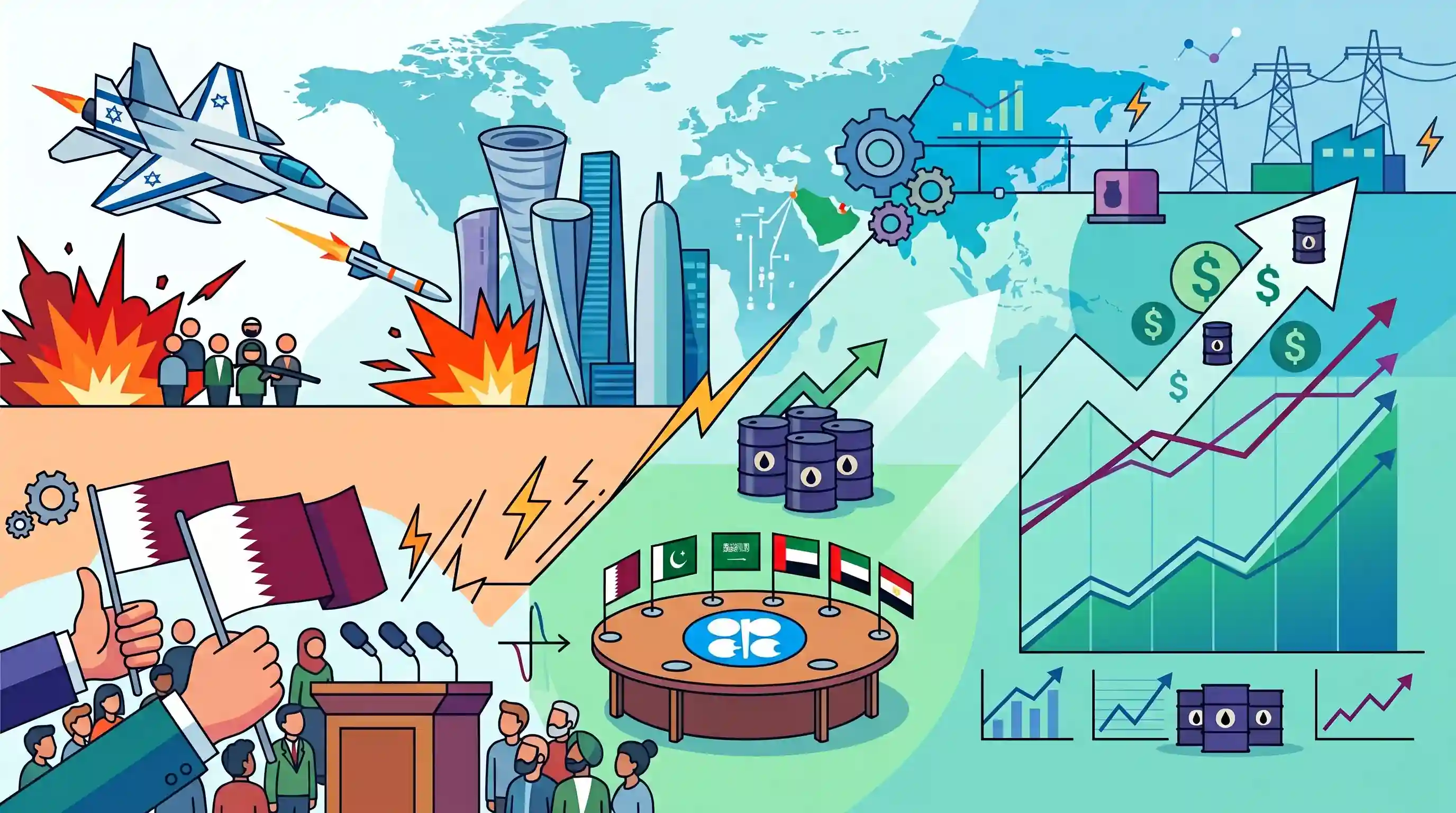
Global oil prices, including Brent and West Texas Intermediate (WTI) benchmarks, surged by approximately 2% following a precise Israeli military strike targeting senior Hamas leadership in Doha, Qatar. The geopolitical escalation, which drew condemnation from the Qatari Ministry of Foreign Affairs, added a risk premium to energy markets. Simultaneously, prices were further supported by an OPEC+ agreement to raise oil production by only 137,000 barrels per day, an increase smaller than market expectations.
Key Points
- Brent and WTI crude oil prices rose nearly 2% following an Israeli military strike in Doha, Qatar.
- The strike, targeting senior Hamas leadership, expanded the geographical scope of the Middle East conflict and heightened regional tensions.
- The upward pressure on oil prices was compounded by an OPEC+ decision to increase oil production by a smaller-than-anticipated 137,000 barrels per day.
- Qatar strongly condemned the attack, highlighting the fragile diplomatic situation in West Asia and introducing a geopolitical risk premium into global energy markets.
Important Terms
OPEC+

An alliance of OPEC members and non-OPEC oil-producing nations, including Russia, formed in 2016 to coordinate petroleum policies and stabilize global oil markets through production adjustments.
UPSC context
GS Paper II/III (International Orgs/Energy); tests understanding of global trade alliances and India's dependency on external oil supplies.
Hamas
A Palestinian Sunni-Islamic fundamentalist and militant organization that has governed the Gaza Strip since 2007; it is a central actor in the Israel-Palestine conflict.
UPSC context
GS Paper II (International Relations); focuses on West Asia geopolitics and the impact of regional conflicts on Indian strategic interests.
Brent Crude
A major global price benchmark for crude oils from the North Sea; it is used to price two-thirds of the world's internationally traded oil.
UPSC context
GS Paper III (Indian Economy); essential for analyzing fiscal deficit, inflation, and India’s energy import bill.
Energy Security
The uninterrupted availability of energy sources at an affordable price, crucial for maintaining a nation's economic stability and strategic autonomy.
UPSC context
GS Paper III (Infrastructure); a core concept in India's developmental strategy and national security framework.
West Texas Intermediate (WTI)
A grade of light, sweet crude oil produced in the U.S. that serves as a primary benchmark for North American oil pricing.
UPSC context
GS Paper III (Economy); tests knowledge of global commodity markets and their influence on domestic fuel prices.
Risk Premium
An additional cost factored into commodity prices (like oil) to compensate for the potential risk of supply disruptions due to geopolitical instability or war.
UPSC context
GS Paper III (Economy); relates to market volatility and how non-economic factors influence global commodity pricing.
Prelims Trap
"Qatar is strategically crucial as it is the largest single supplier of crude oil to India."
Qatar is India's largest supplier of Liquefied Natural Gas (LNG), accounting for over 40% of its imports, not crude oil (which is dominated by Russia, Iraq, and Saudi Arabia).
Static Concepts Connected
What is the difference between Brent and WTI crude oil benchmarks?
- Origin source: Brent is extracted from the North Sea (Europe), whereas WTI is sourced from landlocked US oil fields (primarily Texas, Louisiana, and North Dakota).
- Benchmark scope: Brent dictates prices for nearly two-thirds of globally traded crude and includes a geopolitical risk premium. WTI is the primary benchmark for the US domestic market.
- Quality differences: WTI is generally lighter (lower density) and sweeter (lower sulfur content) than Brent, making it ideal for gasoline production.
How does OPEC+ differ from the original OPEC?
- Core membership: OPEC is a permanent intergovernmental organization currently comprising 12 oil-exporting developing nations. Notably, Qatar exited in 2019 and Angola in 2024.
- The 'Plus' alliance: Formed in 2016, OPEC+ includes 10 additional non-OPEC major exporters, most notably Russia and Kazakhstan, to collectively manage and stabilize global crude oil supplies.
Cross-Topic Patterns
Imported inflation & CAD
Rising crude oil prices directly widen India's Current Account Deficit (CAD) and import inflation, forcing the RBI to recalibrate its monetary policy and inflation forecasting models.
Chokepoints & Energy Security
Escalation in the Gulf (Doha) heightens risks to the Strait of Hormuz, reinforcing India's strategic need for alternate energy corridors like the IMEEC and diversified LNG sourcing.

Expect a multi-statement Prelims question in 2026 mixing OPEC+ membership changes, crude benchmarks (Brent/WTI), and India's LNG suppliers.
Linked PYQs · 2
Linked PYQs · 2
- 2020PrelimsGS1
The term 'West Texas Intermediate', sometimes found in news, refers to a grade of
- 2018MainsGS2
“India’s relations with Israel have, of late, acquired a depth and diversity, which cannot be rolled back.” Discuss.
