Islamabad Traffic Lockdown Amid US Iran Talks
Source:The Hindu ↗
Why It Matters
The ongoing conflict involving the US, Israel, and Iran drastically affects global energy security and supply chains, directly impacting India's geopolitical interests. Moreover, Pakistan's role as a diplomatic mediator elevates its regional relevance, which India must monitor closely.
Summary
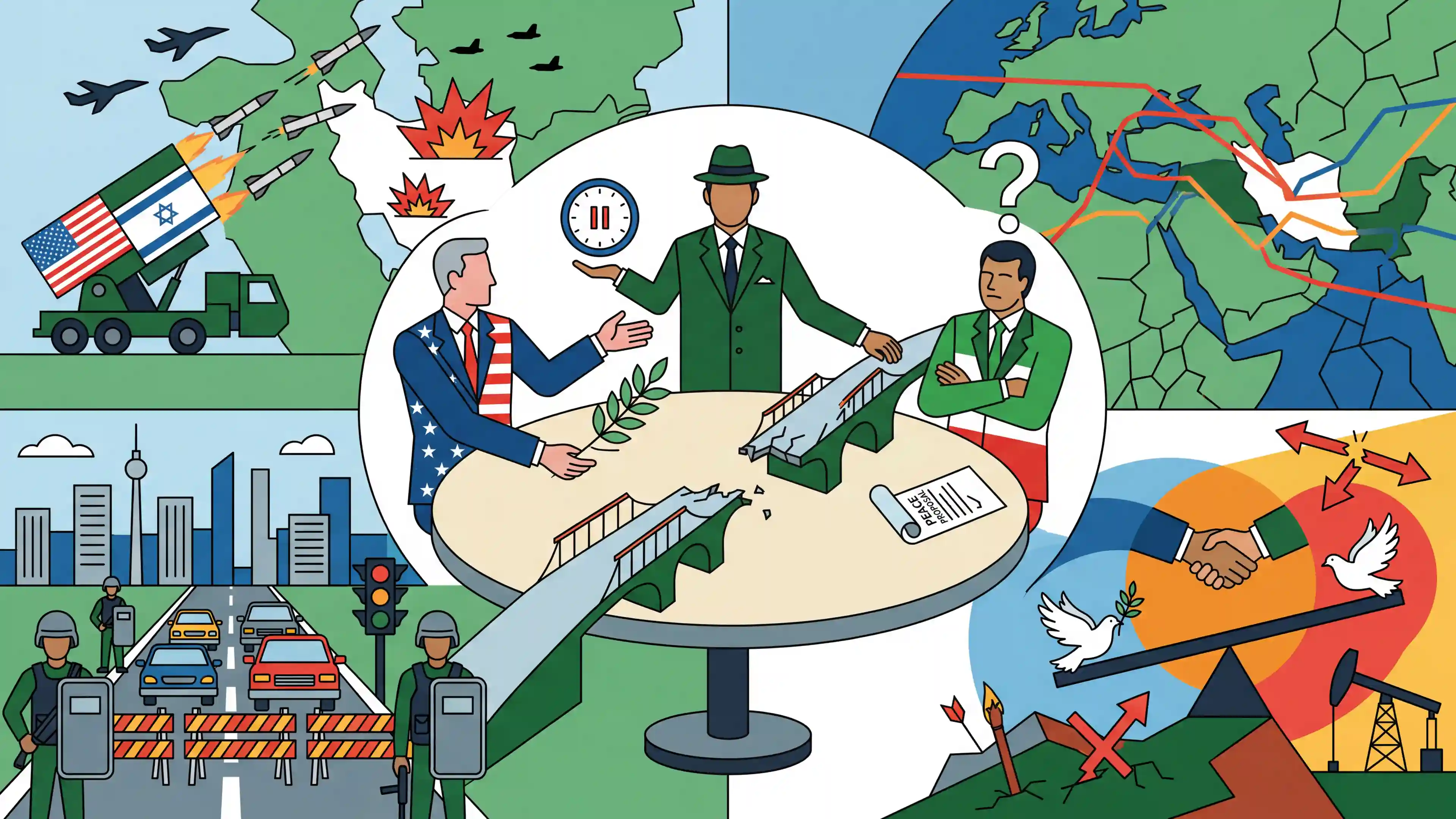
Islamabad remains under heavy security lockdowns with significant traffic restrictions amid uncertainty surrounding Pakistan-mediated peace talks between the United States and Iran. The diplomatic negotiations aim to address escalating tensions sparked by recent US-Israeli strikes on Iran. While US President Donald Trump extended a ceasefire indefinitely to allow Tehran to draft a peace proposal, Iran's Foreign Ministry remains non-committal on officially joining the upcoming talks. The situation highlights the delicate balance of regional diplomacy and the broader geopolitical volatility in the Middle East.
Key Points
- Islamabad has implemented severe security lockdowns and traffic restrictions to host critical Pakistan-mediated peace talks between the US and Iran.
- The negotiations aim to de-escalate the conflict triggered by US-Israeli strikes on Iran that began on February 28, 2026.
- US President Donald Trump has indefinitely extended an initial two-week ceasefire to provide Tehran time to formulate a peace proposal.
- Iranian officials remain undecided on their participation, signaling the fragility and uncertainty of the diplomatic process.
Important Terms
Ministry of Foreign Affairs (Iran)

Iran's executive body for international relations, currently led by Abbas Araghchi. Major foreign policy decisions are typically coordinated through the Supreme National Security Council.
UPSC context
GS II (International Relations); tests understanding of key regional actors and state institutions influencing West Asian security and diplomacy.
Shuttle Diplomacy
A diplomatic method where a neutral mediator travels back and forth between disputing parties that refuse direct contact, to relay proposals and facilitate communication.
UPSC context
GS II (International Relations); relevant for analyzing conflict resolution mechanisms and the strategic role of intermediaries like Pakistan in global flashpoints.
Ceasefire
A temporary suspension of military activities agreed upon by conflicting sides, often used as a transitional step to provide humanitarian aid or initiate peace talks.
UPSC context
GS II & III (Security/IR); tests comprehension of conflict management tools and their legal/strategic implications in international law.
West Asia Geopolitics
The strategic power dynamics and rivalries among states in the Middle East, primarily centered on energy security, regional hegemony, and religious or political influence.
UPSC context
GS II (International Relations); critical for studying India's 'Look West' policy, energy security, and regional stability impacts.
Track I Diplomacy
Official, formal diplomatic communication and negotiations conducted by high-ranking government officials and state representatives to resolve international disputes or draft treaties.
UPSC context
GS II (International Relations); differentiates between official state negotiations and informal or non-governmental mediation efforts (Track II).
Prelims Trap
"Switzerland represents Iran's diplomatic interests in the United States."
It is a common mix-up. Pakistan represents Iran's interests in the US via its Washington embassy, while Switzerland represents US interests in Iran.
Static Concepts Connected
What is the strategic and economic significance of the Strait of Hormuz?
- Geographic location: Connects the Persian Gulf with the Gulf of Oman and the Arabian Sea.
- Global trade: A critical maritime chokepoint that handles around 20% of global oil consumption transit.
- Impact on India: Disruptions directly threaten India's crude and LPG imports, risking inflation and a widened Current Account Deficit.
How does the US-Iran standoff affect India's Eurasian connectivity?
- Chabahar Port: Located in Iran, it bypasses Pakistan, providing India direct access to Afghanistan and Central Asia. Sanctions stall its development.
- INSTC: A multi-modal ship, rail, and road network (India, Iran, Azerbaijan, Russia). US-Iran tensions undermine its operational viability.
Cross-Topic Patterns
Strategic Autonomy in West Asia
India's need to balance deepening defense ties with the US and Israel while maintaining crucial connectivity and energy relations with Iran perfectly exemplifies its policy of 'Strategic Autonomy'.
Geopolitics driving Macroeconomic shifts
Disruptions in the Strait of Hormuz tightly link West Asian geopolitics to India's macroeconomic stability, specifically its Current Account Deficit (CAD) and imported inflation.

Map-based questions on West Asian chokepoints (Hormuz) linked conceptually to India's CAD and Chabahar/INSTC delays are highly probable.
Linked PYQs · 4
Linked PYQs · 4
- 2025MainsGS2
"Energy security constitutes the dominant kingpin of India's foreign policy, and is linked with India's overarching influence in Middle Eastern countries.” How would you integrate energy security with India's foreign policy trajectories in the coming years?
- 2022MainsGS2
How will I2U2 (India, Israel, UAE and USA) grouping transform India's position in global politics?
- 2022PrelimsGS1
The term "Levant" often heard in the news roughly corresponds to which of the following regions?
- 2019MainsGS2
‘Too little cash, too much politics, leaves UNESCO fighting for life.’ Discuss the statement in the light of US' withdrawal and its accusation of the cultural body as being 'anti-Israel bias'.
