IRDAI Initiates Consultations to Establish Public Insurance Registry
Source:The Hindu ↗
આ શા માટે મહત્વનું છે
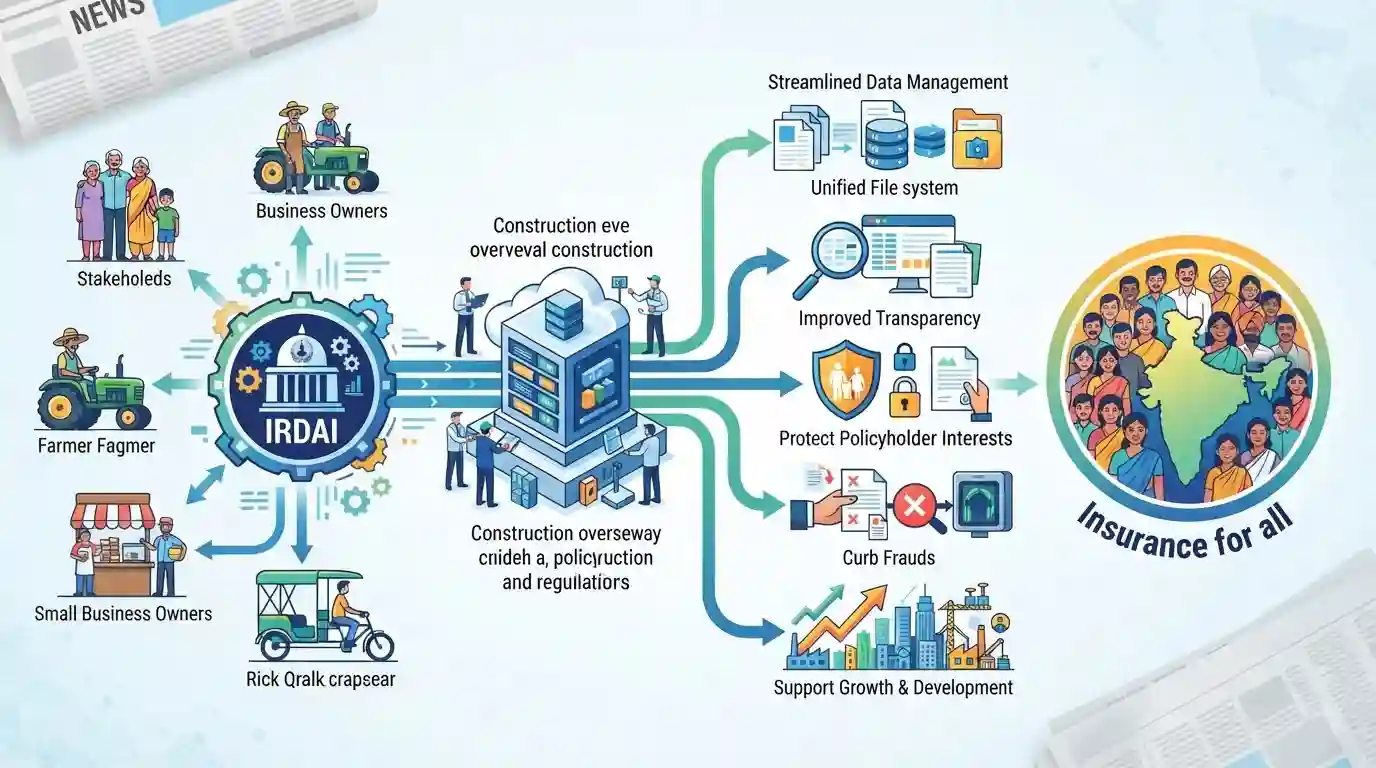
The creation of a Public Insurance Registry represents a major step towards digital public infrastructure in India's financial sector, mirroring credit registries to enhance transparency, improve insurance penetration, and curb fraud.
સારાંશ
The Insurance Regulatory and Development Authority of India (IRDAI) has started stakeholder consultations for setting up a Public Insurance Registry (PIR). This digital repository is envisioned to streamline insurance data management, improve transparency, protect policyholder interests, curb frauds, and support the regulator's target of achieving 'Insurance for all by 2047'.
મુખ્ય મુદ્દા
- The Insurance Regulatory and Development Authority of India (IRDAI) has initiated consultations to establish a Public Insurance Registry (PIR).
- The PIR aims to serve as a comprehensive database of insurance policies across health, life, and general insurance, enhancing transparency and accessibility for policyholders.
- It aligns with IRDAI's broader vision of 'Insurance for all by 2047', seeking to streamline insurance claims, reduce fraud, and improve customer service delivery.
- The registry will act as public digital infrastructure for the insurance sector, similar to credit information registries in the banking sector.
મહત્વપૂર્ણ શબ્દો
Public Insurance Registry

A proposed centralized, population-scale digital infrastructure connecting insurers, intermediaries, and policyholders to streamline insurance data, improve transparency, enhance underwriting, and curb fraud.
UPSC context
Relevant for GS Paper III (Indian Economy - Financial Sector Reforms). Tests understanding of digital public infrastructure in insurance.
Insurance Regulatory and Development Authority of India (IRDAI)
The statutory apex regulator established under the IRDA Act, 1999, responsible for licensing, regulating, and developing the Indian insurance sector while protecting policyholder interests.
UPSC context
Important for GS Paper III (Banking and Financial Sector Reforms). Evaluates knowledge of institutional regulators in India's financial architecture.
પ્રિલિમ્સ ટ્રેપ
Public Insurance Registry operates as a mandatory state-managed insurer replacing private insurance companies.
The Public Insurance Registry is planned as a consent-based public digital infrastructure, not a mandatory direct state surveillance tool or a government-managed direct insurer.
સંલગ્ન સ્થિર ખ્યાલો
What is the mandate and statutory backing of the Insurance Regulatory and Development Authority of India (IRDAI)?
- Statutory Body: Established under the IRDAI Act, 1999, following the recommendations of the Malhotra Committee.
- Mandate: Regulates and promotes the insurance and reinsurance industry in India while protecting policyholder interests.
આંતર-વિષય પેટર્ન
Insurance DPI + Credit Registries (RBI/IRDAI)
The Public Insurance Registry leverages India Stack principles, mirroring credit information companies managed under RBI to streamline sectoral data and transparency.
Financial Inclusion + IRDAI 2047 Vision
IRDAI's push for 'Insurance for all by 2047' directly supports broader financial inclusion mandates alongside Jan Dhan and PMJJBY schemes.

IRDAI's Public Insurance Registry (PIR) could appear in a multi-statement question on digital public infrastructure (DPI) in the insurance sector.
સંલગ્ન PYQ · 2
સંલગ્ન PYQ · 2
- 2026PrelimsGS1
Which one of the following correctly represents the three key sub-indices of the Financial Inclusion Index (FI-Index) of the Reserve Bank of India (RBI) ?
- 2022MainsGS3
Is inclusive growth possible under market economy ? State the significance of financial inclusion in achieving economic growth in India.
