Iraqi President Nominates Ali Al Zaidi as Prime Minister
Source:The Hindu ↗
Why It Matters
Iraq's political landscape is heavily influenced by the proxy conflict between the United States and Iran. For UPSC aspirants, understanding government formation in West Asia is crucial for analyzing regional stability, energy security, and how shifting major power dynamics (like U.S. policy under Donald Trump) affect India's extended neighborhood and strategic interests in the Middle East.
Summary
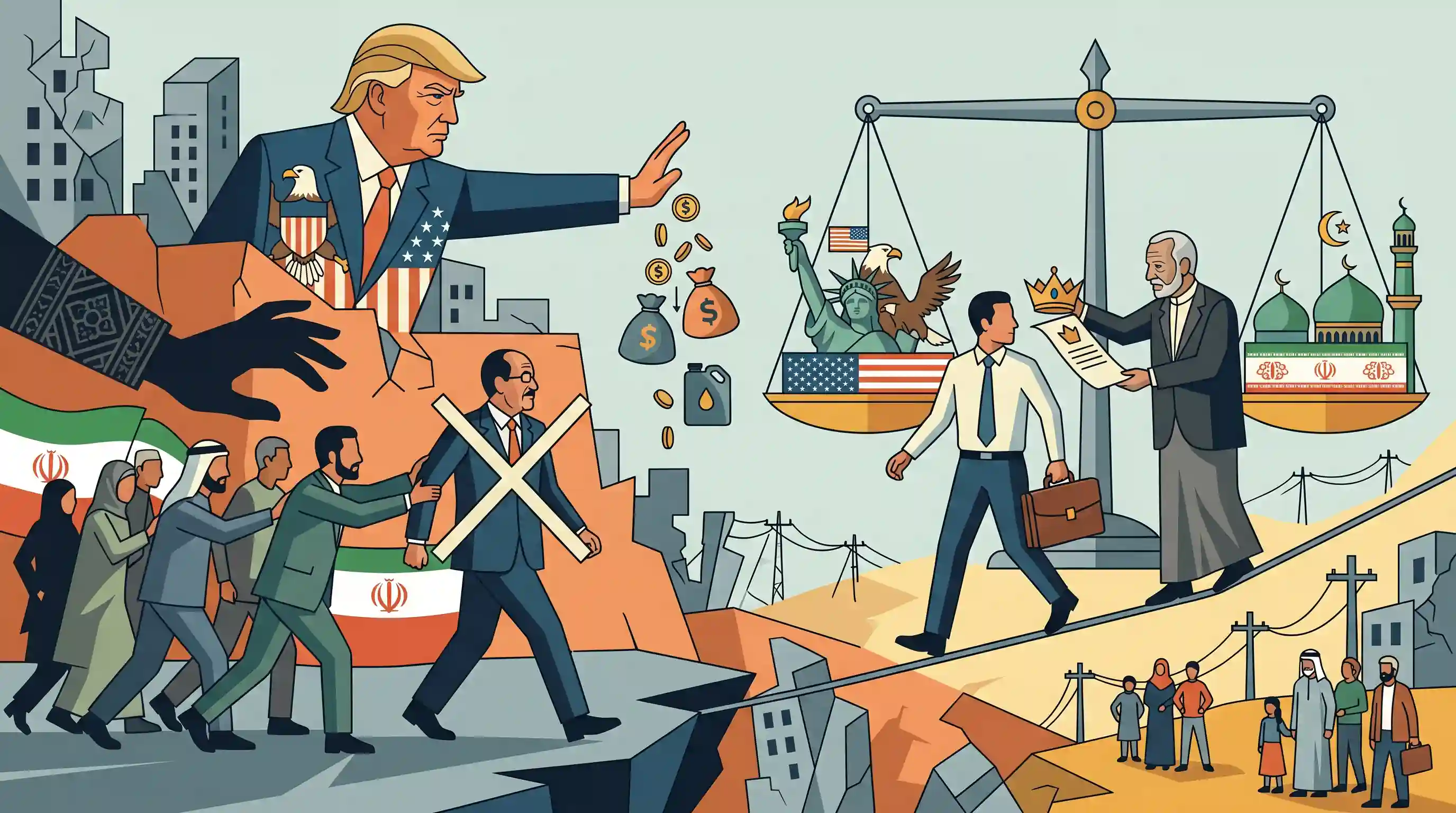
Iraqi President Nizar Amede has appointed businessman Ali al-Zaidi as the country's Prime Minister-designate, following his nomination by the Iran-backed Coordination Framework. The Shia alliance originally backed former Prime Minister Nouri al-Maliki but withdrew his candidacy following threats from U.S. President Donald Trump to halt American support if the Iran-aligned Maliki returned to power. Zaidi, a compromise candidate without previous government experience, assumes the role as Iraq navigates a highly polarized political environment and attempts to balance complex geopolitical pressures from both the United States and Iran.
Key Points
- Iraqi President Nizar Amede has nominated Ali al-Zaidi, a businessman and TV channel owner with no prior government experience, as the country's new Prime Minister-designate.
- The nomination came after the Iran-aligned Coordination Framework withdrew their initial candidate, former PM Nouri al-Maliki, due to strong opposition from the United States.
- U.S. President Donald Trump threatened to cut off all support for Iraq if Maliki, known for his close ties to Iran, was brought back to power.
- The selection of Zaidi serves as a compromise, underscoring Iraq's delicate position as a geopolitical battleground where it must balance competing interests from the U.S. and Iran.
Important Terms
Coordination Framework

An umbrella coalition of pro-Iran Shia political parties and paramilitary groups in Iraq. It serves as a major parliamentary bloc influential in government formation and regional security.
UPSC context
GS Paper 2 (International Relations); vital for understanding Iranian influence in Iraq and India's strategic interests in West Asian stability.
PM-designate
An individual formally tasked by the Head of State to assemble a cabinet and secure a parliamentary majority before assuming full executive powers as Prime Minister.
UPSC context
GS Paper 2 (Polity and Governance); relevant for comparative studies of parliamentary democracies and constitutional processes of government formation.
West Asia Geopolitics
The study of regional power struggles, sectarian dynamics, and the involvement of global powers in the Middle East, primarily centered on energy security and strategic maritime routes.
UPSC context
GS Paper 2 (International Relations); critical for India's energy security, trade routes (Strait of Hormuz), and the 9 million-strong Indian diaspora.
Shia Alliance
A political coalition representing the Shia Muslim majority in Iraq. These alliances often face internal fragmentation and external pressures from regional actors like Iran and the United States.
UPSC context
GS Paper 2 (International Relations); important for analyzing sectarian politics in the Middle East and its impact on regional peace.
Post-Conflict Governance
The process of establishing stable political, economic, and social institutions in a state transitioning out of active conflict or internal collapse.
UPSC context
GS Paper 2 (International Relations/Governance); tests understanding of state-building, power-sharing mechanisms like Iraq's Muhasasa system, and international intervention impacts.
Prelims Trap
Iraq is a Levant country that shares a maritime border with the eastern Mediterranean Sea.
UPSC frequently tests Middle East maps. Iraq has no Mediterranean coast and is not part of the Levant; it only holds a narrow coastline on the Persian Gulf.
Static Concepts Connected
What are the geographic boundaries and maritime access points of Iraq?
- North & East: Turkey bounds it to the north, and Iran to the east.
- West & South: Syria, Jordan, Saudi Arabia, and Kuwait.
- Maritime Access: Iraq is nearly landlocked but maintains a narrow, strategically vital 58km coastline along the northern end of the Persian Gulf.
How does Iraq feature in India's macroeconomic and energy security matrix?
- Crude Imports: Iraq consistently ranks as India's top or second-largest crude oil supplier, often surpassing traditional heavyweights like Saudi Arabia.
- Trade Deficit: Due to massive crude purchases, India runs a heavy trade deficit with Iraq, impacting India's overall Current Account Deficit (CAD).
- Energy Diversification: Stable Iraqi supplies allow India to diversify its energy basket, reducing reliance on the highly volatile Strait of Hormuz chokepoint.
Cross-Topic Patterns
Energy security + Proxy conflicts
Political instability in Baghdad directly threatens India's current account deficit, as Iraq consistently ranks as one of our top crude oil suppliers, making its domestic politics a strategic concern.
Sectarian divides + Regional geopolitics
The Iran-backed Shia 'Coordination Framework' reflects how sectarian identities continue to drive West Asian alignments, dictating government formation and complicating broader US diplomatic strategies in the region.

Expect a Prelims question pairing India's crude oil import sources (Iraq vs Russia) with a map-based border identification of West Asia.
Linked PYQs · 3
Linked PYQs · 3
- 2017PrelimsGS1
Mediterranean Sea is a border of which of the following countries? 1. Jordan 2. Iraq 3. Lebanon 4. Syria Select the correct answer using the code given below:
- 2018MainsGS2
In what ways would the ongoing US-Iran Nuclear Pact Controversy affect the national interest of India? How should India respond to this situation?
- 2025MainsGS2
"The reform process in the United Nations remains unresolved, because of the delicate imbalance of East and West and entanglement of the USA vs. Russo-Chinese alliance.” Examine and critically evaluate the East-West policy confrontations in this regard.
