Iraqi Militia Preparations for Protracted US Iran Conflict
Source:The Hindu ↗
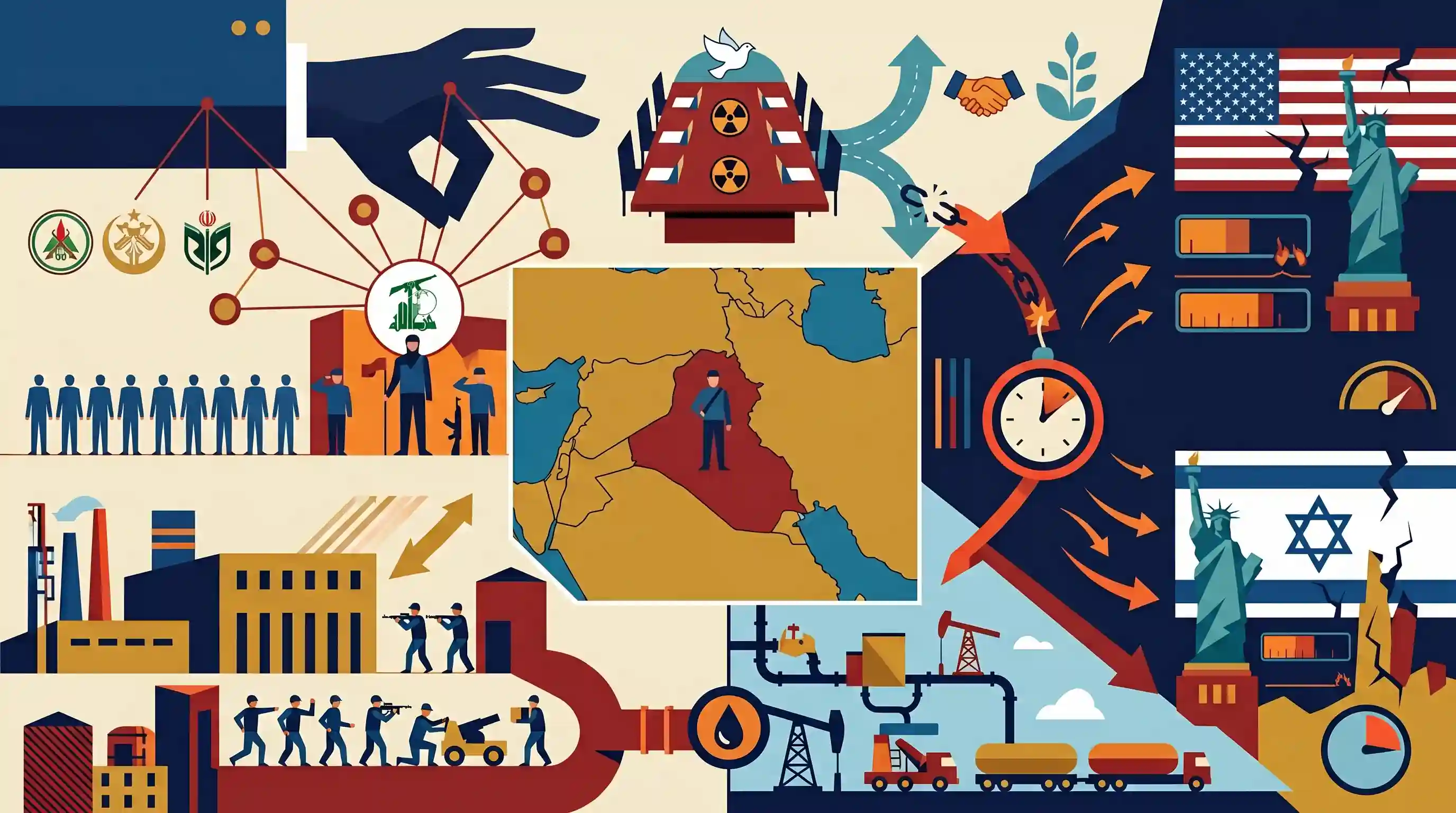
Why It Matters
The escalating proxy war dynamics and direct US-Iran tensions in West Asia are highly relevant for UPSC aspirants. A regional conflict or the collapse of the Iran nuclear negotiations directly threatens India's energy security, the safety of the Indian diaspora in the Middle East, and regional stability. It also illustrates the modern geopolitical strategy of utilizing non-state actors to wage wars of attrition.
Summary
The Iraqi armed faction Kataeb Hezbollah, a key component of Iran's 'Axis of Resistance', has directed its fighters to prepare for a potentially protracted conflict between Iran and the United States. The group has announced a recruitment drive and the opening of new training camps to ready forces for what it describes as a 'war of attrition' intended to exhaust US and Israeli resources. This escalation in readiness comes against the backdrop of renewed talks over Iran's nuclear program, with non-state actors positioning themselves for widespread regional warfare should diplomatic efforts under the incoming US administration fail.
Key Points
- Kataeb Hezbollah, a powerful Iraqi armed group backed by Iran, has instructed its fighters to prepare for a potential long-term conflict between the US and Iran.
- The group is opening new training camps and actively recruiting volunteers, anticipating a broader 'war of attrition' across West Asia.
- These preparations are a strategic move in case upcoming nuclear negotiations between Iran and Western nations fail to yield a resolution before Donald Trump takes office.
- The strategy emphasizes the coordinated use of the 'Axis of Resistance' (including factions in Iraq, Lebanon, Gaza, and Yemen) to drain American and Israeli resources in a multi-front conflict.
Important Terms
Axis of Resistance

An informal Iran-led regional coalition comprising state and non-state actors (like Hezbollah, Hamas, and Houthis) dedicated to countering Western and Israeli influence in West Asia.
UPSC context
GS Paper 2: West Asia geopolitics, non-state actors, and regional security architectures affecting global stability.
Kataeb Hezbollah
A powerful Iran-aligned Iraqi Shiite militia and part of the Popular Mobilization Forces; it seeks to expel US forces and advance Iranian interests in Iraq.
UPSC context
GS Paper 2: Role of non-state actors in international relations and their impact on regional stability.
Iran Nuclear Deal (JCPOA)
The 2015 agreement (JCPOA) between Iran and world powers to limit Tehran's nuclear program for sanctions relief; its breakdown remains a primary driver of West Asian tensions.
UPSC context
GS Paper 2: International treaties, diplomacy, and the impact of major power policies on global and Indian interests.
Hezbollah
A Lebanon-based Shiite political and military organization, and a key member of the Axis of Resistance, frequently engaging in multi-front warfare against Israel.
UPSC context
GS Paper 2 & 3: Proxy warfare, non-state actors, and their role in regional security and maritime stability.
Houthis
A Zaydi Shiite militant group in Yemen that targets Red Sea shipping routes in solidarity with the Axis of Resistance, directly impacting global trade.
UPSC context
GS Paper 2 & 3: Maritime security, threats to global trade routes, and energy security for India.
Energy Security
A nation's ability to ensure a continuous and affordable supply of energy; India’s security is highly vulnerable to disruptions in the Strait of Hormuz.
UPSC context
GS Paper 3: Infrastructure, energy, and the impact of global conflicts on India's economic stability.
Prelims Trap
"Kataeb Hezbollah is a prominent Iran-backed militant organization operating primarily out of Lebanon."
Kataeb Hezbollah operates primarily in Iraq, while 'Hezbollah' operates in Lebanon. UPSC frequently swaps the base countries of these non-state actors in mapping questions to confuse candidates.
Static Concepts Connected
What is the 'Axis of Resistance' in West Asian geopolitics?
- Led by Iran: An informal political and military coalition spearheaded by Tehran to project regional power.
- Key Members: Comprises non-state actors like Hezbollah (Lebanon), Hamas (Gaza), Houthis (Yemen), and Shia militias in Iraq/Syria.
- Strategic Objective: Aims to counter US and Israeli influence in the Middle East through asymmetric proxy warfare and wars of attrition.
How do West Asian proxy conflicts impact India's macroeconomic stability?
- Energy Security: West Asia supplies a majority of India's crude oil; multi-front conflicts risk supply disruptions and price shocks, leading to imported inflation.
- Diaspora Remittances: Over 8 million Indians work in the Gulf, contributing massively to India's forex reserves. Regional instability threatens their safety and remittance flows.
- Trade Chokepoints: Proxy attacks threaten critical transit routes like the Strait of Hormuz and the Red Sea, significantly increasing freight and insurance costs for Indian exporters.
Cross-Topic Patterns
Proxy groups + Maritime Chokepoints
The Houthis in Yemen and Iraqi militias often target maritime routes like the Red Sea and Strait of Hormuz, linking non-state proxy warfare directly to global supply chain disruptions.
JCPOA collapse + India's strategic autonomy
The stalling of Iran nuclear talks limits India's ability to maximize Chabahar port's potential, complicating New Delhi's balancing act between US strategic partnerships and Iranian connectivity.

Expect a 2026 Prelims matching question pairing Middle Eastern proxy groups (Kataeb Hezbollah, Houthis) with their base countries.
Linked PYQs · 4
Linked PYQs · 4
- 2018MainsGS2
In what ways would the ongoing US-Iran Nuclear Pact Controversy affect the national interest of India? How should India respond to this situation?
- 2012MainsGS2
How have the US sanctions against Iran affected India's bilateral relations with Iran?
- 2025MainsGS2
"Energy security constitutes the dominant kingpin of India's foreign policy, and is linked with India's overarching influence in Middle Eastern countries.” How would you integrate energy security with India's foreign policy trajectories in the coming years?
- 2017MainsGS2
The question of India's Energy Security constitutes the most important part of India's economic progress. Analyze India's energy policy cooperation with West Asian countries.
