पश्चिम एशिया सैन्य वृद्धि और अमेरिकी ईरान कूटनीतिक घर्षण
स्रोत:द हिंदू ↗
क्यों मायने रखता है
The geopolitical stability of West Asia, particularly the US-Iran relationship and the fate of Iran's nuclear program, is a recurring theme in UPSC Mains. It directly impacts global energy security, maritime choke points (like the Strait of Hormuz), and India's strategic and economic interests in the region.
सारांश
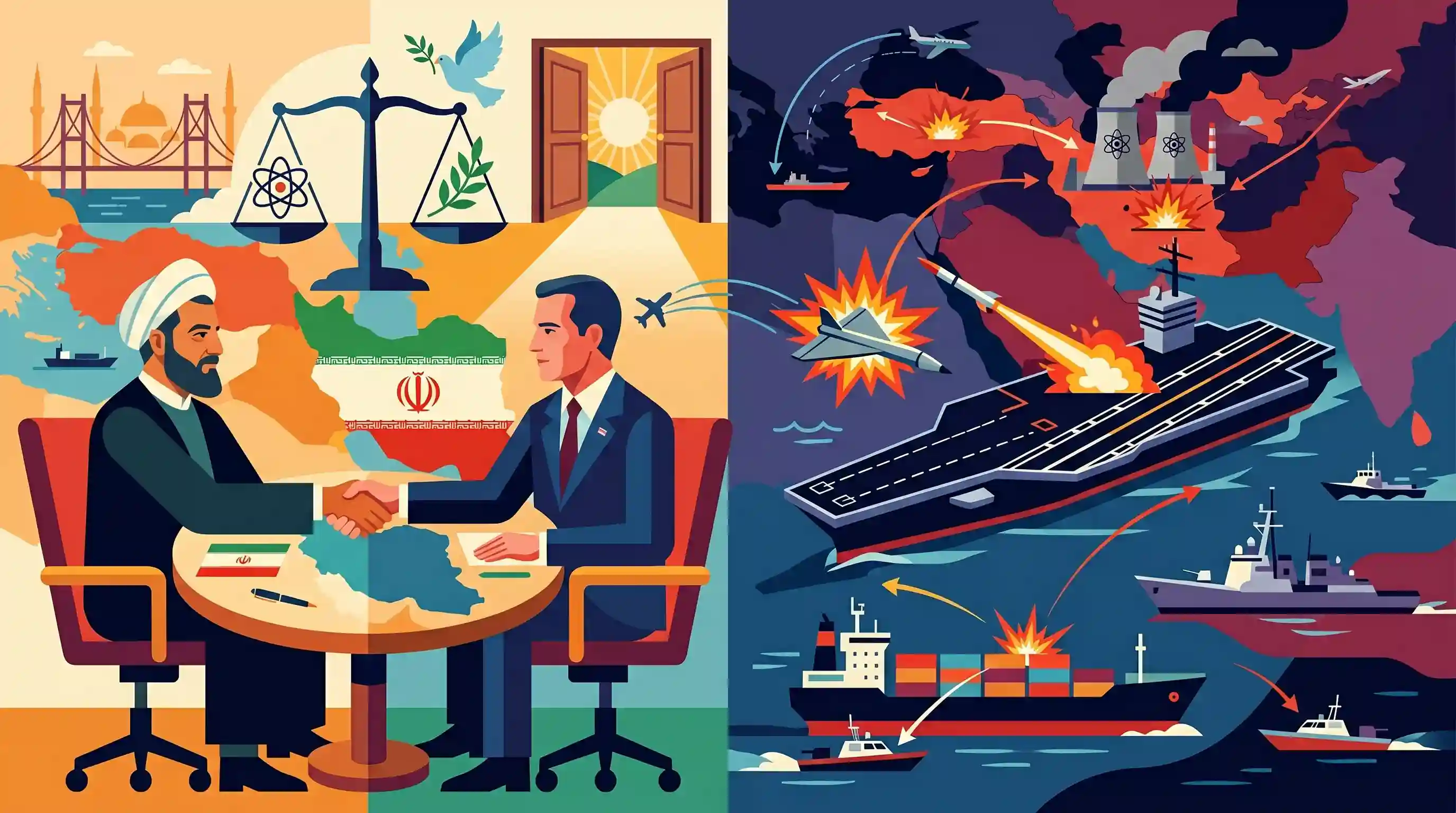
Iran's President Masoud Pezeshkian has called for "fair and equitable" negotiations with the United States focused exclusively on the nuclear issue, ahead of anticipated talks in Turkey. However, this diplomatic overture contrasts sharply with ongoing military friction in the region. The US Navy recently shot down an Iranian Shahed-139 drone approaching the USS Abraham Lincoln in international waters, and intervened when the IRGC harassed a US merchant vessel. This delicate dual-track dynamic of diplomacy amidst kinetic military tensions follows a recent 12-day conflict in which the US authorized strikes on Iranian nuclear sites.
मुख्य बिंदु
- Iranian President Masoud Pezeshkian expressed willingness for fair and equitable negotiations with the US, strictly limited to the nuclear file.
- Diplomatic talks are expected to take place in Turkey, potentially involving US special envoy Steve Witkoff.
- Simultaneous military escalation occurred as the US shot down an Iranian Shahed-139 drone that approached the USS Abraham Lincoln aircraft carrier in international waters.
- The IRGC harassed the US-flagged merchant vessel Stena Imperative, prompting intervention by the US destroyer USS McFaul.
- These events unfold in the aftermath of a recent 12-day conflict where US-backed Israeli strikes targeted Iranian nuclear facilities.
महत्वपूर्ण शब्द
Masoud Pezeshkian

The reformist President of Iran (elected 2024) who has signaled a willingness to pursue 'fair and equitable' nuclear negotiations with the West to alleviate sanctions and regional tensions.
UPSC context
GS Paper-II (International Relations); relevant for India-Iran ties and the impact of leadership changes on West Asian stability.
Islamic Revolutionary Guard Corps (IRGC)
An elite branch of the Iranian Armed Forces responsible for protecting the country's Islamic system, conducting asymmetric warfare, and exerting regional influence through its naval and Quds Force divisions.
UPSC context
GS Paper-II; tests knowledge of regional security actors, state-sponsored entities, and their role in West Asian geopolitics.
Twelve-Day War (2025)
A 2025 military conflict between Israel/US and Iran involving surprise airstrikes on Iranian nuclear facilities (e.g., Natanz, Fordow) following the collapse of diplomatic negotiations.
UPSC context
GS Paper-II (Regional Geopolitics); critical for understanding escalation cycles and the shift from proxy to direct state-on-state conflict.
Shahed-139
A sophisticated Iranian-manufactured one-way attack drone (loitering munition) used for maritime surveillance and precision strikes against naval assets.
UPSC context
GS Paper-III (Internal Security/Defense); highlights the proliferation of asymmetric drone technology and its challenge to conventional military platforms.
Strait of Hormuz
A strategic maritime chokepoint between the Persian Gulf and the Gulf of Oman, essential for global energy security as it facilitates nearly 20% of world oil trade.
UPSC context
GS Paper-I (Geography) and Paper-II (International Relations); vital for global trade, energy security, and India’s maritime interests.
JCPOA (Nuclear Deal)
A 2015 landmark agreement (Joint Comprehensive Plan of Action) intended to limit Iran's nuclear enrichment capabilities in exchange for the lifting of international economic sanctions.
UPSC context
GS Paper-II; essential for analyzing non-proliferation efforts and the impact of multilateral agreements on regional peace.
प्रारंभिक ट्रैप
"The Strait of Hormuz is considered international high seas where unlimited military operations are permitted."
The Strait of Hormuz is not high seas. It overlaps Omani and Iranian territorial waters. Foreign vessels enjoy "transit passage" rights under UNCLOS, meaning passage must be continuous and expeditious, not unlimited military freedom.
संबंधित अवधारणाएँ
What is the difference between Innocent Passage and Transit Passage under UNCLOS?
- Innocent Passage: Applies to territorial waters. Passage must be non-threatening. Submarines must navigate on the surface and show their flag. Overflight is not permitted.
- Transit Passage: Applies to straits used for international navigation (e.g., Hormuz). Allows continuous/expeditious transit, permits submarines to remain submerged, and grants overflight rights for aircraft.
How do US-Iran tensions impact India's strategic connectivity?
- Chabahar Port: Sanctions complicate banking, insurance, and heavy equipment procurement for the India-operated Shahid Beheshti terminal, delaying Afghanistan/Central Asia connectivity.
- INSTC viability: The International North-South Transport Corridor (INSTC) relies on Iranian transit to reach Russia. US financial sanctions make multi-modal cargo financing extremely difficult for Indian exporters.
अंतर-विषय पैटर्न
Asymmetric drone warfare vs traditional air defense
The use of cheap Shahed kamikaze drones to overwhelm expensive US carrier defenses highlights a global shift toward asymmetric, cost-attritional warfare in maritime domains.
Maritime chokepoints and India's energy calculus
Kinetic friction in the Strait of Hormuz threatens 50% of India's crude imports, accelerating the urgency for India's Strategic Petroleum Reserves (SPR) and green energy transition.

Expect a mapping question linking West Asian straits (Hormuz, Bab-el-Mandeb) with UNCLOS maritime zones and transit passage rights in 2026.
संबद्ध PYQ · 2
संबद्ध PYQ · 2
- 2018MainsGS2
In what ways would the ongoing US-Iran Nuclear Pact Controversy affect the national interest of India? How should India respond to this situation?
- 2012MainsGS2
How have the US sanctions against Iran affected India's bilateral relations with Iran?
