Geopolitical Tensions and US Iran Nuclear Diplomacy
Source:The Hindu ↗
Why It Matters
The US-Iran dynamic significantly affects global energy security, oil prices, and the stability of the Persian Gulf region. A regional conflict would endanger global maritime choke points like the Strait of Hormuz, directly threatening India's energy imports, diaspora safety, and strategic footprint in West Asia.
Summary
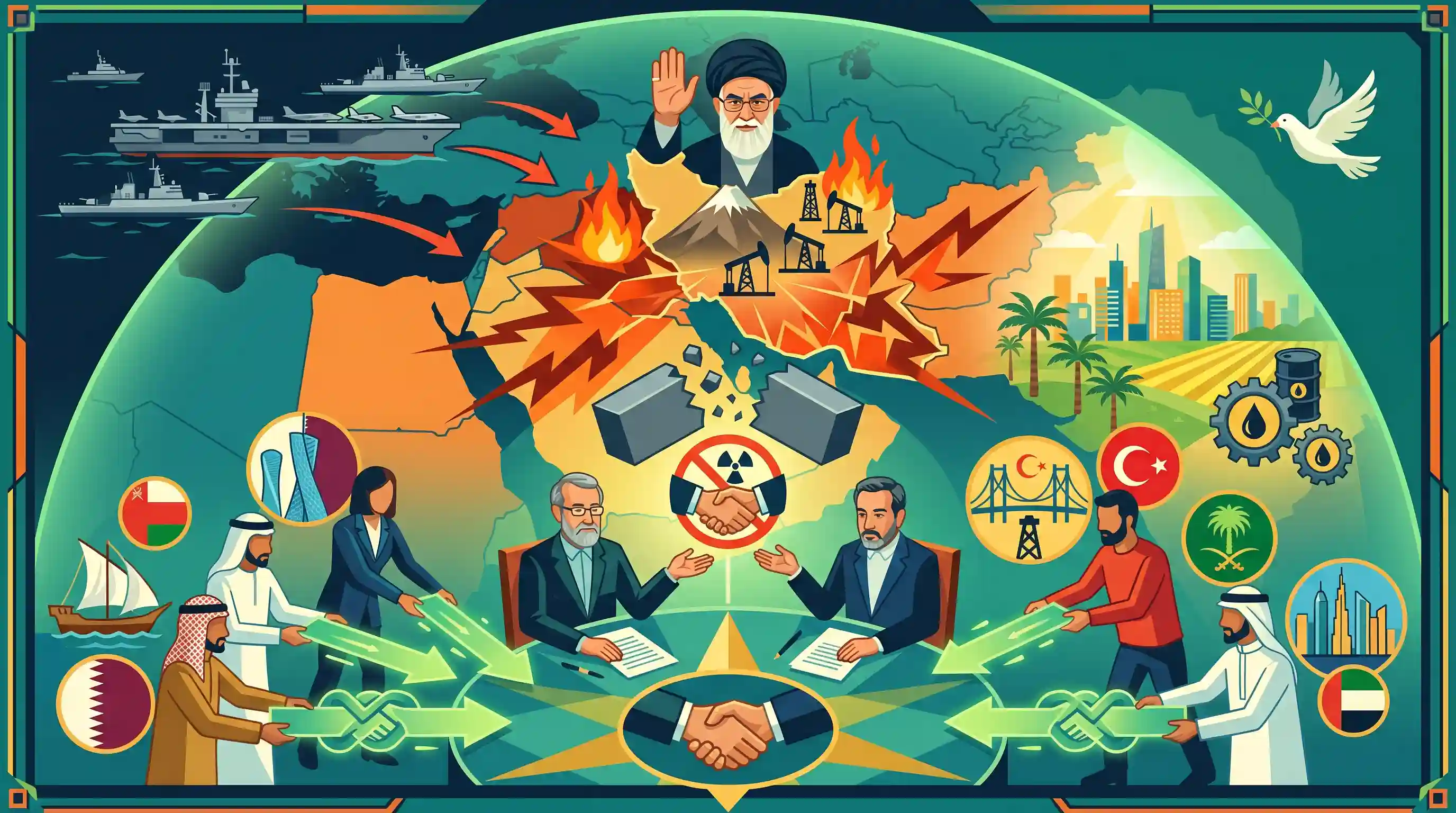
Iranian Supreme Leader Ayatollah Ali Khamenei has warned that any U.S. military strike on Iran would trigger a broader regional war. The statement follows the deployment of U.S. military assets, including warships and an aircraft carrier, to West Asia as President Donald Trump pressures Tehran over its nuclear program. Despite the escalation and heightened rhetoric, diplomatic efforts are actively underway. Key Iranian officials, such as Ali Larijani and Abbas Araghchi, have signalled an openness to negotiate a fair nuclear deal that lifts sanctions without pursuing nuclear weapons. Concurrently, regional players like Oman, Qatar, Turkey, Saudi Arabia, and the UAE are actively advocating for a diplomatic resolution and de-escalation to preserve regional stability.
Key Points
- Iran's Supreme Leader warned that any military strike by the United States would precipitate a full-scale regional war in West Asia.
- The United States has bolstered its military presence near Iran, including warships and an aircraft carrier, amid President Donald Trump\'s demands for a nuclear agreement.
- Despite military posturing, both nations confirm that diplomatic negotiations are progressing.
- Regional countries, including U.S. allies Saudi Arabia and the UAE, as well as Oman, Qatar, and Turkey, are actively pushing for de-escalation and refusing airspace for military strikes.
- Iran\'s Foreign Minister signaled readiness for a fair nuclear deal that guarantees the lifting of sanctions while cementing a 'No Nuclear Weapons' policy.
Important Terms
Joint Comprehensive Plan of Action (JCPOA)

The 2015 landmark agreement between Iran and world powers (P5+1) to curb Iran's nuclear program in exchange for the lifting of international economic sanctions.
UPSC context
GS Paper II (International Relations); tests understanding of multilateral agreements and their impact on India's energy security and strategic interests.
Supreme National Security Council (SNSC)
Iran's highest constitutional body responsible for formulating defense and national security policies; its decisions are final only after approval by the Supreme Leader.
UPSC context
GS Paper II (International Relations); relevant for understanding the political decision-making structures of key regional powers in West Asia.
International Atomic Energy Agency (IAEA)
The UN's nuclear watchdog tasked with monitoring compliance with nuclear non-proliferation treaties and verifying that nuclear material is used only for peaceful purposes.
UPSC context
GS Paper II (International Institutions); tests knowledge of global governance and the role of international agencies in conflict resolution.
West Asia Geopolitics
The strategic political and security landscape of the Middle East, defined by regional rivalries and the influence of global powers like the USA and China.
UPSC context
GS Paper II (Effect of Policies of Developed/Developing Countries); crucial for analyzing India’s regional stability, diaspora safety, and trade routes.
Secondary Sanctions
U.S. economic penalties targeting non-U.S. entities or countries (like Indian firms) that conduct business with sanctioned Iranian sectors, notably energy and shipping.
UPSC context
GS Paper II (International Relations); tests how foreign extra-territorial laws challenge India's strategic autonomy and bilateral trade with Iran.
Strait of Hormuz
A vital maritime chokepoint between the Persian Gulf and the Gulf of Oman, through which approximately one-fifth of the world's total oil consumption passes.
UPSC context
GS Paper II & III (Security/IR); significant for understanding global energy supply chains and maritime security threats in the Indian Ocean.
Strategic Autonomy
India's foreign policy doctrine of maintaining independent decision-making and avoiding formal military alliances while balancing relations with competing global powers.
UPSC context
GS Paper II (International Relations); tests India's ability to navigate the US-Iran conflict while protecting national interests like the Chabahar Port.
Prelims Trap
The Strait of Hormuz is a critical chokepoint bordered by Iran, Saudi Arabia, and the UAE.
The Strait of Hormuz is bordered only by Iran to the north and Oman (via its Musandam exclave) to the south. The UAE and Saudi Arabia do not directly border it.
Static Concepts Connected
What is the strategic and geographical significance of the Strait of Hormuz?
- Location: Connects the Persian Gulf to the Gulf of Oman and the broader Arabian Sea.
- Bordering Nations: Bounded strictly by Iran to the north and the Musandam Peninsula of Oman to the south.
- Energy Corridor: A critical maritime chokepoint facilitating roughly 20% of global oil trade and virtually all of Qatar's LNG exports.
How do US secondary sanctions impact India's regional connectivity and economy?
- Chabahar Port: Sanction threats create operational and investment risks for the Shahid Beheshti terminal, vital for accessing Central Asia.
- INSTC Bottlenecks: Financial sanctions hinder the International North-South Transport Corridor (INSTC) due to severe international banking and insurance hurdles.
- Energy Sourcing: Forces India to substitute cheaper Iranian crude with costlier alternatives, increasing the import bill and current account deficit.
Cross-Topic Patterns
West Asian stability + IMEC/I2U2 viability
The shift of regional powers like Saudi Arabia and the UAE toward de-escalation directly supports the viability of India's trans-regional connectivity initiatives like IMEC and I2U2.
Energy Security vs. Strategic Autonomy
India's struggle to balance its growing strategic partnership with the US against its need for Iranian oil and Chabahar transit perfectly illustrates the tightrope of strategic autonomy.

Expect a multi-statement Prelims question mapping West Asian maritime chokepoints (Hormuz) to global energy trade and India's oil security.
Linked PYQs · 3
Linked PYQs · 3
- 2018MainsGS2
In what ways would the ongoing US-Iran Nuclear Pact Controversy affect the national interest of India? How should India respond to this situation?
- 2025MainsGS2
"Energy security constitutes the dominant kingpin of India's foreign policy, and is linked with India's overarching influence in Middle Eastern countries.” How would you integrate energy security with India's foreign policy trajectories in the coming years?
- 2024PrelimsGS1
Consider the following statements : Statement-I : Sumed pipeline is a strategic route for Persian Gulf oil and natural gas shipments to Europe. Statement-II : Sumed pipeline connects the Red Sea with the Mediterranean Sea. Which one of the following is correct in respect of the above statements?
