Iran China Russia Joint Rejection of European Sanctions
Source:Indian Express ↗
Why It Matters
Important for understanding shifting geopolitical fault lines (the China-Russia-Iran axis vs. the West), the limitations of international non-proliferation treaties like the JCPOA, and the contentious use of UN Security Council enforcement mechanisms.
Summary
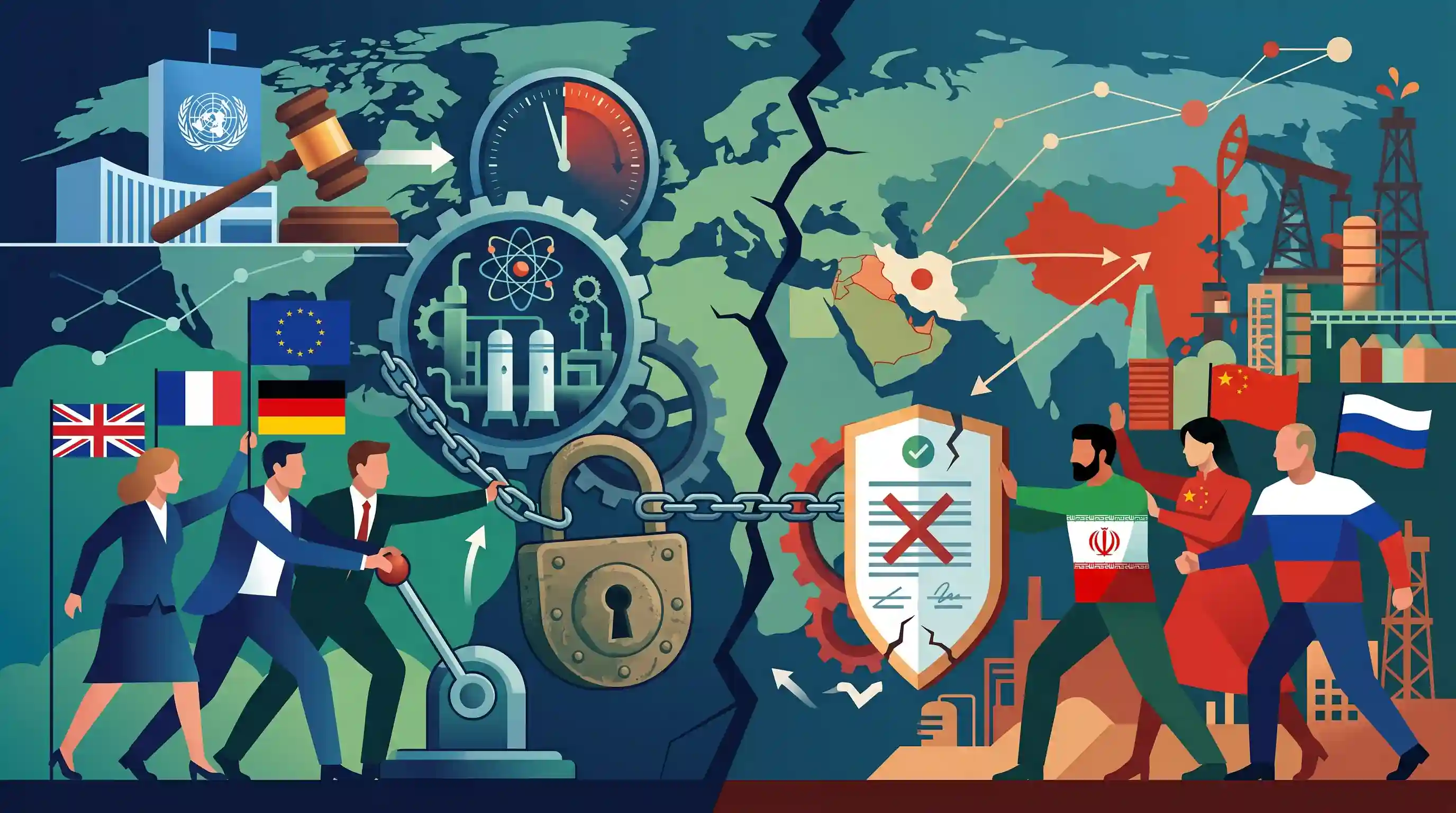
Iran, backed by China and Russia, has declared the European (E3) move to trigger UN "snapback" sanctions as legally and procedurally flawed. The joint rejection highlights the deepening East-West divide over the 2015 JCPOA nuclear deal ahead of its October expiration.
Key Points
- Iran, Russia, and China issued a joint letter in Tianjin condemning the E3's attempt to reinstate UN sanctions against Tehran via the "snapback mechanism."
- The E3 (Britain, France, and Germany) initiated the snapback over Iran's alleged breaches of the 2015 JCPOA nuclear deal's limits.
- Iran asserts its nuclear expansion was legally justified under the deal due to the unilateral US withdrawal executed by Donald Trump in 2018.
- The confrontation reflects the growing strategic alignment between Iran, Russia, and China against Western powers, complicating UN multilateral functions.
- The 2015 nuclear pact is set to formally expire in October, raising stakes for both sanctions enforcement and the future of Middle East stability.
Important Terms
Joint Comprehensive Plan of Action (JCPOA)

A 2015 landmark agreement between Iran and the P5+1 (US, UK, France, China, Russia, and Germany) to limit Iran's nuclear program in exchange for international sanctions relief.
UPSC context
GS Paper II: Bilateral/global groupings affecting India’s interests; GS Paper III: Nuclear non-proliferation and global security architecture.
UN snapback sanctions mechanism
A provision under UNSC Resolution 2231 allowing any JCPOA participant to unilaterally reimpose pre-2015 UN sanctions on Iran for "significant non-performance," bypassing the standard Security Council veto.
UPSC context
GS Paper II: International Relations; tests knowledge of unique international legal enforcement mechanisms and UN diplomacy.
E3 (Britain, France, Germany)
The diplomatic grouping of France, Germany, and the United Kingdom that played a central role in negotiating and maintaining the Iran nuclear deal (JCPOA).
UPSC context
GS Paper II: Important International institutions, agencies, and fora — their structure, mandate and global influence.
UN Security Council Resolution 2231
The 2015 resolution that formally endorsed the JCPOA and established the legal framework for lifting UN sanctions and the "snapback" enforcement mechanism.
UPSC context
GS Paper II: International law and treaties; critical for understanding the legal legitimacy of Iranian nuclear constraints.
UN Security Council (UNSC)
The primary UN organ charged with maintaining international peace and security, serving as the forum where JCPOA disputes and snapback triggers are adjudicated.
UPSC context
GS Paper II: Structure and mandate of major international institutions and their role in global geopolitics.
Prelims Trap
"The UN snapback sanctions on Iran can be blocked by a veto from Russia or China."
The snapback mechanism under UNSCR 2231 is explicitly veto-proof. A P5 veto applies to the continuation of sanctions relief, meaning old sanctions automatically resume if relief isn't renewed.
Static Concepts Connected
What are the core components of the Joint Comprehensive Plan of Action (JCPOA)?
- P5+1 Framework: Negotiated between Iran and the P5 (US, UK, France, Russia, China) plus Germany, alongside the EU.
- Uranium Limits: Iran agreed to cap uranium enrichment at 3.67% and drastically reduce its low-enriched uranium stockpile.
- UNSCR 2231: The UN Security Council Resolution that legally endorsed the JCPOA and included a 2025 expiration clause.
How does the UN's veto-proof 'Snapback' sanctions mechanism work?
- Unilateral Trigger: Any original JCPOA participant can notify the UNSC of significant non-compliance, triggering a 30-day voting window.
- Reversed Veto Logic: The UNSC must vote to *continue* sanctions relief. If a state vetoes this continuation, the old sanctions automatically 'snap back' into place.
Cross-Topic Patterns
Russia-China-Iran strategic axis
The joint rejection of E3 moves illustrates an emerging 'axis of evasion' aimed at undermining Western-led sanctions architecture, a key theme in post-Ukraine geopolitics.
Minilateral groupings: E3 vs P5+1
UPSC frequently tests informal groupings. The E3 (UK, France, Germany) acts independently from the broader P5+1, highlighting how European security interests can operate distinctly within multilateral frameworks.

Expect a 2026 prelims statement mixing P5+1 vs E3 composition, testing the unique veto-proof nature of the JCPOA UN snapback mechanism.
Linked PYQs · 2
Linked PYQs · 2
- 2018MainsGS2
In what ways would the ongoing US-Iran Nuclear Pact Controversy affect the national interest of India? How should India respond to this situation?
- 2025MainsGS2
"The reform process in the United Nations remains unresolved, because of the delicate imbalance of East and West and entanglement of the USA vs. Russo-Chinese alliance.” Examine and critically evaluate the East-West policy confrontations in this regard.
