Iran warns of prolonged war amid US strike threats
Source:The Hindu ↗
Why It Matters
This development highlights the fragile security architecture of West Asia, with direct implications for India's energy security, diaspora safety, and strategic diplomatic balancing in the region.
Summary
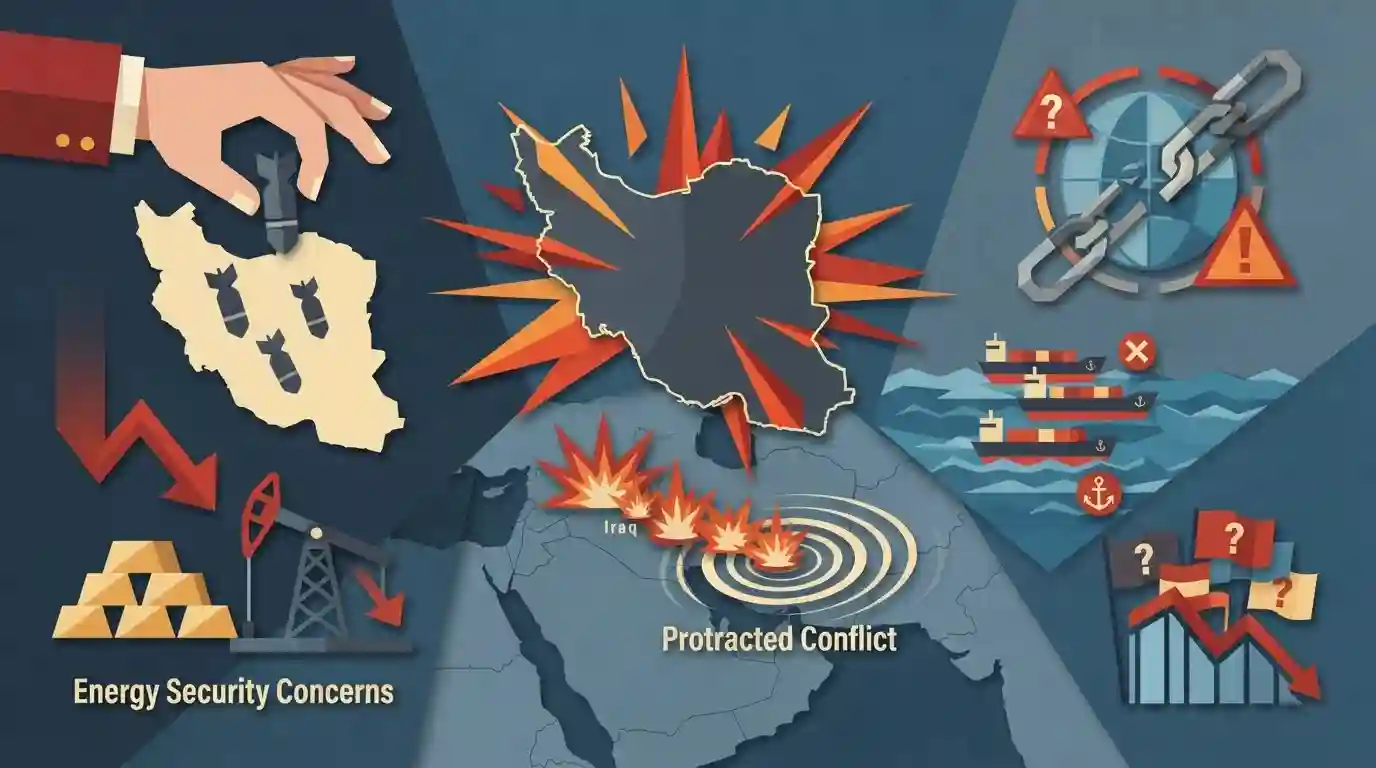
Iran has responded to threats of U.S. military strikes by warning that a new conflict in the Middle East would be protracted and widespread, escalating international security concerns in West Asia.
Key Points
- Iran has warned that any new war in the Middle East would last longer and become more expansive following threats of military strikes by U.S. President Donald Trump.
- Tensions between Iran and the U.S. have escalated significantly, raising concerns about regional stability, global energy security, and maritime trade routes in West Asia.
- Escalating conflict poses severe risks to international diplomacy, nuclear negotiations, and economic stability across the globe.
Important Terms
Iran

A major West Asian nation holding strategic geopolitical significance, vital for energy transit through the Strait of Hormuz, and central to regional stability and nuclear proliferation debates.
UPSC context
GS Paper II (International Relations): Tests understanding of India's West Asia policy, energy security, and bilateral ties with Iran (e.g., Chabahar Port).
United States
A global superpower whose foreign policy, military posture, and sanctions in West Asia profoundly influence global security, oil markets, and geopolitical alignments.
UPSC context
GS Paper II (International Relations): Tests analysis of bilateral relations, global hegemon dynamics, and multilateral security frameworks affecting India's strategic interests.
Trump administration
The political administration under Donald Trump known for pursuing 'maximum pressure' campaigns, unilateral foreign policies, and strategic interventions in West Asia.
UPSC context
GS Paper II (International Relations): Tests comprehension of shifting US foreign policy paradigms and their cascading effects on global trade and regional conflicts.
Prelims Trap
All U.S. unilateral military threats or sanctions against Iran carry mandatory international enforcement under UN Charter Chapter VII.
Aspirants often confuse U.S. sanctions regimes under executive orders with multilateral UN Security Council sanctions, which have distinct enforcement mechanisms.
Static Concepts Connected
What are the key geopolitical chokepoints impacting global energy security and maritime trade in West Asia?
- Strait of Hormuz:: Connecting the Persian Gulf to the Gulf of Oman, handling over 20% of global petroleum liquids.
- Bab el-Mandeb:: Linking the Red Sea to the Mediterranean via the Suez Canal, critical for Europe-Asia maritime trade.
- SUMED Pipeline:: A vital land and pipeline corridor bypassing maritime chokepoints in the region.
Cross-Topic Patterns
West Asia Conflict & Indian Energy Security
West Asian geopolitical flare-ups directly threaten the safe passage of crude oil through the Strait of Hormuz, impacting India's oil import bills and macroeconomic stability.
Iran Sanctions & India's Strategic Autonomy
Escalating U.S.-Iran hostilities complicate India's diplomatic balancing act across the Persian Gulf, intersecting with the Chabahar Port project and North-South transport corridor.

West Asian chokepoints (Strait of Hormuz) + energy security risks are a perennial match for UPSC statement-based questions.
Linked PYQs · 2
Linked PYQs · 2
- 2025MainsGS2
"Energy security constitutes the dominant kingpin of India's foreign policy, and is linked with India's overarching influence in Middle Eastern countries.” How would you integrate energy security with India's foreign policy trajectories in the coming years?
- 2017MainsGS2
The question of India's Energy Security constitutes the most important part of India's economic progress. Analyze India's energy policy cooperation with West Asian countries.
