Middle East Conflict Impact on US Logistics and Inflation
Source:The Hindu ↗
Why It Matters
Understanding how geopolitical conflicts in the Middle East translate into domestic economic pressures (like inflation and fuel costs) is crucial for analyzing energy security, global supply chains, and macroeconomic stability—all key areas in the UPSC syllabus.
Summary
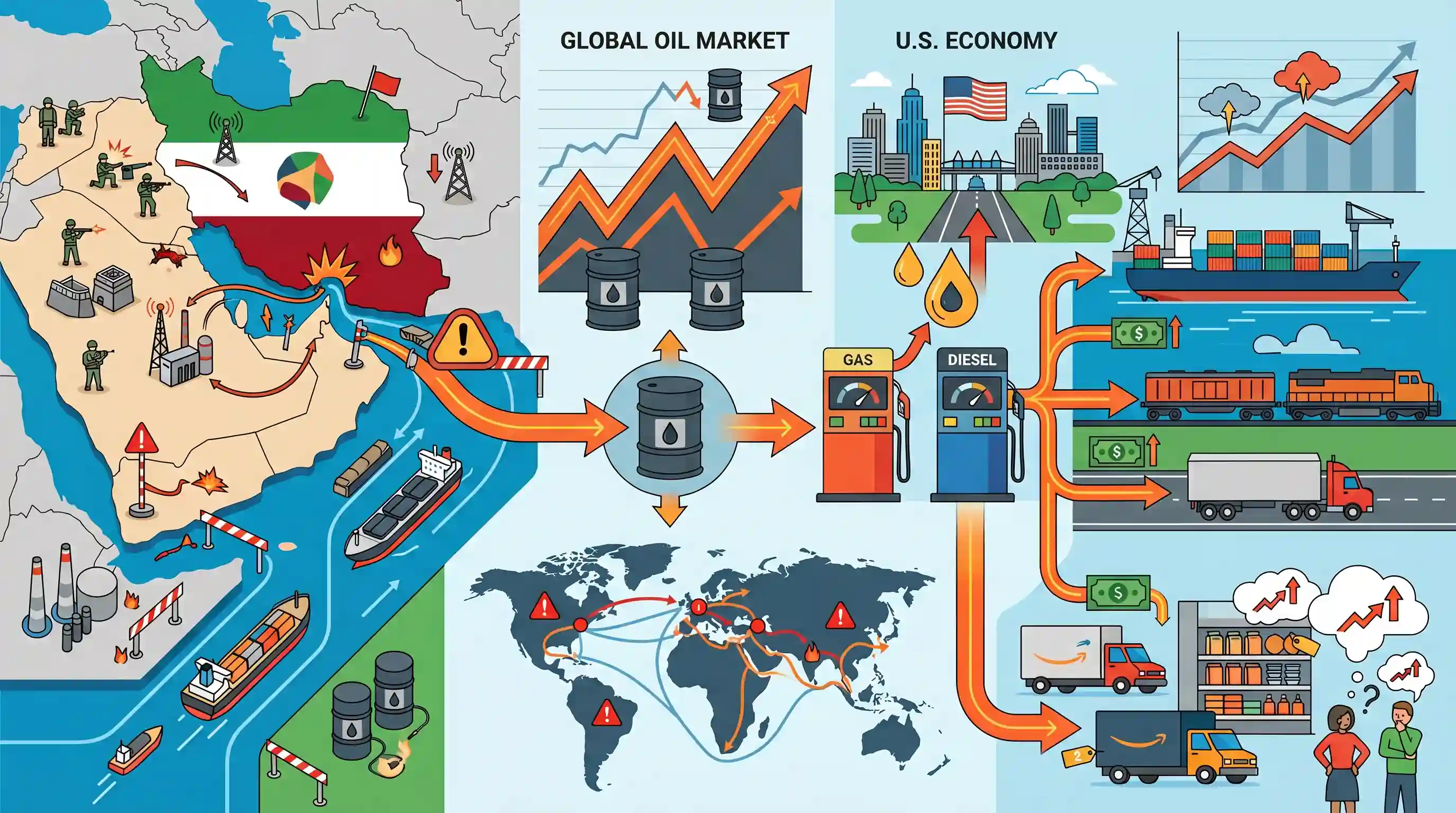
The conflict involving Iran is beginning to significantly impact the U.S. economy, primarily through surging gas and diesel prices. This rise in fuel costs has triggered a corresponding increase in transportation and shipping expenses, prompting entities like Amazon and the U.S. Postal Service to apply fuel surcharges. The underlying cause relates to global supply chain disruptions and threats to crucial oil transit routes such as the Strait of Hormuz, which restrict global crude supplies and heighten domestic inflationary pressures.
Key Points
- The ongoing conflict involving Iran has directly impacted the U.S. economy by driving up gas and diesel prices.
- Transport and shipping costs have surged, leading major logistics entities like Amazon and the U.S. Postal Service to implement fuel surcharges.
- The conflict threatens critical global oil transit chokepoints, such as the Strait of Hormuz, causing severe supply chain disruptions.
- Rising energy costs are exacerbating broader macroeconomic challenges, including inflation and increased cost of living in the U.S.
Important Terms
Strait of Hormuz

A vital maritime chokepoint between Iran and Oman connecting the Persian Gulf to the Gulf of Oman. It handles roughly 20% of global oil and liquefied natural gas (LNG) transit.
UPSC context
GS II/III; vital for West Asian geopolitics, global energy flows, and threats to India’s energy import dependency.
Energy Security
The uninterrupted availability of energy sources at an affordable price. It encompasses availability, accessibility, and reliability, essential for a nation's strategic autonomy and economic growth.
UPSC context
GS III; crucial for discussions on India's resource management, fuel import bills, and transitions toward sustainable energy sources.
Cost-Push Inflation
Inflation caused by an increase in production costs—such as higher fuel or raw material prices—which decreases aggregate supply and forces businesses to raise consumer prices.
UPSC context
GS III; tests clarity on macroeconomic concepts and the impact of global supply shocks on domestic inflation.
Fuel Surcharges (FSC)
Variable fees added by logistics providers to offset the volatility of fuel prices. They protect carriers' margins while passing energy cost fluctuations directly to businesses and consumers.
UPSC context
GS III; relevant for transport economics, logistics infrastructure, and the cascading effect of oil prices on retail inflation.
Maritime Chokepoint
Narrow sea passages connecting major water bodies that are vital for international shipping. Their strategic importance lies in their vulnerability to blockades during geopolitical conflicts.
UPSC context
GS I/II; foundational for geography and international security topics regarding freedom of navigation and global trade.
Supply Chain Disruptions
Breakdowns in the production and distribution of goods, often triggered by geopolitical strife or logistics failures, leading to shortages and economic instability.
UPSC context
GS III; tests awareness of structural economic vulnerabilities and the need for supply diversification and resilience.
Prelims Trap
"The Strait of Hormuz connects the Red Sea to the Gulf of Aden."
Aspirants frequently confuse Middle Eastern chokepoints. Hormuz connects the Persian Gulf to the Gulf of Oman/Arabian Sea, while Bab-el-Mandeb connects the Red Sea to the Gulf of Aden.
Static Concepts Connected
What distinguishes cost-push inflation from demand-pull inflation?
- Cost-push inflation: Driven by supply-side shocks, such as fuel price spikes or supply chain disruptions, which increase the overall cost of production.
- Demand-pull inflation: Driven by aggregate demand outpacing aggregate supply, often due to increased money supply or high government spending.
- Imported inflation: A subset of cost-push inflation where rising prices of imported critical commodities (like crude oil) cascade into higher domestic retail prices.
Which major maritime chokepoints dictate global energy security?
- Strait of Hormuz: Connects the Persian Gulf to the Arabian Sea; handles roughly 20% of global crude oil transit.
- Bab-el-Mandeb: Connects the Red Sea to the Gulf of Aden, serving as the southern gateway to the Suez Canal.
- Strait of Malacca: Connects the Indian Ocean to the Pacific Ocean; vital for the energy imports of East Asian economies like China and Japan.
Cross-Topic Patterns
West Asian geopolitics driving CAD
Disruptions in West Asia directly inflate India's oil import bill, worsening the Current Account Deficit (CAD) and putting depreciative pressure on the Rupee.
Chokepoint risks and INSTC/IMEC viability
The vulnerability of traditional maritime chokepoints accelerates India's strategic push for multimodal alternatives like the International North-South Transport Corridor (INSTC) and IMEC.

Expect a multi-statement Prelims question pairing Middle Eastern maritime chokepoints with their macroeconomic impacts on India's BoP.
Linked PYQs · 3
Linked PYQs · 3
- 2025MainsGS2
"Energy security constitutes the dominant kingpin of India's foreign policy, and is linked with India's overarching influence in Middle Eastern countries.” How would you integrate energy security with India's foreign policy trajectories in the coming years?
- 2017MainsGS2
The question of India's Energy Security constitutes the most important part of India's economic progress. Analyze India's energy policy cooperation with West Asian countries.
- 2024PrelimsGS1
Consider the following statements : Statement-I : Sumed pipeline is a strategic route for Persian Gulf oil and natural gas shipments to Europe. Statement-II : Sumed pipeline connects the Red Sea with the Mediterranean Sea. Which one of the following is correct in respect of the above statements?
