Iran pursues diplomatic resolution while preparing defense against US
Source:The Hindu ↗
Why It Matters
The stability of West Asia is critical for global energy security and India's strategic interests. Rising US-Iran tensions can destabilize the region, cause volatility in global oil prices, and complicate India's diplomatic balancing act between its strategic partnership with the US and its energy/connectivity interests in Iran and the broader Middle East.
Summary
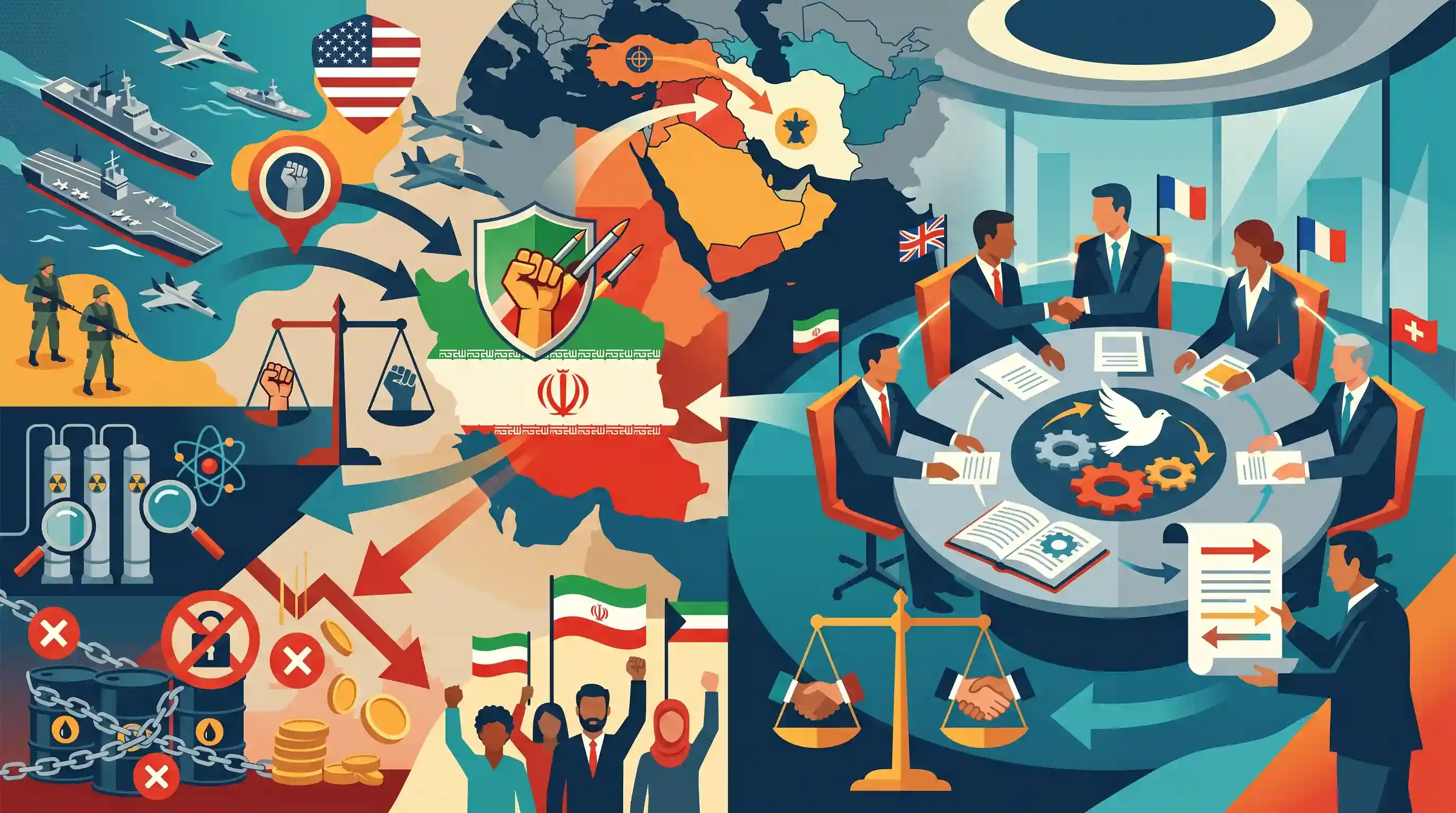
Iran's Foreign Minister Abbas Araghchi stated that while Iran remains fully prepared to retaliate against any U.S. attacks on its interests in West Asia, Tehran is still pursuing diplomatic solutions to defuse the ongoing geopolitical standoff. The crisis is characterized by increased U.S. military deployments in the region, international concerns over Iran's nuclear enrichment program, and intense domestic pressure within Iran due to economic sanctions and anti-government protests. Amidst this, diplomatic engagements continue in Geneva, with Iran drafting a proposal to avert military action.
Key Points
- Iranian Foreign Minister Abbas Araghchi emphasized Iran\'s readiness to defend itself and target U.S. interests in West Asia if attacked.
- Despite military posturing, Tehran is maintaining diplomatic channels and drafting a proposal in Geneva aimed at preventing military conflict.
- Tensions are escalating as the United States increases its military footprint, including aircraft carriers, in the Middle East.
- Iran\'s continued nuclear enrichment activities are central to the geopolitical standoff.
- Domestically, the Iranian government is grappling with significant anti-government protests and economic challenges exacerbated by international sanctions.
Prelims Trap
"CAATSA sanctions targeting Iran's nuclear and defense sectors are mandated by the United Nations."
CAATSA is a US federal law, not a UN Security Council resolution. UPSC often tests the origin of sanctions regimes to trick aspirants into assuming multilateral UN backing.
Static Concepts Connected
What are the critical thresholds for Uranium enrichment?
- LEU (Civilian): Low-Enriched Uranium, containing 3-5% of the U-235 isotope, is typically used to fuel civilian nuclear power reactors.
- HEU (Research): Highly Enriched Uranium is concentrated above 20% and is used primarily in research reactors and medical isotope production.
- Weapons-Grade: Enriched to roughly 90% U-235, reaching this threshold drastically reduces the 'breakout time' required to construct a nuclear warhead.
Why is the Strait of Hormuz a global economic chokepoint?
- Strategic Location: It connects the Persian Gulf to the Gulf of Oman, acting as the only sea passage from the oil-rich Persian Gulf to the open ocean.
- Oil Transit Volume: It accommodates nearly 20% of global petroleum consumption transit, making global energy markets highly sensitive to blockades or military escalations.
Cross-Topic Patterns
India's connectivity vs. US Sanctions
Iran's geopolitical isolation directly complicates India's operationalization of Chabahar Port and the INSTC, forcing New Delhi to balance US strategic ties with crucial Central Asian access.
Gulf tensions and India's CAD
Escalations in the US-Iran standoff historically spike Brent crude prices, which widens India's Current Account Deficit and puts depreciatory pressure on the Indian Rupee.

Expect a map-based Prelims question pairing West Asian maritime chokepoints (Hormuz, Bab el-Mandeb) with surrounding actors.
Linked PYQs · 3
Linked PYQs · 3
- 2017MainsGS2
The question of India's Energy Security constitutes the most important part of India's economic progress. Analyze India's energy policy cooperation with West Asian countries.
- 2022PrelimsGS1
The term "Levant" often heard in the news roughly corresponds to which of the following regions?
- 2014PrelimsGS1
Turkey is located between
