Iran insists on uranium enrichment rights amid US nuclear standoff
Source:The Hindu ↗
Why It Matters
The US-Iran nuclear standoff is a pivotal issue in global geopolitics that directly affects Middle Eastern stability, global crude oil prices, and India's energy security and foreign policy calculus in West Asia.
Summary
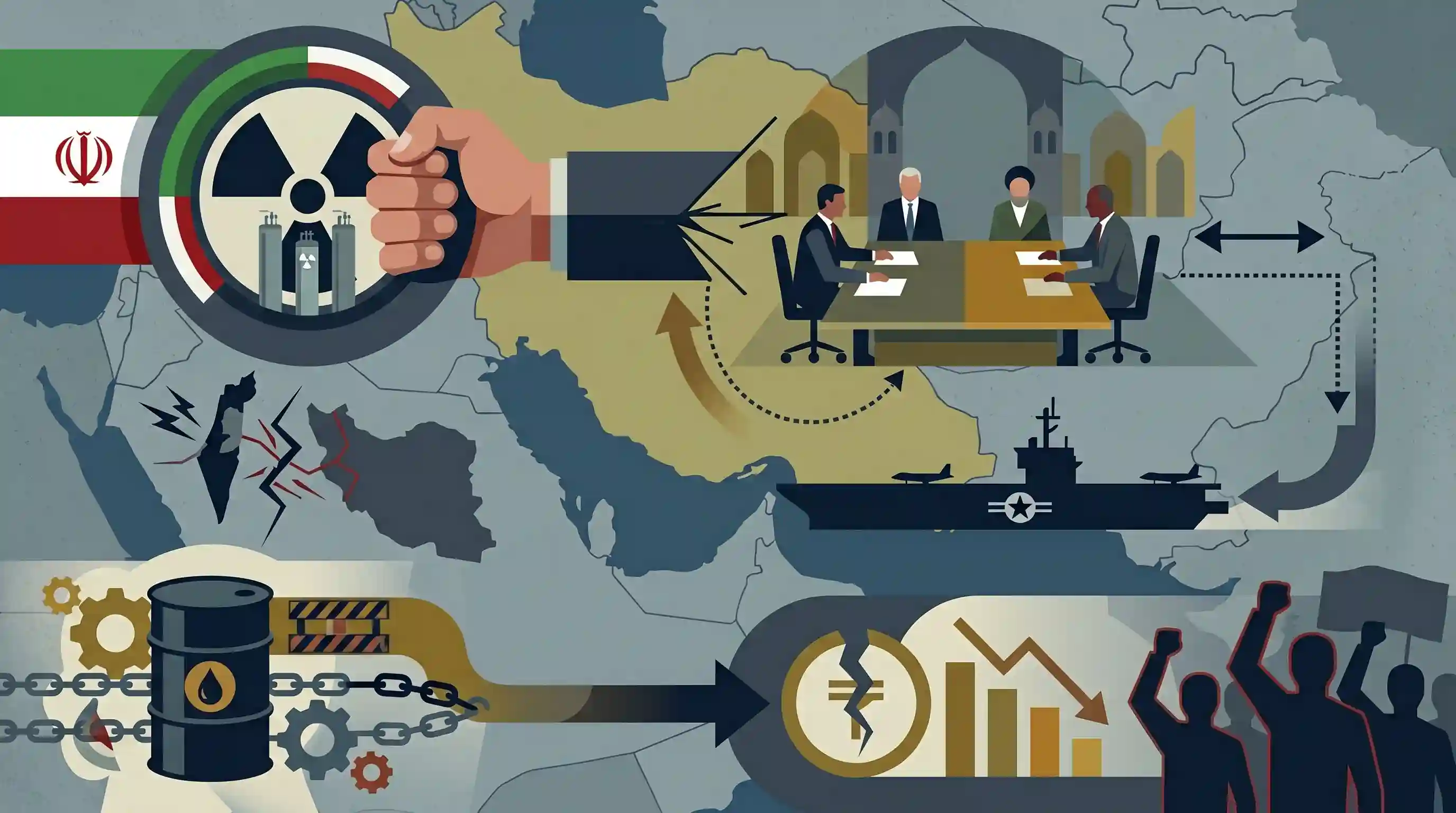
Recent negotiations between the US and Iran in Oman highlight the persistent geopolitical standoff over Iran's nuclear program. Iranian Foreign Minister Abbas Araghchi has declared that Tehran will not surrender its right to enrich uranium, even in the face of potential US military strikes. These talks follow a major conflict between Israel and Iran in June 2025 and coincide with the US deploying the USS Abraham Lincoln to the Arabian Sea. Furthermore, the US is tightening economic sanctions to curb Iranian oil exports, exacerbating Iran's domestic economic crisis, which has triggered deadly mass protests.
Key Points
- High-level backchannel talks between the US and Iran were hosted in Oman amidst escalating regional tensions in the Middle East.
- Iranian Foreign Minister Abbas Araghchi firmly reiterated Iran's right to enrich uranium, refusing to back down despite the threat of a wider conflict with the US.
- Regional volatility is extremely high following a 12-day war between Israel and Iran in June 2025 and the deployment of the USS Abraham Lincoln to the Arabian Sea.
- The US administration has intensified its 'maximum pressure' campaign, imposing new sanctions on shipping entities to severely restrict Iran's crude oil exports.
- Domestically, Iran is battling massive protests driven by economic hardships, which have resulted in significant civilian casualties.
Important Terms
Joint Comprehensive Plan of Action (JCPOA)

A 2015 multilateral agreement between Iran and the P5+1 countries to limit Iran’s nuclear program in exchange for the lifting of international economic sanctions.
UPSC context
GS II: International Relations; tests knowledge of regional geopolitics, nuclear diplomacy, and the impact of the US withdrawal on global security frameworks.
Uranium Enrichment
The process of increasing the concentration of the fissile isotope Uranium-235. Levels around 3-5% are used for power, while 90% is considered weapons-grade.
UPSC context
GS III: Science & Technology; crucial for understanding nuclear fuel cycles and the technical threshold between peaceful energy and military weapons.
International Atomic Energy Agency (IAEA)
The UN's autonomous 'nuclear watchdog' based in Vienna, responsible for promoting peaceful nuclear energy use and verifying non-diversion of materials to weapons programs.
UPSC context
GS II: International Institutions; relevant for the agency's role in global nuclear governance and its verification mandate under the NPT.
Nuclear Non-Proliferation Treaty (NPT)
A 1970 treaty based on three pillars: non-proliferation, disarmament, and peaceful use of nuclear energy. It distinguishes between nuclear-weapon and non-nuclear-weapon states.
UPSC context
GS II: Global Treaties; tests understanding of the global non-proliferation regime and India's historical 'discriminatory' critique of the treaty.
Economic Sanctions
Commercial and financial penalties used by states to influence a target country's behavior, often targeting sectors like oil, banking, and military technology.
UPSC context
GS II: International Relations; significant for analyzing energy security, oil supply chains, and the impact on Indian projects like Chabahar.
P5+1
The group of six world powers—China, France, Germany, Russia, the United Kingdom, and the United States—that led nuclear negotiations with Iran.
UPSC context
GS II: Global Groupings; essential for identifying the major diplomatic stakeholders and permanent UNSC members involved in the Iran nuclear crisis.
Prelims Trap
"The Nuclear Non-Proliferation Treaty (NPT) strictly prohibits non-nuclear-weapon states from enriching uranium under any circumstances."
Article IV of the NPT actually guarantees the 'inalienable right' to develop nuclear energy for peaceful purposes, which includes civilian uranium enrichment under IAEA safeguards.
Static Concepts Connected
What is the difference between the NPT framework and JCPOA limits on uranium enrichment?
- NPT Baseline: Grants signatory states the sovereign right to peaceful nuclear technology, permitting civilian uranium enrichment (typically Low Enriched Uranium up to 20% U-235).
- JCPOA Caps: The 2015 agreement specifically capped Iran's enrichment at 3.67% and severely limited its stockpile to extend the "breakout time" for a nuclear weapon.
What gives Oman its strategic mediating role and geographic leverage in West Asia?
- Diplomatic Neutrality: Dubbed the 'Switzerland of West Asia', Oman deliberately maintains pragmatic diplomatic neutrality, keeping open ties with adversaries like the US, Israel, Iran, and Houthi factions.
- Strait of Hormuz: Oman shares control of this vital maritime chokepoint via the Musandam Peninsula with Iran, managing the only passage from the Persian Gulf to the Arabian Sea.
Cross-Topic Patterns
US Secondary Sanctions vs India's INSTC
US "maximum pressure" on Iranian shipping complicates India's operationalization of Chabahar Port and slows down the strategic International North-South Transport Corridor (INSTC) due to secondary sanctions.
Strait of Hormuz & Rupee Depreciation
Conflict-driven supply shocks or blockades in the Strait of Hormuz typically widen India's Current Account Deficit (CAD), inflate import bills, and put depreciative pressure on the Rupee.

Expect a 2026 prelims mapping question linking West Asian water bodies (Hormuz, Persian Gulf) to regional mediators like Oman and Qatar.
Linked PYQs · 5
Linked PYQs · 5
- 2018MainsGS2
In what ways would the ongoing US-Iran Nuclear Pact Controversy affect the national interest of India? How should India respond to this situation?
- 2012MainsGS2
How have the US sanctions against Iran affected India's bilateral relations with Iran?
- 2025MainsGS2
"Energy security constitutes the dominant kingpin of India's foreign policy, and is linked with India's overarching influence in Middle Eastern countries.” How would you integrate energy security with India's foreign policy trajectories in the coming years?
- 2024PrelimsGS1
Consider the following statements : Statement-I : Sumed pipeline is a strategic route for Persian Gulf oil and natural gas shipments to Europe. Statement-II : Sumed pipeline connects the Red Sea with the Mediterranean Sea. Which one of the following is correct in respect of the above statements?
- 2023PrelimsGS1
Consider the following statements: Statement-I: Israel has established diplomatic relations with some Arab States. Statement-II: The 'Arab Peace Initiative' mediated by Saudi Arabia was signed by Israel and Arab League. Which one of the following is correct in respect of the above statements?
