Iran US Nuclear Diplomacy and Regional De Escalation Efforts
Source:Indian Express ↗
Why It Matters
The geopolitical stability of the Middle East heavily impacts global oil prices, deeply tying into India's energy security and foreign policy goals. Re-engagements between the US and Iran also influence the viability of Indian strategic investments in the region, such as the Chabahar port.
Summary
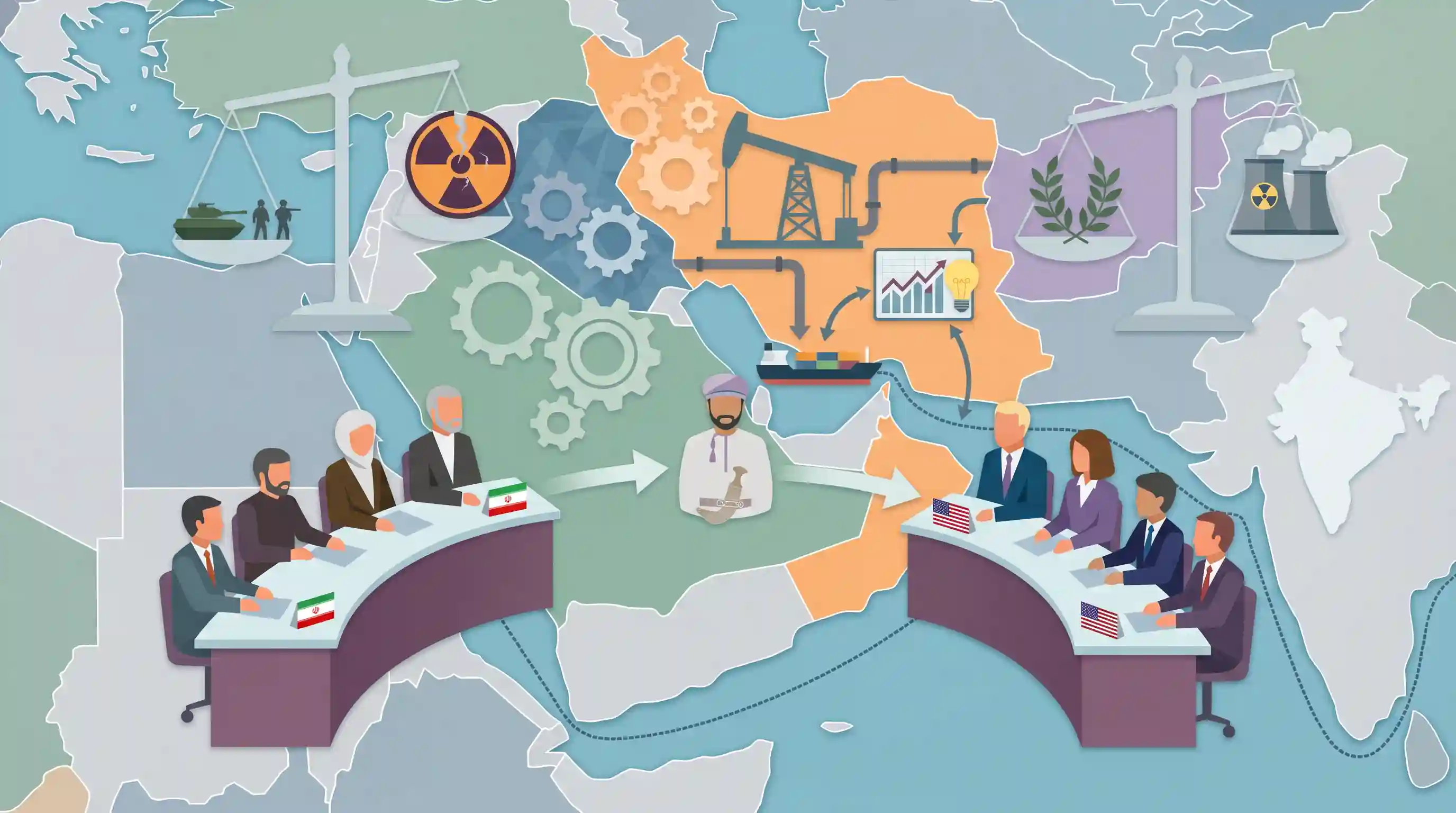
Iran and the US have resumed high-stakes indirect talks facilitated by Oman, focusing on nuclear diplomacy and regional de-escalation in the Middle East. With Iranian negotiator Abbas Araghchi playing a leading role, the talks reflect a pragmatic attempt by both sides to establish guardrails against broader regional conflict, despite the breakdown of the original JCPOA nuclear deal. This ongoing dialogue holds significant implications for global energy markets and India's strategic footprint in West Asia.
Key Points
- Iran and the United States are engaging in indirect diplomatic talks mediated by Oman to address ongoing Middle Eastern tensions and nuclear issues.
- Iranian diplomat Abbas Araghchi is a central figure in these high-stakes negotiations, maintaining a pragmatic 'open eyes' approach despite the fraught history of the JCPOA.
- The resumption of dialogue aims to prevent an uncontrolled regional escalation, indicating a mutual interest in establishing guardrails.
- For India, stability in West Asia remains a cornerstone of its energy security strategy and the broader geopolitical balance.
Important Terms
Joint Comprehensive Plan of Action (JCPOA)

The 2015 agreement between Iran and world powers to limit Tehran's nuclear program in exchange for sanctions relief; it remains the central benchmark for current diplomacy.
UPSC context
GS Paper II: International Relations. Tests knowledge of global treaties and their impact on India’s energy security in West Asia.
Abbas Araghchi
Iran's Foreign Minister (since 2024) and veteran diplomat who served as a chief architect of the JCPOA; he leads current indirect negotiations with the US.
UPSC context
GS Paper II: Bilateral Relations. Relevant for understanding diplomatic leadership and policy shifts in the Middle East.
Muscat Process (Omani Mediation)
The long-standing diplomatic role of Oman as a neutral 'backchannel' mediator facilitating indirect talks and message-shuttling between Washington and Tehran.
UPSC context
GS Paper II: IR. Tests understanding of West Asian geopolitics and the strategic importance of neutral mediators.
P5+1
The group of nations (China, France, Russia, UK, US, and Germany) that jointly negotiated with Iran to curb its nuclear ambitions.
UPSC context
GS Paper II: Global Groupings. Essential for analyzing multipolar diplomacy and the role of permanent UN Security Council members.
International Atomic Energy Agency (IAEA)
The UN nuclear watchdog responsible for monitoring nuclear facilities to ensure compliance with international safeguards and non-proliferation commitments.
UPSC context
GS Paper II: International Institutions. Tests knowledge of the bodies governing global nuclear safety and security.
Breakout Time
The estimated duration required for a state to enrich enough uranium to weapons-grade levels (typically 90%) for one nuclear bomb.
UPSC context
GS Paper III: Science & Technology/Security. A key metric in nuclear diplomacy testing technical understanding of weaponization timelines.
Prelims Trap
The JCPOA is a bilateral agreement between the USA and Iran, with Oman as a signatory mediator.
The JCPOA is a multilateral agreement involving the P5+1 nations and the EU. Oman facilitated crucial backchannel talks but is not a signatory.
Static Concepts Connected
What is the P5+1 framework within the JCPOA?
- P5 Nations: The five permanent members of the UN Security Council: USA, UK, France, Russia, and China.
- Plus One: Germany, which alongside the European Union, played a crucial role in the negotiations.
- Core Objective: Lifting heavy economic sanctions on Iran in exchange for strict, IAEA-verified limitations on its nuclear enrichment program.
What makes Oman geographically and strategically critical?
- Strait of Hormuz: Oman's Musandam Peninsula forms the southern shore of this vital oil transit chokepoint, bordering Iran to the north.
- Diplomatic Neutrality: Known as the "Switzerland of West Asia," Oman maintains strict non-alignment, making it a trusted regional mediator.
- Duqm Port: A strategic Omani port where the Indian Navy has secured logistical and turnaround access to monitor the Western Indian Ocean.
Cross-Topic Patterns
Chokepoints & Imported Inflation
Disruptions in the Strait of Hormuz directly impact India's crude imports, triggering cascading macroeconomic shocks in forex reserves, inflation, and domestic fuel prices.
Naval Diplomacy in the IOR
India's strategic access to Oman's Duqm port acts as a logistical counterweight in the Western Indian Ocean, safeguarding crucial sea lanes amidst West Asian geopolitical volatility.

Expect a Prelims mapping question combining the Strait of Hormuz, Oman's borders, and India's strategic assets like Duqm Port in 2026.
Linked PYQs · 3
Linked PYQs · 3
- 2025MainsGS2
"Energy security constitutes the dominant kingpin of India's foreign policy, and is linked with India's overarching influence in Middle Eastern countries.” How would you integrate energy security with India's foreign policy trajectories in the coming years?
- 2017MainsGS2
The question of India's Energy Security constitutes the most important part of India's economic progress. Analyze India's energy policy cooperation with West Asian countries.
- 2015PrelimsGS1
The area known as 'Golan Heights' sometimes appears in the news in the context of the events related to
