US Withdrawal from JCPOA and Middle East Geopolitical Fallout
Source:Indian Express ↗
Why It Matters
The US-Iran nuclear pact controversy is a recurring theme in global geopolitics. Understanding the rationale behind the JCPOA's breakdown is crucial for analyzing Middle Eastern stability, global nuclear non-proliferation architecture, and its direct impact on India's energy security and strategic investments.
Summary
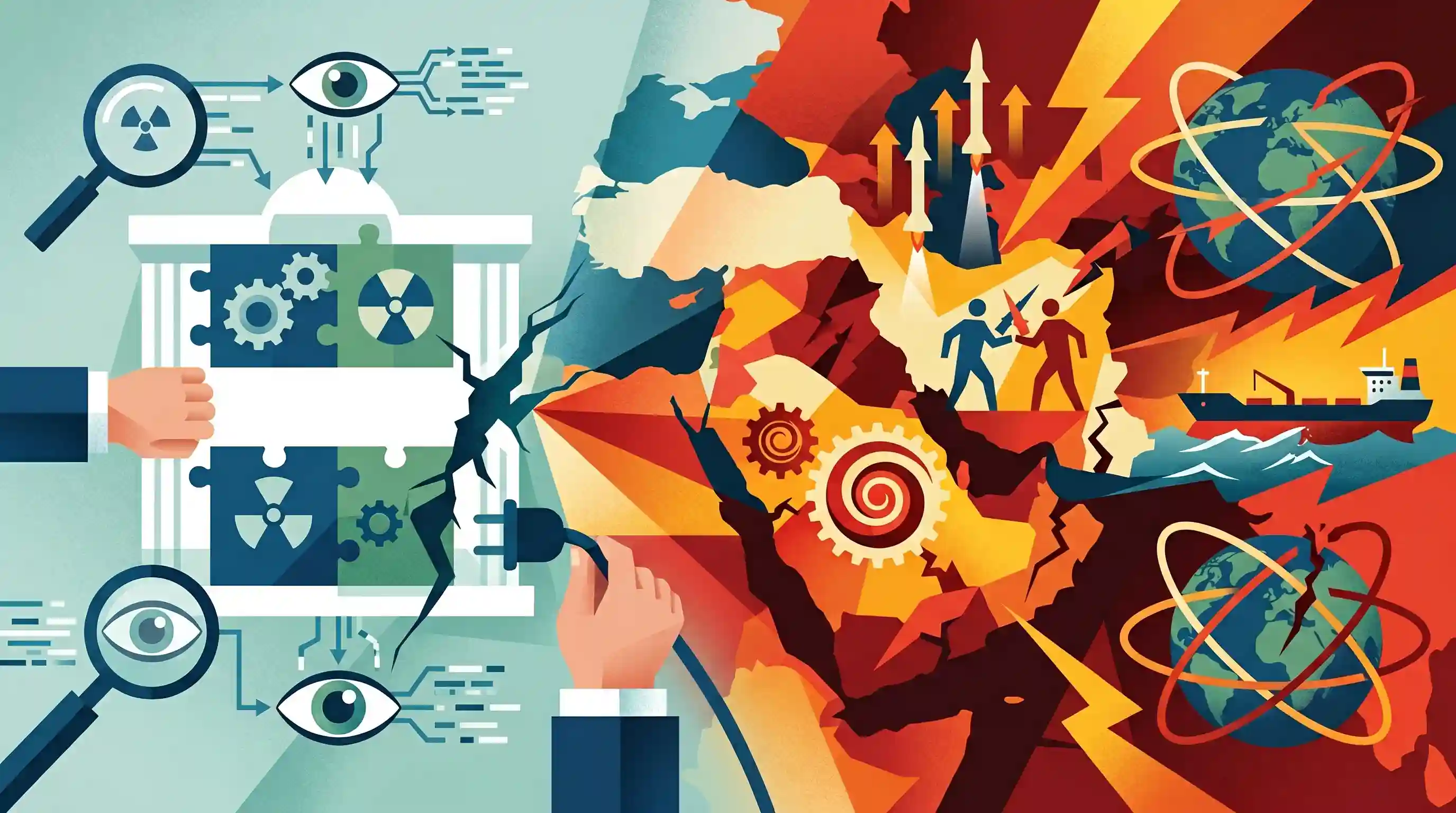
The article explores the geopolitical contradictions surrounding the US withdrawal from the Iran nuclear deal (JCPOA) and subsequent military escalations, despite Iran initially agreeing to unprecedented nuclear restrictions. It explains how the IAEA's strict oversight mechanisms, including the Additional Protocol, were implemented to curb Iran's nuclear program. However, the Donald Trump administration abandoned the deal to pursue a "maximum pressure" campaign, citing concerns over Iran's ballistic missile program and regional influence. This shift triggered escalatory cycles in the Middle East, fundamentally altering the region's security landscape and raising concerns for global energy security and non-proliferation efforts.
Key Points
- Under the JCPOA, Iran accepted unprecedented constraints on uranium enrichment and intrusive IAEA inspections to guarantee the peaceful nature of its nuclear program.
- The US, during Donald Trump's presidency, withdrew from the JCPOA in 2018 and reinstated a "maximum pressure" sanctions campaign, despite Iran's initial compliance.
- US objections centered on the deal's "sunset clauses" and its failure to constrain Iran's ballistic missile development and regional proxy networks.
- The breakdown of the agreement led to a cycle of military escalations and attacks, increasing the risk of widespread conflict in the Middle East.
- The resulting geopolitical instability directly impacts India's national interests, particularly concerning energy security, diaspora safety, and strategic connectivity projects.
Important Terms
Joint Comprehensive Plan of Action (JCPOA)

A 2015 landmark agreement between Iran and world powers (P5+1) that restricted Iran's nuclear activities in exchange for the lifting of economic sanctions.
UPSC context
GS Paper 2 (IR); critical for understanding Middle East geopolitics, non-proliferation diplomacy, and global energy security.
P5+1
A group consisting of the UN Security Council’s five permanent members (USA, UK, France, Russia, China) plus Germany, which negotiated the Iran nuclear deal.
UPSC context
GS Paper 2 (IR); tests knowledge of global power groupings and multilateral consensus-building in international security.
IAEA Additional Protocol
A legal document granting the IAEA expanded rights of access to information and sites to provide credible assurance about a country's peaceful nuclear activities.
UPSC context
GS Paper 2 (International Relations/Nuclear Policy); relevant for international verification regimes and India's specific safeguards agreements.
International Atomic Energy Agency (IAEA)
An autonomous international organization established in 1957 that promotes peaceful nuclear energy use and verifies that nuclear materials are not diverted for military purposes.
UPSC context
GS Paper 2 (Important International Institutions); essential for studying global nuclear governance and India’s energy security.
Maximum Pressure Campaign
A US policy initiated in 2018 involving intensified unilateral sanctions intended to cripple Iran’s economy and force it to renegotiate nuclear and regional security terms.
UPSC context
GS Paper 2 (Effect of policies of developed countries on India’s interests); analyzes US-Iran tensions and regional stability.
Prelims Trap
"US 'maximum pressure' sanctions forced India to halt both its oil imports and the Chabahar Port project."
While India stopped Iranian oil imports to avoid secondary sanctions, the US granted a specific sanctions carve-out for Chabahar port to facilitate Afghan reconstruction and humanitarian aid.
Static Concepts Connected
What is the difference between IAEA Comprehensive Safeguards and the Additional Protocol?
- Comprehensive Safeguards: Mandatory for NPT non-nuclear-weapon states; it restricts IAEA inspections to only verifying a country's officially 'declared' nuclear material.
- Additional Protocol: A voluntary legal standard granting IAEA inspectors expanded rights, including unannounced or short-notice access to 'undeclared' nuclear facilities.
- India's Status: India is not an NPT signatory but signed a customized Additional Protocol in 2014, placing its civilian reactors under IAEA safeguards.
How does the US CAATSA legislation affect India's strategic autonomy?
- Core Target: A US federal law penalizing countries that engage in significant transactions with Iran, North Korea, and Russia.
- Secondary Sanctions: Threatens foreign entities (like Indian banks or refiners) with exclusion from the US financial system if they transact with sanctioned states.
- Waiver Mechanism: The US President can grant national security waivers, utilized historically for India's Chabahar port operations and the S-400 missile defense purchase.
Cross-Topic Patterns
Sanctions reshaping India's energy basket
The halt in Iranian oil imports forced India to heavily diversify toward US and Russian crude, exposing the deep vulnerability of India's macroeconomic stability to extra-territorial US policies.
INSTC vs. IMEEC geopolitical friction
US-Iran hostility creates persistent secondary sanction risks for the Iran-transit INSTC, subtly increasing the strategic premium on US-backed connectivity alternatives like the India-Middle East-Europe Economic Corridor (IMEEC).

Expect a 2026 prelims question differentiating IAEA Comprehensive Safeguards from the Additional Protocol, testing India’s signatory status.
Linked PYQs · 3
Linked PYQs · 3
- 2018MainsGS2
In what ways would the ongoing US-Iran Nuclear Pact Controversy affect the national interest of India? How should India respond to this situation?
- 2018PrelimsGS1
In the Indian context, what is the implication of ratifying the 'Additional Protocol' with the 'International Atomic Energy Agency (IAEA)'?
- 2025MainsGS2
"Energy security constitutes the dominant kingpin of India's foreign policy, and is linked with India's overarching influence in Middle Eastern countries.” How would you integrate energy security with India's foreign policy trajectories in the coming years?
