Iran Denies Requesting Direct Talks With United States After War
Source:The Hindu ↗
Why It Matters
The Israel-Iran conflict and direct US military involvement in the Middle East significantly alter global geopolitical dynamics and energy markets. For UPSC aspirants, understanding the internal political constraints within Iran and the broader US-Middle East engagement is crucial for analyzing energy security risks and India's strategic balancing in West Asia.
Summary
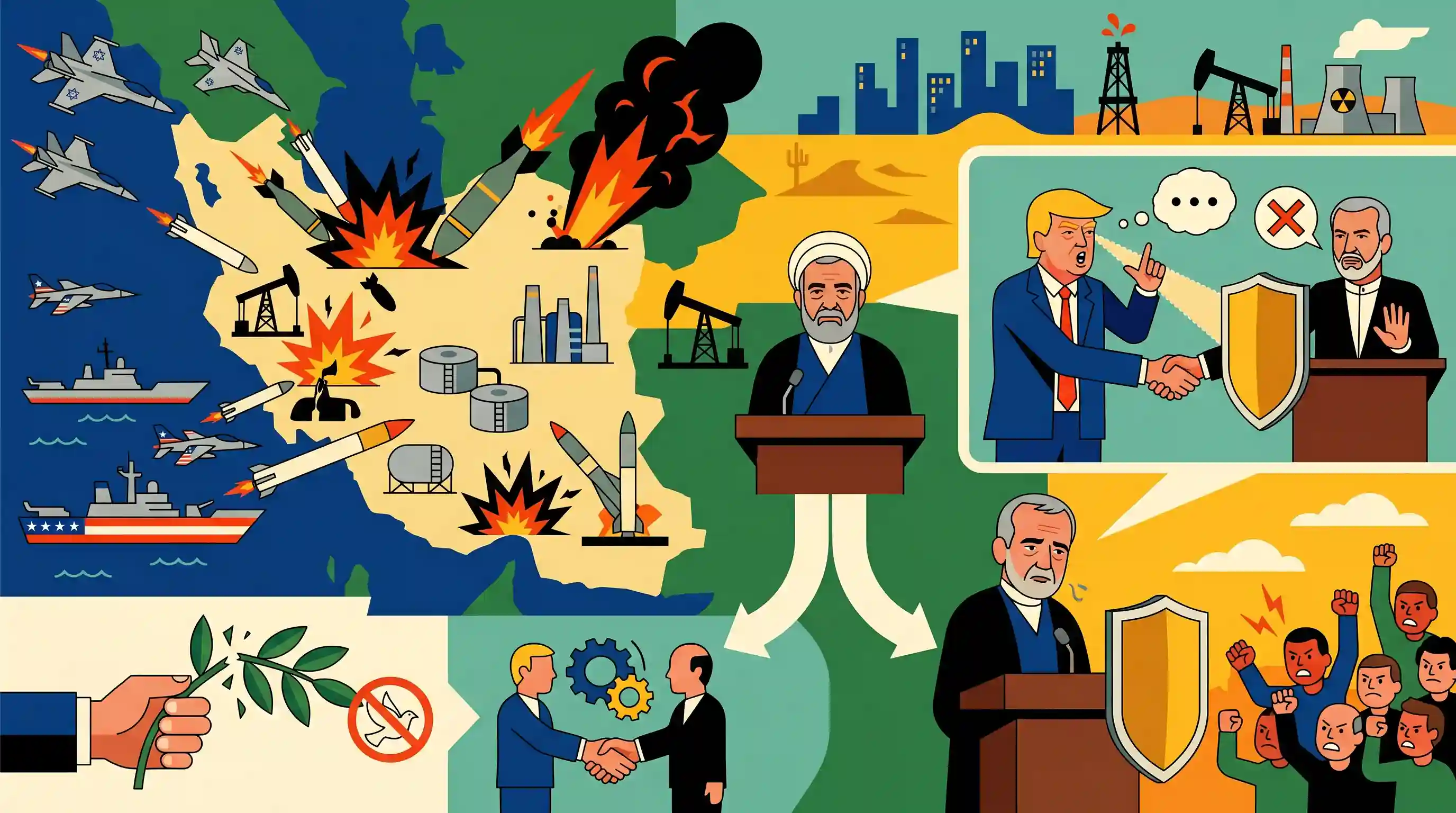
Iran's Foreign Ministry has denied making any request for direct talks with the US since the onset of the recent war with Israel, rejecting recent claims by Donald Trump. The denial follows a devastating conflict that saw Israel and subsequently the US launching massive strikes on Iranian military and energy infrastructure in June 2025, concluding with a ceasefire on June 24. While Iranian President Masoud Pezeshkian was elected on a platform of easing sanctions through dialogue, the recent hostilities have hardened domestic attitudes, with his administration facing criticism for appearing too conciliatory towards the West.
Key Points
- Iran formally denied requesting talks with the US following the Israel-Iran war, rejecting claims made by Donald Trump.
- A ceasefire between Iran and Israel went into effect on June 24, 2025, after a devastating conflict.
- The US carried out substantial strikes on Iranian military and energy infrastructure on June 22, 2025, preceding the ceasefire.
- Iranian President Masoud Pezeshkian faces domestic political pressure from hardliners for appearing too open to dialogue with Western powers amidst ongoing geopolitical tensions.
Prelims Trap
Iran is excluded from major multilateral groupings like BRICS and SCO due to US sanctions.
Despite severe US and Western sanctions, Iran is not diplomatically isolated from the Global South; it formally joined the SCO in 2023 and BRICS in 2024.
Static Concepts Connected
What are the macroeconomic impacts of Middle East energy shocks on India?
- Widening CAD: Spikes in global crude oil prices significantly widen India's trade deficit, subsequently expanding the Current Account Deficit (CAD) and pressuring the Rupee.
- Imported Inflation: Increased fuel and maritime freight costs ripple through the domestic supply chain, leading to cost-push imported inflation that affects the CPI.
Why is the Strait of Hormuz a critical global maritime chokepoint?
- Geographic Location: It physically connects the Persian Gulf to the Gulf of Oman and the Arabian Sea, serving as the sole sea passage from the Persian Gulf.
- Energy Transit: It handles 20-25% of global oil consumption. Any military blockade or mining by Iran severely threatens energy supply chains for import-dependent nations like India.
Cross-Topic Patterns
De-hyphenation Policy in West Asia
India strictly balances its technology and defense partnerships with Israel (e.g., I2U2) against its strategic Eurasian connectivity projects with Iran (Chabahar Port, INSTC), utilizing a 'de-hyphenation' diplomatic strategy.
JCPOA Collapse and Secondary Sanctions
The 2018 US withdrawal from the JCPOA and subsequent secondary sanctions forced India to drastically cut Iranian crude imports, fundamentally altering India's energy procurement strategy.

Expect a 2026 prelims map question combining Iran's targeted energy infrastructure, Chabahar port, and the Strait of Hormuz.
Linked PYQs · 3
Linked PYQs · 3
- 2018MainsGS2
In what ways would the ongoing US-Iran Nuclear Pact Controversy affect the national interest of India? How should India respond to this situation?
- 2025MainsGS2
"Energy security constitutes the dominant kingpin of India's foreign policy, and is linked with India's overarching influence in Middle Eastern countries.” How would you integrate energy security with India's foreign policy trajectories in the coming years?
- 2018MainsGS2
“India’s relations with Israel have, of late, acquired a depth and diversity, which cannot be rolled back.” Discuss.
