Iran Declares Nuclear Watchdog Cooperation Agreement Void
Source:Indian Express ↗
Why It Matters
The collapse of IAEA inspections in Iran directly impacts global nuclear non-proliferation efforts and regional stability in the Middle East. For UPSC aspirants, understanding the mandate of the IAEA, the history of the Iran nuclear deal (JCPOA), and the geopolitical ramifications of sanctions is crucial for International Relations (GS2) and Prelims questions on global organizations.
Summary
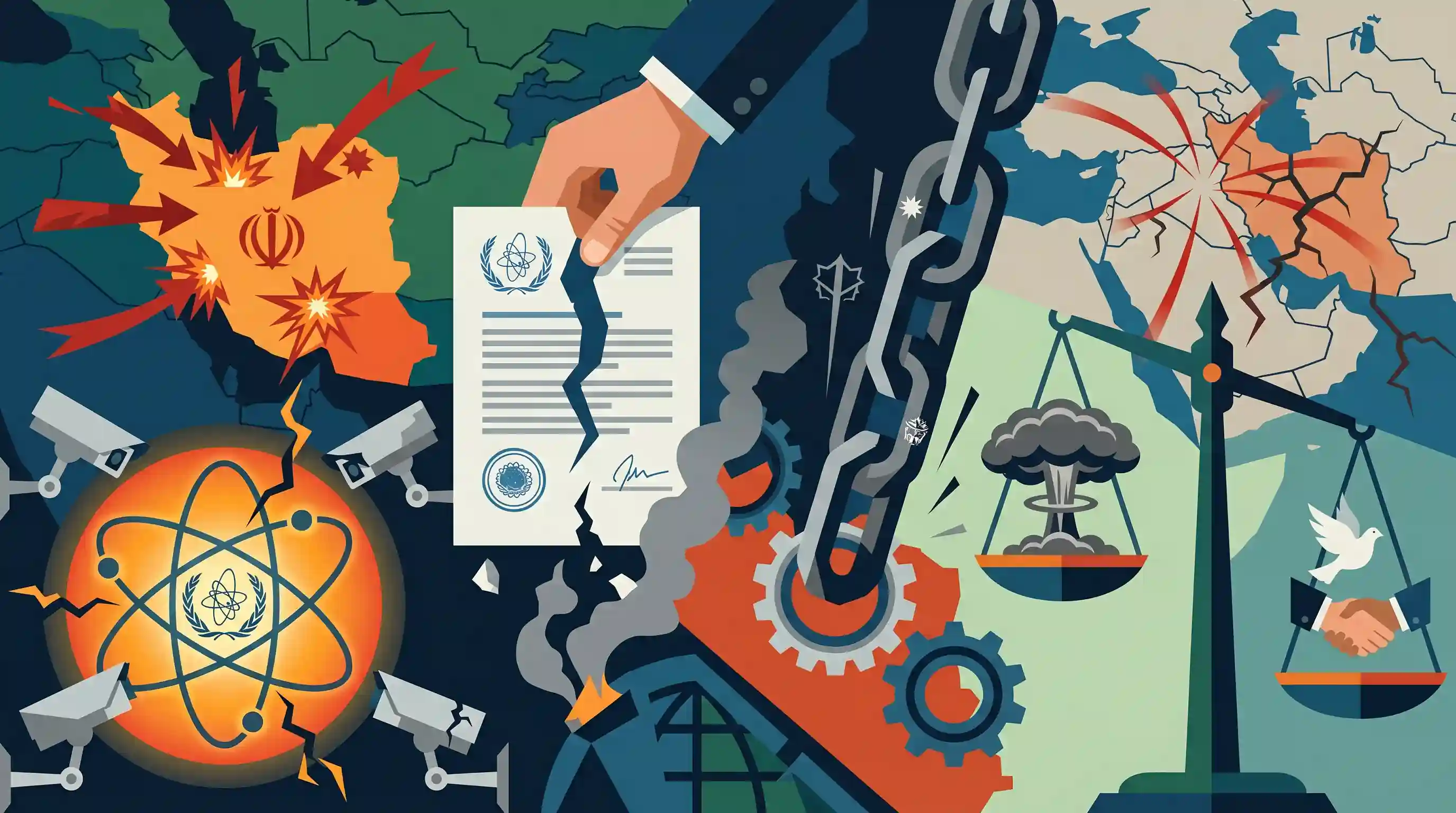
Iran has formally scrapped a cooperation agreement with the International Atomic Energy Agency (IAEA) that was signed in September 2025 to facilitate inspections of its nuclear sites. According to Ali Larijani, Secretary of Iran's Supreme National Security Council, the deal is now void due to the reinstatement of UN sanctions by Western powers. This decision undermines the IAEA's recent efforts to restore monitoring capabilities, which had been severely disrupted following military strikes on Iranian nuclear installations by Israel and the US in June 2025, further escalating geopolitical tensions and non-proliferation concerns in the Middle East.
Key Points
- Iran has declared its September 2025 cooperation agreement with the UN nuclear watchdog (IAEA) void.
- The scrapped deal had previously allowed the IAEA to resume critical inspections of Iran's nuclear facilities.
- Iran attributed its decision to the reinstatement of UN sanctions by Western powers in the preceding month.
- This development deals a significant blow to the IAEA's efforts to monitor Iran's nuclear program, especially following the June 2025 US and Israeli military strikes on Iranian nuclear sites.
Important Terms
IAEA (International Atomic Energy Agency)

An autonomous international organization within the UN system that promotes peaceful nuclear energy and ensures, through safeguards and inspections, that nuclear materials are not used for military purposes.
UPSC context
GS Paper II (International Institutions); crucial for understanding nuclear diplomacy, safeguards, and India's role.
Supreme National Security Council (Iran)
Iran's highest constitutional body for defense and security, responsible for formulating nuclear policy and coordinating military and intelligence activities. Decisions require the Supreme Leader's final approval.
UPSC context
GS Paper II (International Relations); relevant for analyzing foreign state actors and regional security dynamics.
Snapback Mechanism
A provision under UNSC Resolution 2231 allowing the automatic reinstatement of previously lifted UN sanctions if Iran significantly violates its nuclear commitments, bypassing the standard Security Council veto.
UPSC context
GS Paper II (International Relations); focuses on the JCPOA framework and UN multilateral diplomacy.
Nuclear Non-proliferation
A global regime and policy framework aimed at preventing the spread of nuclear weapons and technology while encouraging cooperation in the peaceful uses of atomic energy.
UPSC context
GS Papers II & III; fundamental to global security architecture and India's nuclear doctrine.
IAEA Cooperation Deal (Sept 2025)
A specific 2025 framework between Tehran and the IAEA designed to restore monitoring and inspection access to Iranian nuclear sites following regional military escalations and damaged facilities.
UPSC context
GS Paper II (Current Affairs); tests knowledge of contemporary diplomatic efforts and nuclear verification challenges.
Prelims Trap
"India's ratification of the IAEA Additional Protocol places all its nuclear installations under international safeguards."
India signed an "India-specific" Additional Protocol, which carefully separates civilian and military facilities. Only designated civilian reactors are placed under IAEA safeguards, keeping military sites strictly exempt.
Static Concepts Connected
What are IAEA Safeguards and the Additional Protocol?
- Basic Safeguards: Standard agreements ensuring a state's declared nuclear materials are not diverted to weapons programs.
- Additional Protocol: A voluntary, expanded agreement granting IAEA inspectors enhanced access to information and undeclared physical sites.
- India's Position: India signed an India-specific Additional Protocol in 2009, bringing only civilian facilities under IAEA watch, exempting military sites.
What is the "Snapback" mechanism regarding Iran?
- Origin: Enshrined in UN Security Council Resolution 2231, which endorsed the 2015 JCPOA (Iran Nuclear Deal).
- Mechanism: Allows any participating state to unilaterally reinstate all UN sanctions on Iran in the event of significant non-compliance.
- Veto-proof: It is designed to bypass the traditional UNSC veto process, ensuring swift reimposition of multilateral sanctions.
Cross-Topic Patterns
Sanctions impact on Eurasian connectivity
Escalating UN and Western sanctions on Iran create secondary-sanction risks for India's strategic investments in Chabahar Port and the INSTC, complicating access to Central Asian markets.
India's strategic balancing in West Asia
India must continuously navigate its energy security and historical ties with Iran against its deepening strategic, technological, and defense partnerships with the US and Israel.

Differences between standard IAEA safeguards, the Additional Protocol, and JCPOA's snapback mechanism are prime targets for 2026 Prelims.
Linked PYQs · 3
Linked PYQs · 3
- 2018PrelimsGS1
In the Indian context, what is the implication of ratifying the 'Additional Protocol' with the 'International Atomic Energy Agency (IAEA)'?
- 2020PrelimsGS1
In India, why are some nuclear reactors kept under "IAEA Safeguards" while others are not?
- 2018MainsGS2
In what ways would the ongoing US-Iran Nuclear Pact Controversy affect the national interest of India? How should India respond to this situation?
