Strait of Hormuz Navigational Restrictions and Geopolitics
Source:The Hindu ↗
Why It Matters
The Strait of Hormuz is a critical chokepoint for global oil supplies; disruptions here directly impact India's energy security and macroeconomic stability. The broader US-Iran-Israel conflict alters Middle Eastern geopolitics, requiring recalibration of India's foreign policy in the region.
Summary
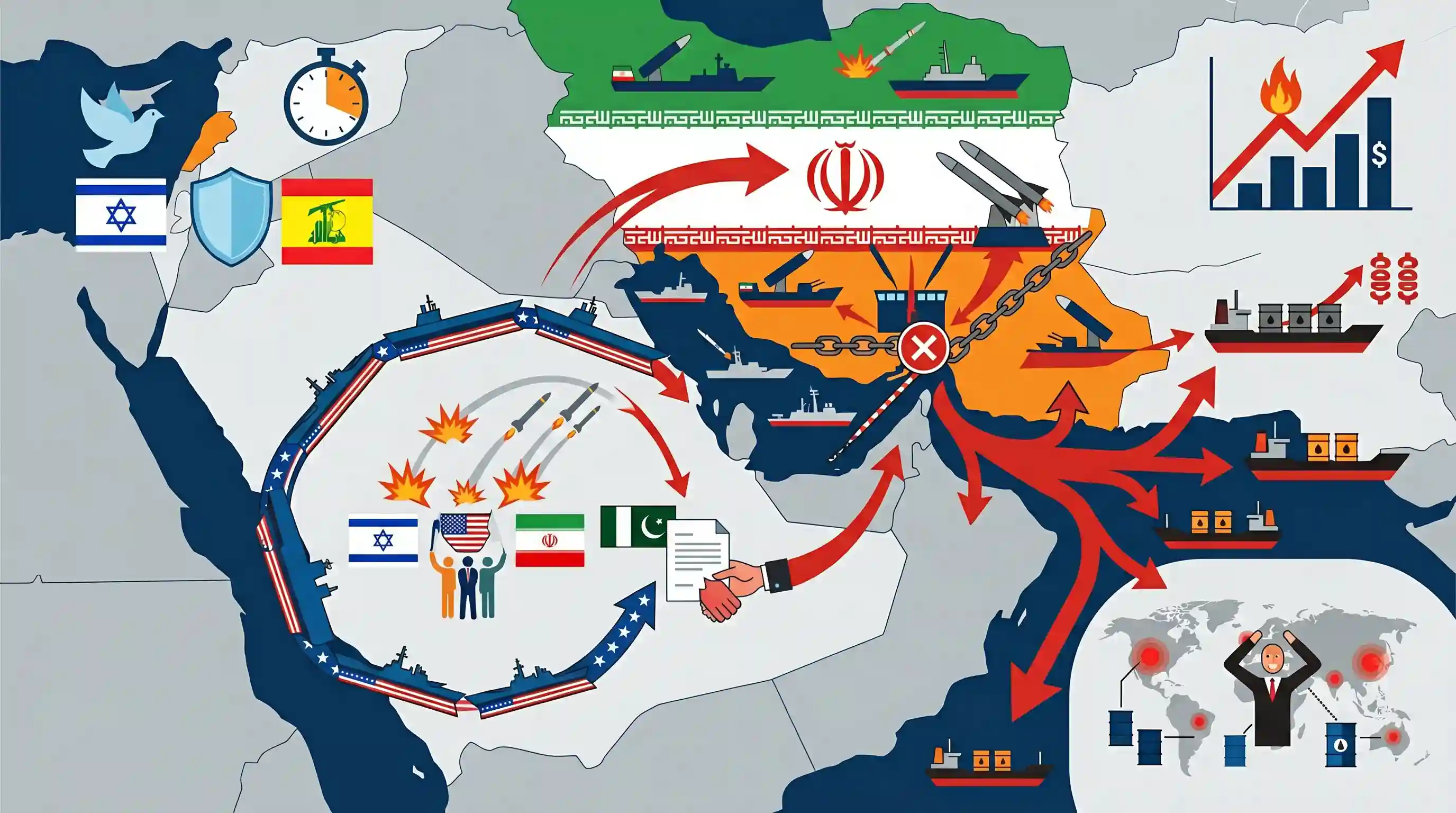
Iran has reinstated restrictions on the Strait of Hormuz, accusing the United States of violating an agreement to keep the vital shipping lane open. This action comes in retaliation against an ongoing US blockade of Iranian ports. The US has maintained this blockade to force Tehran to agree to a Pakistan-brokered ceasefire, aiming to resolve a multi-week conflict involving Israel, the US, and Iran. In a related regional development, Israel and Hezbollah have entered a 10-day truce in Lebanon. The closure of the Strait of Hormuz, a key artery for global oil trade, severely threatens global energy security and risks spiking international oil prices.
Key Points
- Iran has reimposed navigational restrictions on the Strait of Hormuz, a critical global chokepoint for oil transport.
- The restrictions are a retaliatory measure against a US blockade on Iranian ports, which Iran claims violates a prior agreement to keep the strait open.
- The US blockade is intended to pressure Iran into accepting a Pakistan-brokered ceasefire following weeks of conflict involving Israel, the US, and Iran.
- A separate 10-day truce has been agreed upon between Israel and Hezbollah in Lebanon.
- The escalating tensions pose significant risks to global oil prices and energy security.
Important Terms
Strait of Hormuz

A strategic narrow waterway between Iran and Oman connecting the Persian Gulf to the Gulf of Oman. It is the world's most critical oil transit chokepoint.
UPSC context
GS Paper 1 (Geography: Mapping) and GS Paper 2 (International Relations: Geopolitics of West Asia).
Hezbollah
A Lebanese Shia militant group and political party backed by Iran. It is a primary member of the 'Axis of Resistance' and a major regional rival to Israel.
UPSC context
GS Paper 2 (International Relations: Non-state actors and regional security in West Asia).
Maritime Chokepoints
Geographically narrow sea passages (e.g., straits or canals) that concentrate high volumes of global maritime trade. They are vital for shipping efficiency but vulnerable to blockades.
UPSC context
GS Paper 1 (Geography) and GS Paper 3 (Economy: Global trade and supply chains).
Energy Security
The uninterrupted availability of energy sources at an affordable price. It includes availability, reliability, affordability, and sustainability of energy supplies for national development.
UPSC context
GS Paper 3 (Infrastructure/Energy) and GS Paper 2 (Strategic implications of global supply disruptions).
Axis of Resistance
An informal anti-Western and anti-Israeli alliance led by Iran, comprising various state and non-state actors like Hezbollah and the Syrian government.
UPSC context
GS Paper 2 (International Relations: Geopolitics of the Middle East and Iranian influence).
US-Iran Relations
A complex, adversarial diplomatic relationship since the 1979 Revolution, involving sanctions, proxy conflicts, and nuclear negotiations that significantly impact global oil markets.
UPSC context
GS Paper 2 (International Relations: Bilateral ties and their effect on India's strategic interests).
Prelims Trap
"The Strait of Hormuz is bordered by Iran and the UAE, connecting the Red Sea to the Arabian Sea."
It connects the Persian Gulf to the Gulf of Oman. Crucially, its southern coast is Oman's Musandam Peninsula, not the UAE.
Static Concepts Connected
Which are the primary strategic maritime chokepoints in the Middle East?
- Strait of Hormuz: Connects the Persian Gulf to the Gulf of Oman and Arabian Sea. Bordered by Iran and Oman.
- Bab-el-Mandeb: Connects the Red Sea to the Gulf of Aden. Bordered by Yemen on the Arabian Peninsula, and Djibouti and Eritrea in the Horn of Africa.
- Suez Canal: An artificial sea-level waterway connecting the Mediterranean Sea to the Red Sea through the Isthmus of Suez in Egypt.
How do global oil supply shocks negatively impact India's macroeconomic indicators?
- Current Account Deficit: A sudden surge in the import bill for petroleum products directly widens the CAD, destabilizing the balance of payments.
- Currency Depreciation: Higher dollar demand to finance expensive crude oil imports leads to the depreciation of the Indian Rupee.
- Imported Inflation: Increased freight, logistics, and fuel costs cascade across sectors, triggering domestic retail inflation (Cost-Push Inflation).
Cross-Topic Patterns
Strait closure vs. INSTC viability
US blockades on Iranian ports paralyze India's alternative connectivity frameworks to Central Asia, specifically threatening the long-term strategic viability of the Chabahar Port and the INSTC.
Emerging non-Arab mediators in West Asia
Pakistan acting as a ceasefire broker between the US, Israel, and Iran signals a departure from traditional Gulf-led mediation, testing new geopolitical leverages in the Islamic world.

Map-based matching of West Asian chokepoints (Hormuz, Bab-el-Mandeb) with bordering nations and connected water bodies is highly likely.
Linked PYQs · 4
Linked PYQs · 4
- 2025MainsGS2
"Energy security constitutes the dominant kingpin of India's foreign policy, and is linked with India's overarching influence in Middle Eastern countries.” How would you integrate energy security with India's foreign policy trajectories in the coming years?
- 2018MainsGS2
In what ways would the ongoing US-Iran Nuclear Pact Controversy affect the national interest of India? How should India respond to this situation?
- 2018MainsGS2
“India’s relations with Israel have, of late, acquired a depth and diversity, which cannot be rolled back.” Discuss.
- 2024PrelimsGS1
Consider the following statements : Statement-I : Sumed pipeline is a strategic route for Persian Gulf oil and natural gas shipments to Europe. Statement-II : Sumed pipeline connects the Red Sea with the Mediterranean Sea. Which one of the following is correct in respect of the above statements?
