Impact of Middle East Conflict on India Overseas Trade and Chokepoints
Source:The Hindu ↗
Why It Matters
This issue directly maps to UPSC syllabus themes regarding the effect of global politics on India's strategic and economic interests (GS2), as well as energy security and economic growth (GS3). Understanding the significance of geographic chokepoints (like the Strait of Hormuz) is also vital for Prelims Geography and Mains IR.
Summary
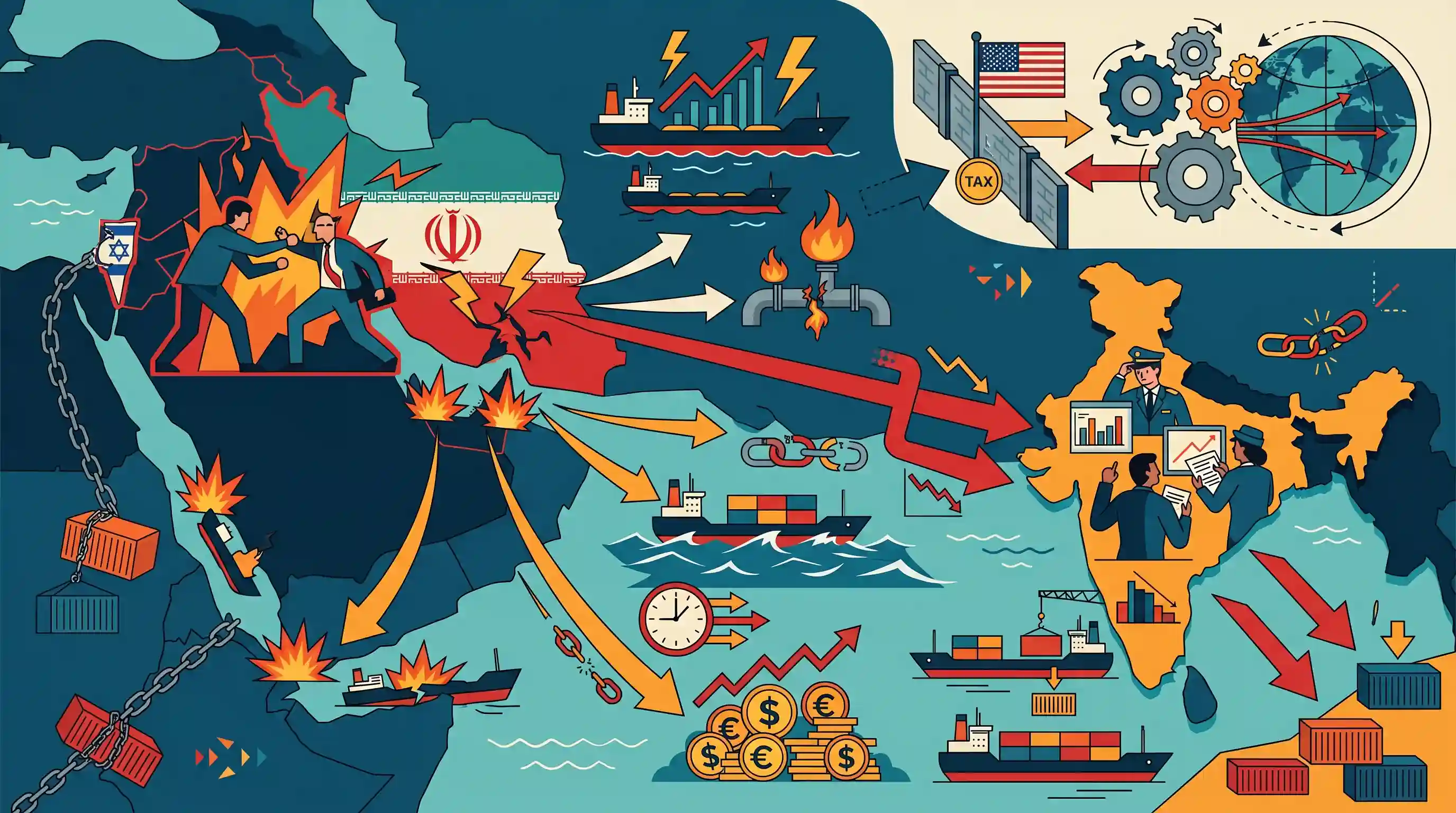
The Indian government is actively assessing the economic implications of the escalating Iran-Israel conflict on the country's overseas trade. Disruptions in crucial maritime routes like the Strait of Hormuz and the Red Sea (Bab el-Mandeb) pose severe risks to global supply chains and energy security. The potential for soaring freight rates and delayed shipments threatens India's export competitiveness. This regional instability coincides with broader concerns of a global trade slowdown, potentially worsened by protectionist tariff policies from the US.
Key Points
- The Indian government is convening meetings with stakeholders to evaluate the economic fallout of escalating tensions between Iran and Israel on overseas trade.
- Crucial maritime chokepoints, such as the Strait of Hormuz and the Bab el-Mandeb Strait in the Red Sea, face significant disruption risks, threatening global energy and trade flows.
- Escalating conflicts could trigger a sharp rise in shipping freight rates, adversely impacting the competitiveness of India's merchandise exports and inflating import costs.
- These geopolitical tensions compound fears of a broader global trade contraction, exacerbated by the prospect of protectionist trade policies and high tariffs from the United States.
Important Terms
Strait of Hormuz

A strategic waterway between the Persian Gulf and Gulf of Oman, handling ~20% of global oil and significant LNG trade. It is the sole maritime outlet for many Gulf producers.
UPSC context
GS Paper 2 (International Relations) and Paper 3 (Energy Security). Tests knowledge of maritime chokepoints and India's energy import vulnerabilities.
Bab el-Mandeb (Red Sea)
A critical chokepoint connecting the Red Sea to the Gulf of Aden. It is vital for trade between Asia and Europe via the Suez Canal.
UPSC context
GS Paper 2 (Geopolitics of West Asia). Crucial for understanding global trade routes and the impact of non-state actors (e.g., Houthis).
World Trade Organization (WTO)
A global international organization dealing with the rules of trade between nations. It provides a platform for negotiations and dispute settlement to ensure predictable trade.
UPSC context
GS Paper 2 (Important International Institutions). Relevant for trade diplomacy and the impact of protectionism on developing economies.
Federation of Indian Export Organisations (FIEO)
The apex body of Indian export promotion councils, representing exporters' interests and providing market intelligence, policy advocacy, and guidance on global trade disruptions.
UPSC context
GS Paper 3 (Indian Economy). Vital for understanding export competitiveness and institutional support for MSMEs during geopolitical crises.
Energy Security
The uninterrupted availability of energy sources at an affordable price. For India, it involves diversifying imports and building Strategic Petroleum Reserves (SPR).
UPSC context
GS Paper 3 (Infrastructure/Energy). Essential for evaluating India's macroeconomic stability and industrial growth against external shocks.
Supply Chain Resilience
The ability of a supply chain to anticipate, resist, and recover from disruptions. It involves diversifying suppliers and routes to mitigate geopolitical risks.
UPSC context
GS Paper 3 (Changes in Industrial Policy). Tests understanding of global value chains and India's 'Atmanirbhar Bharat' objectives.
Prelims Trap
"Bab el-Mandeb connects the Persian Gulf to the Gulf of Oman."
Aspirants often swap West Asian straits. Bab el-Mandeb connects the Red Sea to the Gulf of Aden, whereas the Strait of Hormuz links the Persian Gulf to the Gulf of Oman.
Static Concepts Connected
What are the primary maritime chokepoints in West Asia and their connected water bodies?
- Strait of Hormuz: Links the Persian Gulf to the Gulf of Oman. It is the world's most critical oil transit chokepoint.
- Bab el-Mandeb: Connects the Red Sea to the Gulf of Aden, serving as the southern maritime gateway to the Suez Canal.
How do West Asian supply disruptions trigger "Imported Inflation" in India?
- Crude Oil Dependence: India imports over 85% of its crude; global supply shocks immediately inflate the domestic import bill and fuel prices.
- Elevated Freight Costs: Rerouting vessels via the Cape of Good Hope drastically increases shipping transit time and insurance premiums, inflating landed costs.
- Currency Depreciation: A widening current account deficit from costly oil increases dollar demand, weakening the Rupee and making all imports dearer.
Cross-Topic Patterns
Red Sea crisis & alternative trade corridors
Vulnerabilities in traditional maritime routes heavily reinforce the strategic urgency for multi-modal connectivity projects like the India-Middle East-Europe Economic Corridor (IMEC) and the Chabahar-linked INSTC.
Geopolitics + US tariff protectionism
India's merchandise exports face a structural squeeze: logistical costs are inflating due to regional conflicts while developed-market demand shrinks under incoming US reciprocal tariffs.

Expect a 2026 multi-statement question connecting West Asian maritime chokepoints (map) to macroeconomic impacts like imported inflation.
Linked PYQs · 2
Linked PYQs · 2
- 2024MainsGS2
Discuss the geopolitical and geostrategic importance of Maldives for India with a focus on global trade and energy flows. Further also discuss how this relationship affects India's maritime security and regional stability amidst international competition ?
- 2024PrelimsGS1
Consider the following statements : Statement-I : Sumed pipeline is a strategic route for Persian Gulf oil and natural gas shipments to Europe. Statement-II : Sumed pipeline connects the Red Sea with the Mediterranean Sea. Which one of the following is correct in respect of the above statements?
