Middle East Tensions Force Cancellation of 444 Flights in India
Source:Indian Express ↗
Why It Matters
It illustrates the direct impact of distant geopolitical conflicts (Middle East) on domestic infrastructure (aviation) and the economy. Furthermore, it highlights the role of regulatory bodies (DGCA) and digital governance initiatives (AirSewa) in effective crisis management and consumer protection.
Summary
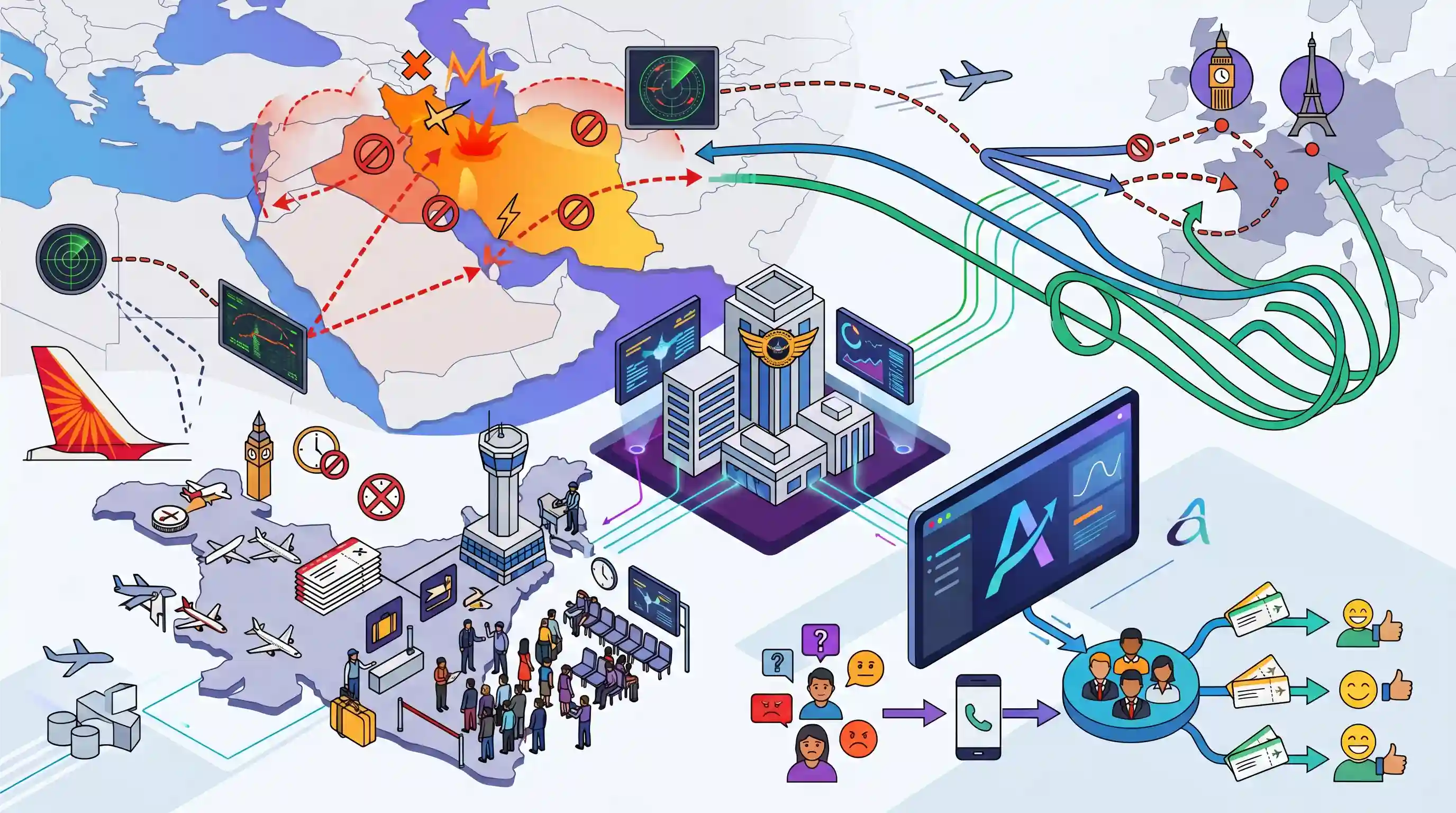
Rising geopolitical tensions between Iran and Israel have led to significant airspace restrictions across the Middle East, disrupting global aviation routes and forcing the cancellation of 444 flights in India. In response, India\'s Ministry of Civil Aviation (MoCA) and the Directorate General of Civil Aviation (DGCA) have intensified coordination with airlines and airports to manage route diversions, crowd control, and passenger facilitation. Major airlines, including Air India, have suspended several flights to Europe to ensure safety. The government is also utilizing its AirSewa digital platform to track and swiftly resolve passenger grievances arising from the sudden operational halt.
Key Points
- The escalating Iran-Israel conflict has triggered airspace restrictions over the Middle East, forcing the cancellation of at least 444 flights connected to India.
- The Ministry of Civil Aviation (MoCA) and the DGCA are spearheading crisis management by coordinating with airlines for route diversions, passenger safety, and terminal crowd control.
- The government's digital grievance redressal portal, AirSewa, is actively managing and resolving passenger complaints amid the disruptions.
- Major carriers like Air India have suspended several crucial international routes linking India to European destinations, reflecting the sector\'s vulnerability to geopolitical instability.
Important Terms
Ministry of Civil Aviation (MoCA)

The central nodal ministry responsible for formulating national policies, programs, and regulations for the development of the civil aviation sector in India.
UPSC context
GS Paper II (Governance/Polity); tests understanding of executive bodies and sector-specific policy frameworks for infrastructure.
Directorate General of Civil Aviation (DGCA)
The statutory regulatory body under MoCA responsible for ensuring aviation safety, airworthiness standards, pilot licensing, and coordinating with the International Civil Aviation Organization (ICAO).
UPSC context
GS Paper II (Statutory Bodies) and GS Paper III (Infrastructure/Safety); relevant for regulatory governance and disaster/risk management.
AirSewa
A digital platform and mobile app launched by MoCA for air passenger grievance redressal, providing real-time flight status and airport information.
UPSC context
GS Paper II (E-Governance); highlights the application of ICT in governance and citizen-centric service delivery.
Air India
Formerly India's national carrier, now a private airline owned by the Tata Group. It remains a key player in India's international air connectivity.
UPSC context
GS Paper III (Economy); tests knowledge on disinvestment, privatization, and the impact of global geopolitics on domestic industry.
Prelims Trap
The DGCA is merely an attached executive office under the Ministry of Civil Aviation without statutory backing.
A classic trap. DGCA was historically an attached office but was elevated to a statutory body by the Aircraft (Amendment) Act, 2020, granting it formal legal powers for aviation safety.
Static Concepts Connected
How does the Chicago Convention govern airspace sovereignty and commercial flight routes?
- Absolute Sovereignty: Article 1 grants nations complete and exclusive sovereignty over their territorial airspace, allowing them to legally and unilaterally close it during conflicts.
- First Freedom: The First Freedom of the Air allows airlines to overfly foreign airspace without landing; this privilege is suspended during airspace closures.
What is the statutory framework governing the DGCA in India?
- Statutory Elevation: Previously an attached office, the DGCA was granted formal statutory status under the Aircraft (Amendment) Act, 2020.
- Core Mandate: It acts as the apex regulatory body for civil aviation safety, airworthiness standards, investigating minor incidents, and pilot licensing in India.
Cross-Topic Patterns
Geopolitics, Airspace, and Imported Inflation
Middle East airspace closures force costly route diversions. The resulting spike in Aviation Turbine Fuel (ATF) consumption disrupts supply chains and imports inflationary pressures into India's broader economy.
E-Governance in Crisis Management
The active deployment of the AirSewa platform during this aviation crisis highlights the integration of e-governance tools for real-time citizen grievance redressal during sudden external shocks.

Expect a 2026 prelims question linking the Chicago Convention's 'Freedoms of the Air' to geopolitical supply chain disruptions.
Linked PYQs · 3
Linked PYQs · 3
- 2014MainsGS3
International civil aviation laws provide all countries complete and exclusive sovereignty over the airspace above their territory. What do you understand by 'airspace'? What are the implications of these laws on the space above this airspace? Discuss the challenges which this poses and suggest ways to contain the threat.
- 2018MainsGS2
“India’s relations with Israel have, of late, acquired a depth and diversity, which cannot be rolled back.” Discuss.
- 2025MainsGS2
"Energy security constitutes the dominant kingpin of India's foreign policy, and is linked with India's overarching influence in Middle Eastern countries.” How would you integrate energy security with India's foreign policy trajectories in the coming years?
