Iran and US Agree to Resume Nuclear Program Negotiations in Muscat
Source:The Hindu ↗
Why It Matters
The resumption of US-Iran nuclear talks is critical for Middle East stability, directly impacting global energy security, non-proliferation regimes, and India's strategic balancing in the region.
Summary
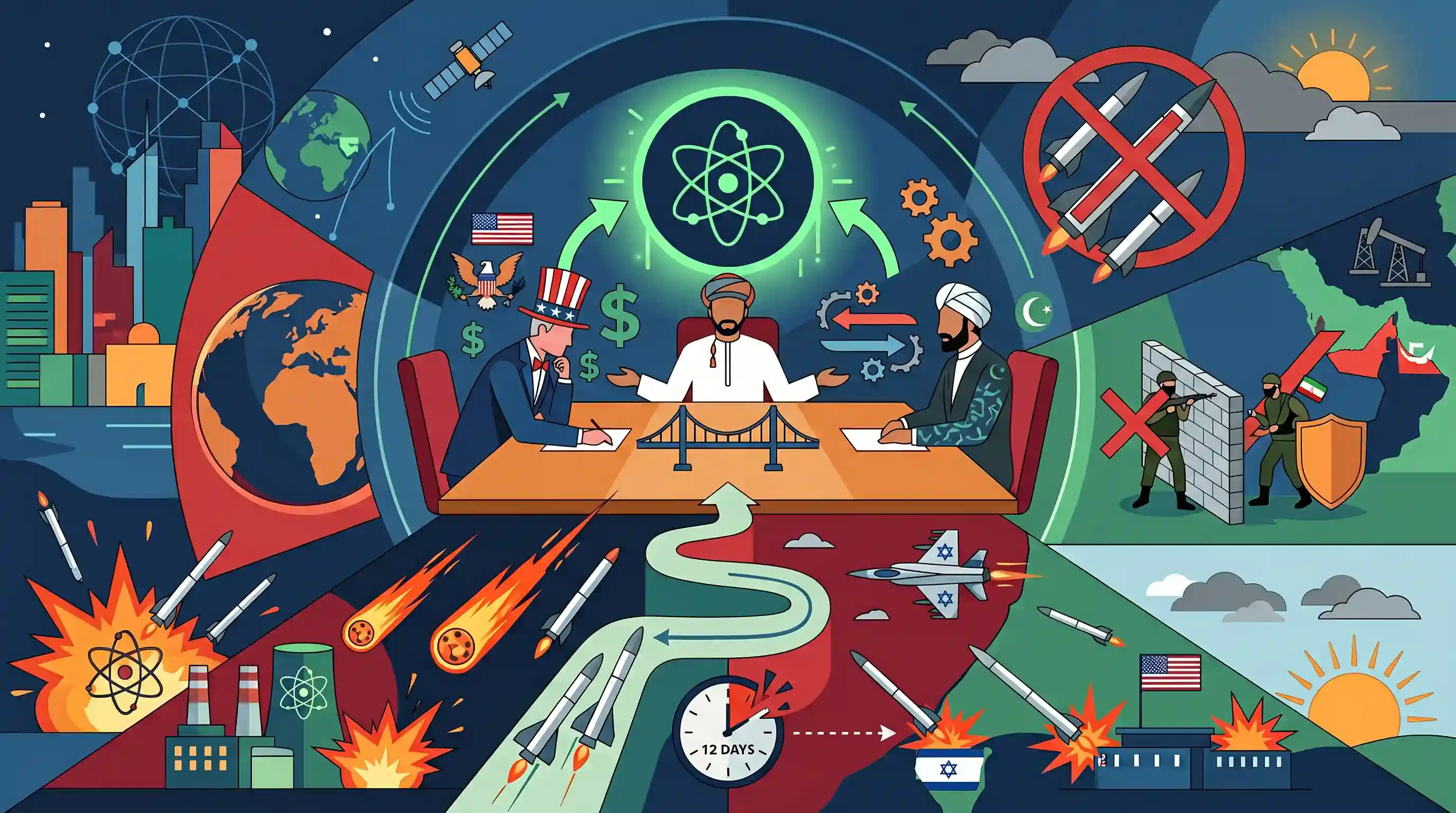
Iran and the United States have agreed to resume negotiations regarding Iran's nuclear program, mediated by Oman in Muscat. This diplomatic re-engagement follows a period of severe regional escalation, including a 12-day war sparked by Israeli strikes on Iranian nuclear sites, US military interventions, and Iranian retaliation targeting Israel and a US base in Qatar. While Iranian Foreign Minister Abbas Araghchi characterized the initial talks as a positive start, Iran has strictly limited the scope of negotiations to the nuclear issue, rejecting US attempts to address Iran's ballistic missile capabilities and its backing of regional militant factions.
Key Points
- Iran and the US have agreed to proceed with negotiations focused exclusively on Iran's nuclear program.
- The talks, hosted in Muscat, Oman, mark the first diplomatic engagement since the collapse of negotiations last year.
- Recent escalations included an Israeli bombing campaign against Iranian nuclear sites, US strikes, and Iranian retaliatory attacks on Israel and a US military base in Qatar.
- Iran rejected US demands to expand the negotiations to include its ballistic missile program and support for regional militant groups.
Important Terms
Joint Comprehensive Plan of Action (JCPOA)

The 2015 landmark agreement between Iran and world powers (P5+1) to restrict Iran's nuclear program in exchange for lifting economic sanctions. The US unilaterally withdrew in 2018.
UPSC context
GS Paper II: International Relations. Significant for understanding global non-proliferation efforts and India's energy security and regional interests in West Asia.
P5+1
The group of world powers—the five permanent UN Security Council members (US, UK, France, China, Russia) plus Germany—that negotiated the original JCPOA with Iran.
UPSC context
GS Paper II: Bilateral and regional groupings. It tests knowledge of the power dynamics in Middle Eastern diplomacy and global security architecture.
International Atomic Energy Agency (IAEA)
The UN's nuclear watchdog responsible for monitoring Iran's compliance with nuclear agreements through inspections and verification of enriched uranium stockpiles and facility usage.
UPSC context
GS Paper II/III: Important International institutions and security. Critical for questions on nuclear governance and international oversight mechanisms.
Strait of Hormuz
A vital maritime chokepoint between the Persian Gulf and the Gulf of Oman. It is the world's most important oil transit route, frequently subject to geopolitical tensions.
UPSC context
GS Paper I: Geography and GS Paper II: International Relations. Crucial for understanding global energy supply chains and maritime security challenges.
Snapback Mechanism
A provision within the JCPOA (and UNSC Resolution 2231) allowing any participant to trigger the automatic re-imposition of all pre-2015 UN sanctions if Iran violates the deal.
UPSC context
GS Paper II: International Relations. Tests understanding of diplomatic leverage, treaty enforcement, and the legal complexities of international agreements.
Breakout Time
The estimated time required for a country to produce enough weapons-grade fissile material (highly enriched uranium) for a single nuclear explosive device.
UPSC context
GS Paper III: Internal Security/Science & Tech. Important for assessing the urgency of non-proliferation negotiations and regional arms race risks.
Additional Protocol (IAEA)
An agreement that grants the IAEA expanded rights of access to information and sites in a country, used to verify the peaceful nature of nuclear activities.
UPSC context
GS Paper II/III: International treaties and security. Tests technical knowledge of global nuclear safeguards and verification standards.
Prelims Trap
The renewed negotiations comprehensively address Iran's nuclear enrichment, ballistic missile program, and regional proxy funding.
Iran strictly limits these negotiations to its nuclear program, explicitly rejecting US demands to include its ballistic missile capabilities or its backing of regional militant factions.
Static Concepts Connected
Why is Oman critical to Middle East stability and global trade?
- Neutral Mediator: Maintains neutrality as the 'Switzerland of West Asia' to facilitate crucial backchannel US-Iran diplomacy during regional crises.
- Chokepoint Control: Shares control of the Strait of Hormuz with Iran, managing a vulnerable maritime chokepoint that handles approximately 20% of global oil trade.
- Strategic Indian Ally: India's oldest strategic partner in the Gulf, providing key logistical access to the Port of Duqm for Indian maritime security operations.
What are the core mechanisms of the Iran Nuclear Deal framework?
- Enrichment Limits: Restricts Iran's uranium enrichment to strict, civilian-use limits, keeping it far below the 90% threshold required for weapons-grade material.
- IAEA Inspections: Subjects Iran's nuclear facilities to an intrusive verification regime and continuous monitoring by the International Atomic Energy Agency (IAEA).
- Sanctions Relief: Provides the lifting of nuclear-related international economic sanctions in exchange for Iran's verifiable compliance with the enrichment limits.
Cross-Topic Patterns
Nuclear sanctions & Chabahar Port
Continued US sanctions disrupt investment in Chabahar port and the INSTC, complicating India's strategic geopolitical bypass of Pakistan for secure access to Central Asia.
Nuclear leverage vs. Regional Proxies
Iran actively uses its Axis of Resistance as asymmetric leverage, carefully separating its proxy warfare from formal nuclear diplomacy to maintain strategic depth against adversaries.

Expect 2026 Prelims to link Middle East mapping (Strait of Hormuz, US bases in Qatar/Oman) with Iran's nuclear pact and energy security.
Linked PYQs · 3
Linked PYQs · 3
- 2018MainsGS2
In what ways would the ongoing US-Iran Nuclear Pact Controversy affect the national interest of India? How should India respond to this situation?
- 2025MainsGS2
"Energy security constitutes the dominant kingpin of India's foreign policy, and is linked with India's overarching influence in Middle Eastern countries.” How would you integrate energy security with India's foreign policy trajectories in the coming years?
- 2022PrelimsGS1
The term "Levant" often heard in the news roughly corresponds to which of the following regions?
