ईरान ने अमेरिका को चौदह सूत्री शांति प्रस्ताव सौंपा
स्रोत:इंडियन एक्सप्रेस ↗
क्यों मायने रखता है
The US-Iran conflict directly impacts global energy markets and maritime trade routes, particularly through the Strait of Hormuz. For India, maintaining balanced relations with both nations while securing energy supplies and protecting diasporic interests in West Asia remains a critical strategic priority.
सारांश
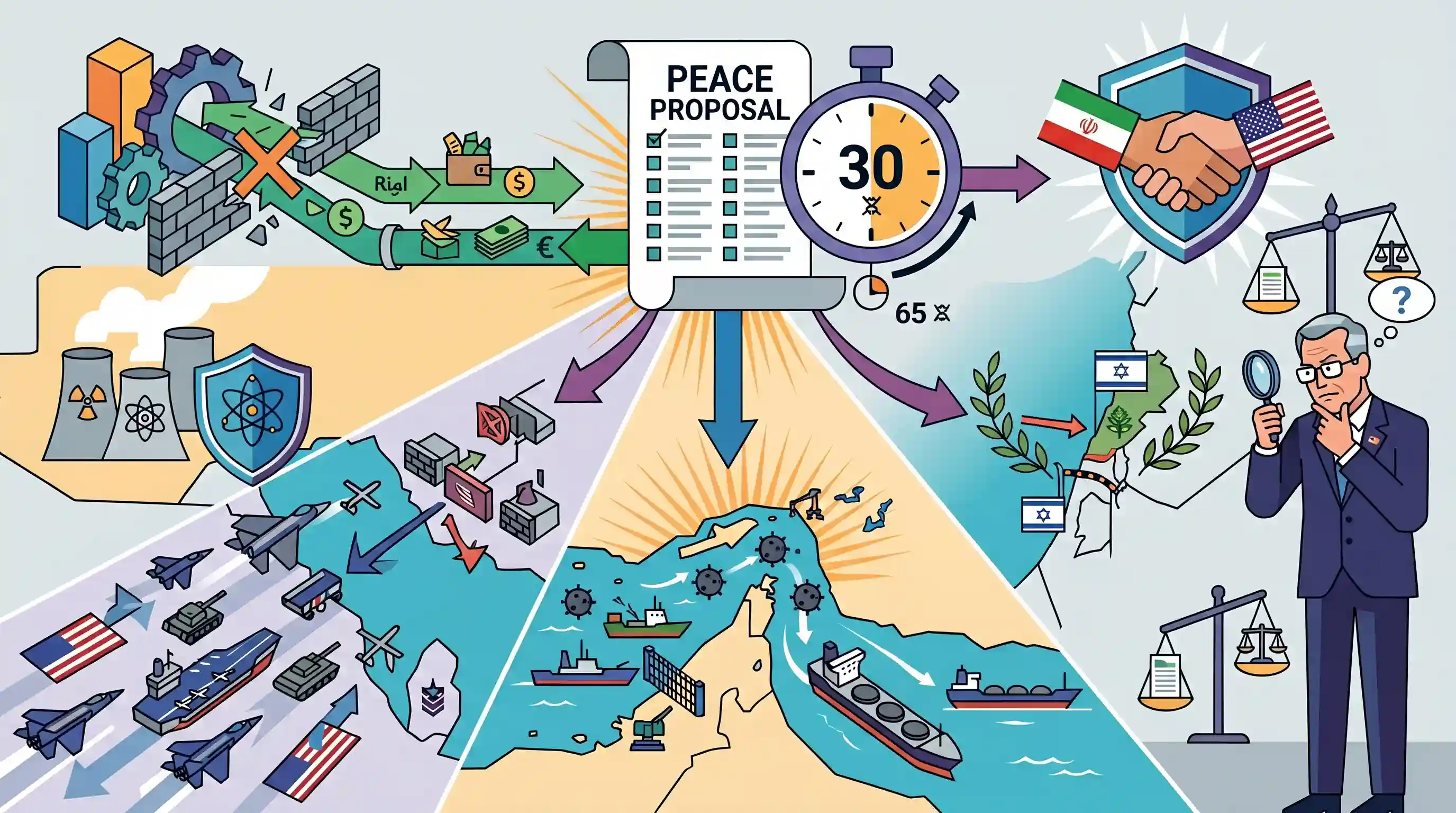
Iran has submitted a comprehensive 14-point peace proposal to the United States designed to formally end their ongoing 65-day conflict within 30 days. The ambitious plan outlines several major concessions demanded by Tehran, including the immediate lifting of economic sanctions, the release of frozen financial assets, and the withdrawal of US military forces from the region. Crucially, the proposal addresses maritime security by advocating for the gradual reopening of the vital Strait of Hormuz and the cessation of the US naval blockade, with Iran offering to take charge of clearing sea mines. It also links regional stability to the broader geopolitical landscape by demanding a halt to Israel's military actions in Lebanon and mutual non-aggression pledges. However, the proposal faces significant hurdles, notably Iran's outright refusal to dismantle its nuclear infrastructure and skepticism from the US administration.
मुख्य बिंदु
- Iran has presented a 14-point proposal to the US aiming to end the 65-day war within 30 days instead of extending the existing fragile ceasefire.
- प्रमुख मांगों में US प्रतिबंधों को हटाना, फ्रीज किए गए फंड को जारी करना, US बलों की वापसी और US नौसैनिक नाकेबंदी की समाप्ति शामिल है।
- The proposal calls for an end to hostilities across the region, including Israel's war in Lebanon, and mutual pledges of non-aggression.
- Maritime aspects of the plan include the gradual reopening of the Strait of Hormuz and Iran taking responsibility for clearing sea mines.
- ईरान अपने परमाणु बुनियादी ढांचे के विघटन को दृढ़ता से खारिज करता है, जो भविष्य की वार्ताओं के लिए एक प्रमुख बाधा है।
महत्वपूर्ण शब्द
ईरान का 14-सूत्रीय प्रस्ताव

मई 2026 में तेहरान द्वारा प्रस्तुत एक 14-सूत्रीय शांति रूपरेखा, जिसका उद्देश्य अमेरिका के साथ 65-दिवसीय संघर्ष को 30 दिनों के भीतर समाप्त करना है।
UPSC context
GS Paper 2: International Relations; tests conflict resolution mechanisms and diplomatic negotiation strategies in West Asia.
होर्मुज जलसंधि
A vital maritime chokepoint between the Persian Gulf and Gulf of Oman through which 20% of global oil passes.
UPSC context
GS Paper 1 & 3: Geography and Energy Security; critical for understanding global trade disruptions and India's energy interests.
Project Freedom
A US military operation launched in May 2026 to escort commercial vessels through the Strait of Hormuz during the Iran-US war.
UPSC context
GS Paper 2: Global Groupings; illustrates US strategic maneuvers to secure maritime trade and protect international shipping lanes.
नौसैनिक नाकेबंदी
एक सैन्य रणनीति जिसका उपयोग दुश्मन के बंदरगाहों तक पहुँच को रोकने के लिए किया जाता है; US ने इसे अप्रैल 2026 में ईरान के तट पर लागू किया था।
UPSC context
GS पेपर 2: अंतर्राष्ट्रीय कानून; संप्रभु अधिकारों और समुद्री युद्ध के कानूनी निहितार्थों से संबंधित है।
West Asia Geopolitics
The study of power dynamics and security relationships between Middle Eastern nations and global powers like the US and China.
UPSC context
GS पेपर 2: अंतर्राष्ट्रीय संबंध; भारत की 'लुक वेस्ट' नीति और क्षेत्रीय स्थिरता के विश्लेषण के लिए आवश्यक।
Nuclear Infrastructure
यूरेनियम संवर्धन के लिए भौतिक सुविधाएं; इन्हें नष्ट करने से ईरान का इनकार एक स्थायी शांति समझौते तक पहुँचने में एक बड़ी बाधा बना हुआ है।
UPSC context
GS Paper 3: Internal Security and Science; relates to nuclear non-proliferation and regional arms control.
प्रारंभिक ट्रैप
The Strait of Hormuz is a maritime chokepoint connecting the Persian Gulf to the Red Sea.
अभ्यर्थी अक्सर पश्चिमी एशियाई जलडमरूमध्यों (straits) को लेकर भ्रमित हो जाते हैं। होर्मुज, फारस की खाड़ी (Persian Gulf) को ओमान की खाड़ी (Gulf of Oman) से जोड़ता है, जबकि बाब अल-मंडेब, लाल सागर (Red Sea) को अदन की खाड़ी (Gulf of Aden) से जोड़ता है।
संबंधित अवधारणाएँ
What are the key strategic maritime chokepoints in West Asia?
- Strait of Hormuz: Connects the Persian Gulf to the Gulf of Oman and Arabian Sea. It handles approximately 20-25% of global seaborne oil trade.
- बाब-अल-मंडेब: Connects the Red Sea to the Gulf of Aden. It is critical for maritime traffic heading toward the Suez Canal.
- स्वेज नहर: भूमध्य सागर को लाल सागर से जोड़ने वाला कृत्रिम जलमार्ग, जो यूरोप और एशिया के बीच सबसे छोटे समुद्री मार्ग के रूप में कार्य करता है।
How do US sanctions on Iran affect India's strategic interests?
- ऊर्जा सुरक्षा: US secondary sanctions forced India to halt Iranian crude imports, disrupting the historically favorable Rupee-Rial bilateral payment mechanism.
- चाबहार बंदरगाह: While Chabahar is officially exempted, over-compliance by foreign private firms delays equipment procurement, hindering India's gateway to Central Asia.
- Connectivity (INSTC): Geopolitical volatility and sanctions on Iran severely complicate the operationalization and funding of the International North-South Transport Corridor (INSTC).
अंतर-विषय पैटर्न
INSTC & IMEC Corridors
Prolonged US-Iran friction delays India's INSTC ambitions through Chabahar, increasing the strategic necessity of the alternative India-Middle East-Europe Economic Corridor (IMEC).
परमाणु विलंबता और JCPOA
Iran's refusal to dismantle its nuclear infrastructure revives the static UPSC theme of nuclear latency vs. weaponization in the post-JCPOA geopolitical landscape.
प्रतिबंध और डी-डॉलराइजेशन
The weaponization of US sanctions and freezing of Iranian/Russian assets accelerates BRICS-led initiatives to build alternative, non-dollar payment systems.

Expect a 2026 prelims pairing of West Asian straits (Hormuz/Bab el-Mandeb) with their bordering nations and connected water bodies.
संबद्ध PYQ · 2
संबद्ध PYQ · 2
- 2012MainsGS2
How have the US sanctions against Iran affected India's bilateral relations with Iran?
- 2017MainsGS2
The question of India's Energy Security constitutes the most important part of India's economic progress. Analyze India's energy policy cooperation with West Asian countries.
