IOC Fleet Acquisition and Energy Security in West Asia Crisis
Source:The Hindu ↗
Why It Matters
It illustrates how geopolitical conflicts in West Asia impact India's maritime trade, energy security, and supply chain logistics, prompting strategic public sector interventions like vessel acquisition.
Summary
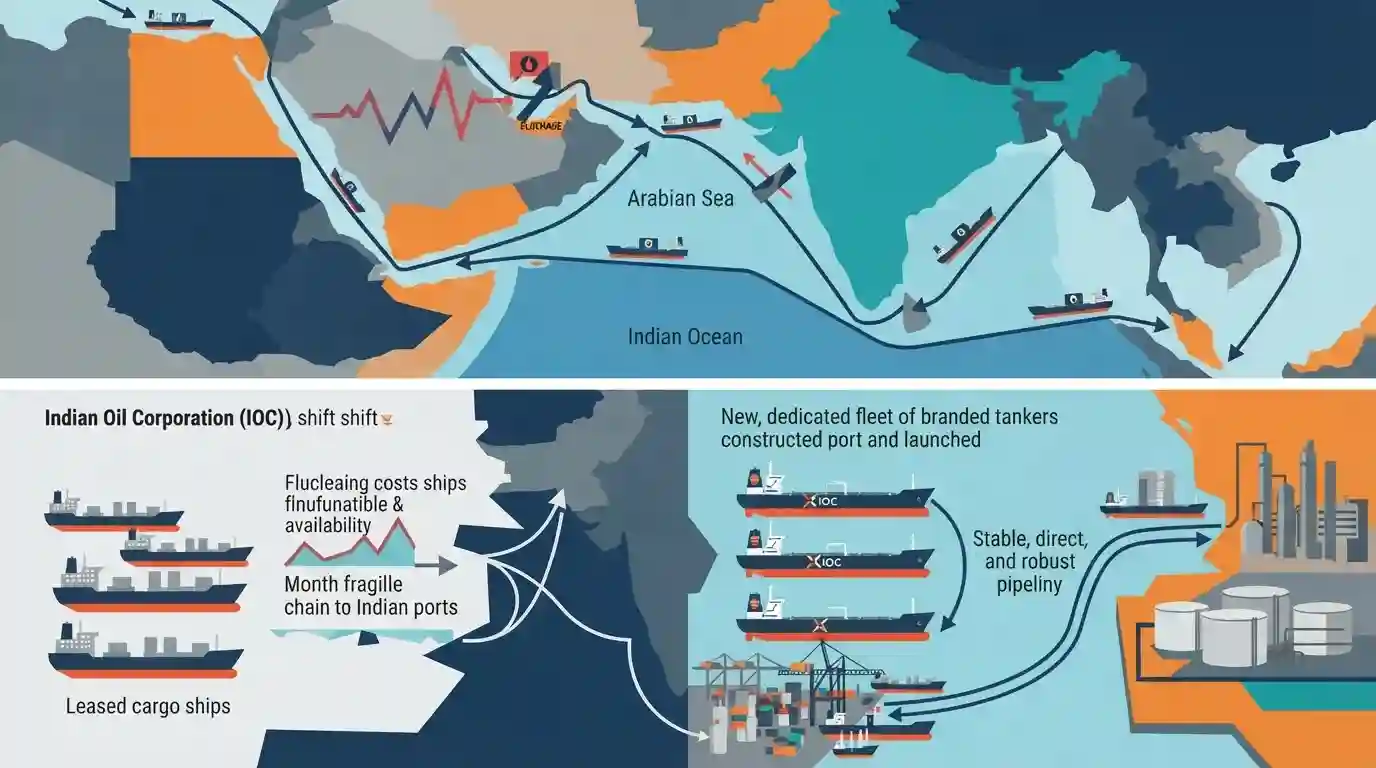
State-run Indian Oil Corporation (IOC) is moving to acquire crude oil and LPG carrying ships to secure its import supply chains against geopolitical vulnerabilities and shipping risks highlighted by the West Asia crisis. By building a dedicated maritime fleet, IOC aims to reduce heavy reliance on leased vessels, stabilize freight logistics, and safeguard India's national energy security against disruptions in key choke points.
Key Points
- Indian Oil Corporation (IOC) plans to acquire its own crude oil and LPG carrying vessels to mitigate shipping risks exposed by ongoing conflicts in West Asia.
- Geopolitical tensions in key maritime trade routes and choke points have disrupted traditional shipping lanes and escalated freight costs for energy imports.
- Owning a dedicated fleet gives state-run refiners greater control over supply chain logistics, reduces dependence on third-party charterers, and enhances national energy security.
- The move aligns with broader efforts to build resilient energy supply chains amid global volatility.
Important Terms
Indian Oil Corporation (IOC)

India's premier state-owned oil refining and marketing Maharatna enterprise, supplying a substantial share of the nation's petroleum products and managing critical domestic energy supply infrastructure.
UPSC context
UPSC GS Paper 3 (Economy & Energy Security): Important for understanding public sector undertakings, energy supply chain management, and strategic economic policy.
Static Concepts Connected
What are the key institutional mechanisms and strategic reserves ensuring India's energy security?
- Strategic Reserves:: Maintains strategic crude oil underground storages at Vizag, Mangalore, and Padur managed by ISMRL.
- Public Refiners:: State-run refiners account for the bulk of crude imports and refining capacity, acting as public sector buffers.
- Diversification:: Diversification of import baskets across West Asia, Russia, Africa, and Latin America to hedge geopolitical risks.
Cross-Topic Patterns
Energy Security + Balance of Payments Risks
India's heavy reliance on foreign-flagged vessels for energy imports creates systemic current account vulnerabilities during geopolitical shocks, directly linking maritime security to macroeconomic stability.

Expect statement-based MCQs on state-run energy refiners acquiring captive maritime fleets to mitigate strategic choke-point risks.
Linked PYQs · 2
Linked PYQs · 2
- 2025MainsGS3
Why is maritime security vital to protect India's sea trade? Discuss maritime and coastal security challenges and the way forward.
- 2022MainsGS3
What are the maritime security challenges in India ? Discuss the organisational, technical and procedural initiatives taken to improve the maritime security.
