INS Sahyadri and India Japan Naval Exercise JAIMEX
Source:The Hindu ↗
Why It Matters
Bilateral exercises like JAIMEX illustrate India's growing defense diplomacy and strategic alignment with key Indo-Pacific partners like Japan, highly relevant for GS2 International Relations.
Summary
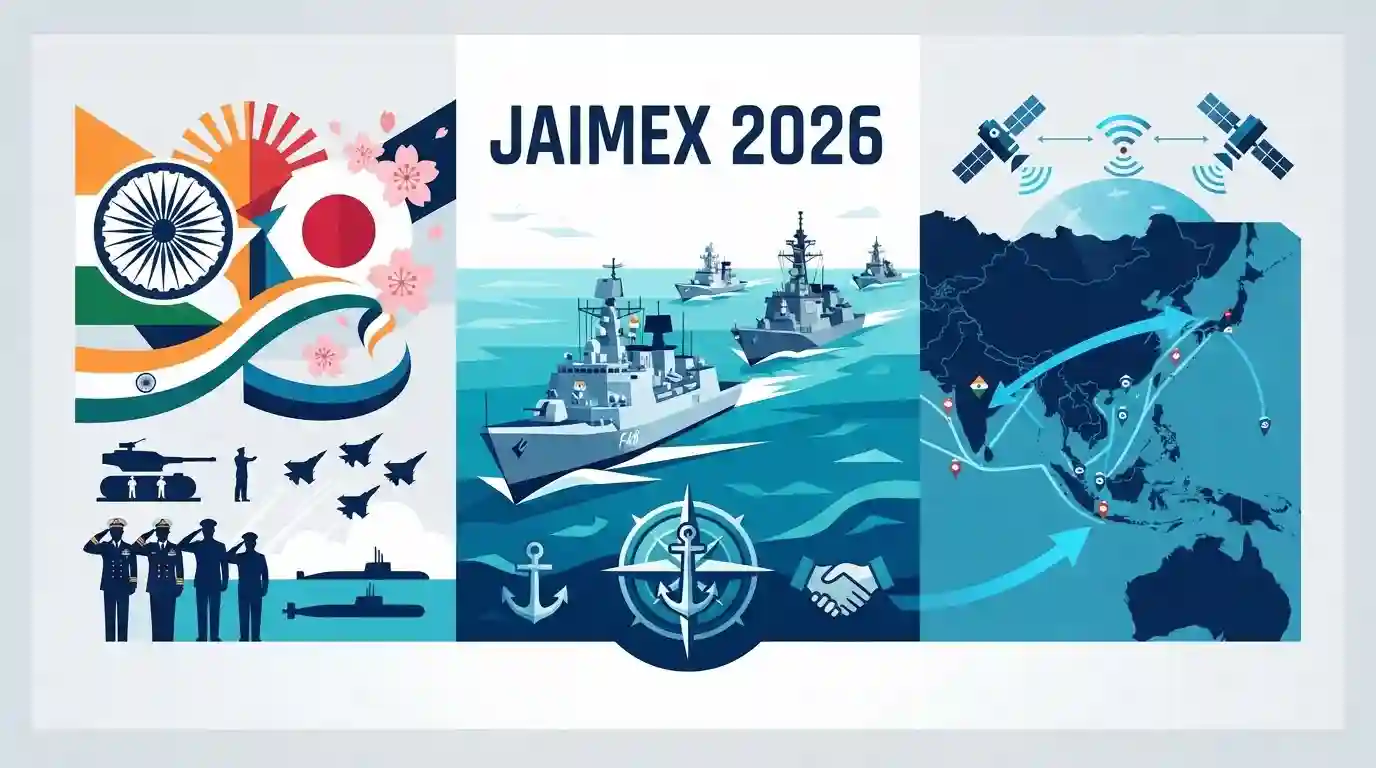
INS Sahyadri's participation in the India-Japan maritime exercise JAIMEX 2026 underscores the deepening bilateral defense cooperation, interoperability, and strategic partnership between the two nations in the Indo-Pacific region.
Key Points
- INS Sahyadri participated in JAIMEX 2026, highlighting bilateral naval cooperation between India and Japan.
- The exercise aims to enhance interoperability, share best practices, and strengthen maritime security in the Indo-Pacific region.
- Bilateral military exercises reflect the deepening strategic and defense partnership between New Delhi and Tokyo.
Important Terms
JAIMEX

A bilateral maritime exercise conducted between the Indian Navy and the Japan Maritime Self-Defense Force to enhance interoperability, tactical coordination, and defense cooperation in the Indo-Pacific region.
UPSC context
UPSC Prelims/Mains (IR & Security): Tests bilateral defense exercises, strategic partnerships, and maritime security frameworks in the Indo-Pacific.
Indian Navy
The naval branch of the Indian Armed Forces responsible for safeguarding India's maritime borders, projecting power, and conducting strategic joint exercises with international allies.
UPSC context
UPSC Prelims/Mains (Security): Tests India's naval capabilities, maritime diplomacy, and strategic outreach in regional security architectures.
Japan Maritime Self-Defense Force
The naval branch of the Japan Self-Defense Forces tasked with the naval defense of Japan and maintaining maritime security and stability in regional and international waters.
UPSC context
UPSC Prelims/Mains (IR): Tests Japan's defense posture, security alliances, and strategic cooperation with India under a free and open Indo-Pacific framework.
Static Concepts Connected
What are the key bilateral and multilateral institutional security mechanisms between India and Japan?
- Ministerial Dialogue: 2+2 Ministerial: Inaugurated in 2019 to deepen foreign and defense policy coordination between the two nations.
- Logistics Pact: ACSA: Signed in 2020, it allows reciprocal provision of supplies and services between the militaries.
- Naval Exercise: Malabar Exercise: Multilateral naval exercise involving India, Japan, the US, and Australia.
Cross-Topic Patterns
Bilateral Naval Exercises + Indo-Pacific Logistics Pacts
Logistics agreements like ACSA signed with Japan are replicated across the Quad and Indian Ocean rim, bridging bilateral naval exercises with wider regional minilateralism.

JIMEX + ACSA logistics integration will likely feature in a matching or statement-based IR question on Indo-Pacific minilateralism.
Linked PYQs · 2
Linked PYQs · 2
- 2019MainsGS2
‘The time has come for India and Japan to build a strong contemporary relationship, one involving global and strategic partnership that will have a great significance for Asia and the world as a whole.’ Comment.
- 2020MainsGS2
What is the significance of Indo-US defence deals over Indo-Russian defence deals? Discuss with reference to stability in the Indo-Pacific region.
