Mumbai civic body proposes bonds and tax hikes for infrastructure
Source:Indian Express ↗
Why It Matters
The financial health and autonomy of Urban Local Bodies (ULBs) are critical for effective urban governance and infrastructure development. The BMC's consideration of municipal bonds and tax hikes provides a practical case study for GS2 topics on the 74th Amendment Act, devolution of finances, and GS3 topics on infrastructure financing models.
Summary
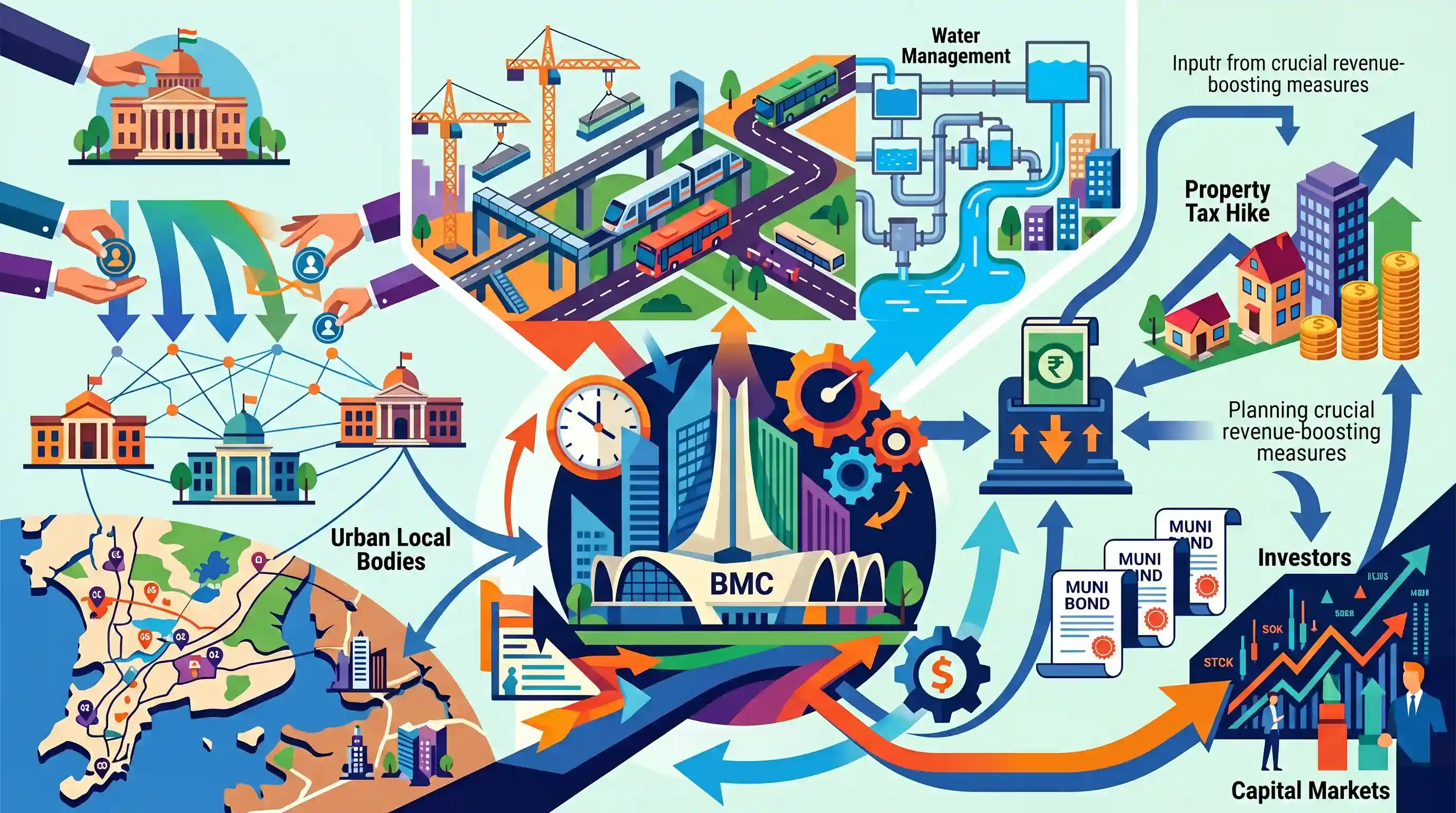
The Brihanmumbai Municipal Corporation (BMC) is preparing to push forward significant infrastructure and water management projects in its upcoming budget. To finance these large-scale urban development initiatives, the civic body is considering crucial revenue-boosting measures, including a hike in property taxes and the issuance of municipal bonds. These moves reflect the broader challenges faced by Urban Local Bodies (ULBs) in India as they strive for financial autonomy and explore alternative capital market mechanisms to meet the escalating infrastructural demands of rapidly growing metropolitan areas.
Key Points
- The Brihanmumbai Municipal Corporation (BMC) budget emphasizes major capital expenditure on urban infrastructure and water management projects.
- To generate necessary funding, the civic body is considering significant revenue-raising measures, including a potential hike in property taxes.
- The BMC is also exploring the issuance of municipal bonds to raise capital from the market for infrastructural development.
- These steps highlight the pressing need for urban local bodies (ULBs) to attain financial self-sufficiency and tap into alternative financing mechanisms rather than relying solely on state grants.
- The development underscores the functional and financial challenges faced by ULBs, a recurring theme in the context of the 74th Constitutional Amendment Act.
Important Terms
74th Constitutional Amendment Act

A 1992 legislation granting constitutional status to urban local bodies via Part IX-A and the Twelfth Schedule, mandating democratic decentralization and the transfer of 18 functional items to municipalities.
UPSC context
GS Paper II (Polity/Governance); tests understanding of grassroots democracy and the constitutional framework for urban decentralization.
Urban Local Bodies (ULBs)
Third-tier governance institutions (Municipal Corporations, Councils, Nagar Panchayats) responsible for managing urban areas, providing essential services, and implementing local development plans under state-delegated authority.
UPSC context
GS Paper II (Governance); relevant for questions on urban management, service delivery, and the challenges of local self-government.
Municipal Bonds
Debt securities issued by municipal bodies to raise capital from the market for infrastructure projects; they reduce dependence on grants and promote fiscal discipline through credit ratings.
UPSC context
GS Paper III (Economy/Infrastructure); concerns alternative financing mechanisms and urban infrastructure development strategies.
Brihanmumbai Municipal Corporation (BMC)
The governing civic body of Mumbai, established in 1888; it is India’s wealthiest municipal corporation with a budget often exceeding that of some smaller Indian states.
UPSC context
GS Paper II (Governance); used as a primary case study for metropolitan administration and municipal financial autonomy.
Property Tax
A levy on land and buildings that serves as the mainstay of a municipality's own-source revenue; reforms here are often tied to 15th Finance Commission grants.
UPSC context
GS Paper III (Economy/Fiscal Federalism); tests knowledge of municipal revenue bottlenecks and fiscal autonomy reforms.
Devolution of Powers
The constitutional transfer of '3Fs'—Functions, Finances, and Functionaries—from state governments to local bodies to ensure effective self-governance and local administrative independence.
UPSC context
GS Paper II (Polity); central to analyzing the gap between constitutional intent and the functional reality of local bodies.
Prelims Trap
"The 74th Amendment directly empowers Urban Local Bodies with constitutional authority to levy property taxes."
Article 243X merely allows State Legislatures to authorize ULBs to levy taxes. ULBs have no inherent, direct constitutional taxing power; it is entirely delegated by the state.
Static Concepts Connected
What are the core Constitutional provisions governing Municipal Finance in India?
- Article 243X: Authorizes the State Legislature to empower municipalities to levy, collect, and appropriate taxes, duties, tolls, and fees.
- Article 243Y: Mandates the State Finance Commission to review ULB finances and recommend tax distribution principles every five years.
- Article 280(3)(c): Requires the Central Finance Commission to suggest measures augmenting State Consolidated Funds to supplement municipal resources.
What are Municipal Bonds and how are they regulated in India?
- Definition: Debt instruments issued by urban local bodies or their corporate entities to raise capital market funds for public infrastructure.
- Regulatory Body: Regulated by SEBI under the Issue and Listing of Municipal Debt Securities Regulations, 2015, not by the RBI.
- Eligibility Criteria: The issuing municipality must not have a negative net worth in any of the three immediately preceding financial years.
Cross-Topic Patterns
15th FC Grants & Property Tax Reforms
The 15th Finance Commission made performance-based grants for urban agglomerations conditional upon notifying floor rates for property tax, pushing ULBs toward financial self-reliance.
Green Muni Bonds & Climate Adaptation
With escalating urban flooding, ULBs are increasingly issuing 'Green Municipal Bonds' to finance climate-resilient water and sanitation infrastructure, bridging GS2 local governance with GS3 environment.

Expect a 2026 prelims question merging SEBI's municipal bond eligibility criteria with the constitutional role of State Finance Commissions.
Linked PYQs · 5
Linked PYQs · 5
- 2023MainsGS2
“The states in India seem reluctant to empower urban local bodies both functionally as well as financially.” Comment.
- 2024MainsGS2
Analyse the role of local bodies in providing good governance at local level and bring out the pros and cons merging the rural local bodies with the urban local bodies.
- 2024MainsGS3
Flooding in urban areas is an emerging climate-induced disaster. Discuss the causes of this disaster. Mention the features of two such major floods in the last two decades in India. Describe the policies and frameworks in India that aim at tackling such floods.
- 2022PrelimsGS1
With reference to Convertible Bonds, consider the following statements: 1. As there is an option to exchange the bond for equity, Convertible Bonds pay a lower rate of interest. 2. The option to convert to equity affords the bondholder a degree of indexation to rising consumer prices. Which of the statements given above is/are correct?
- 2024PrelimsGS1
In India, which of the following can trade in Corporate Bonds and Government Securities? 1. Insurance Companies 2. Pension Funds 3. Retail Investors Select the correct answer using the code given below:
