Industrial and Services Sector Bank Credit Offtake Expansion
Source:Indian Express ↗
ఇది ఎందుకు ముఖ్యం
Credit offtake in industry and services is a primary bellwether for private capital investment, industrial revival, and economic growth momentum, making it highly relevant for GS3 Indian Economy questions.
సారాంశం
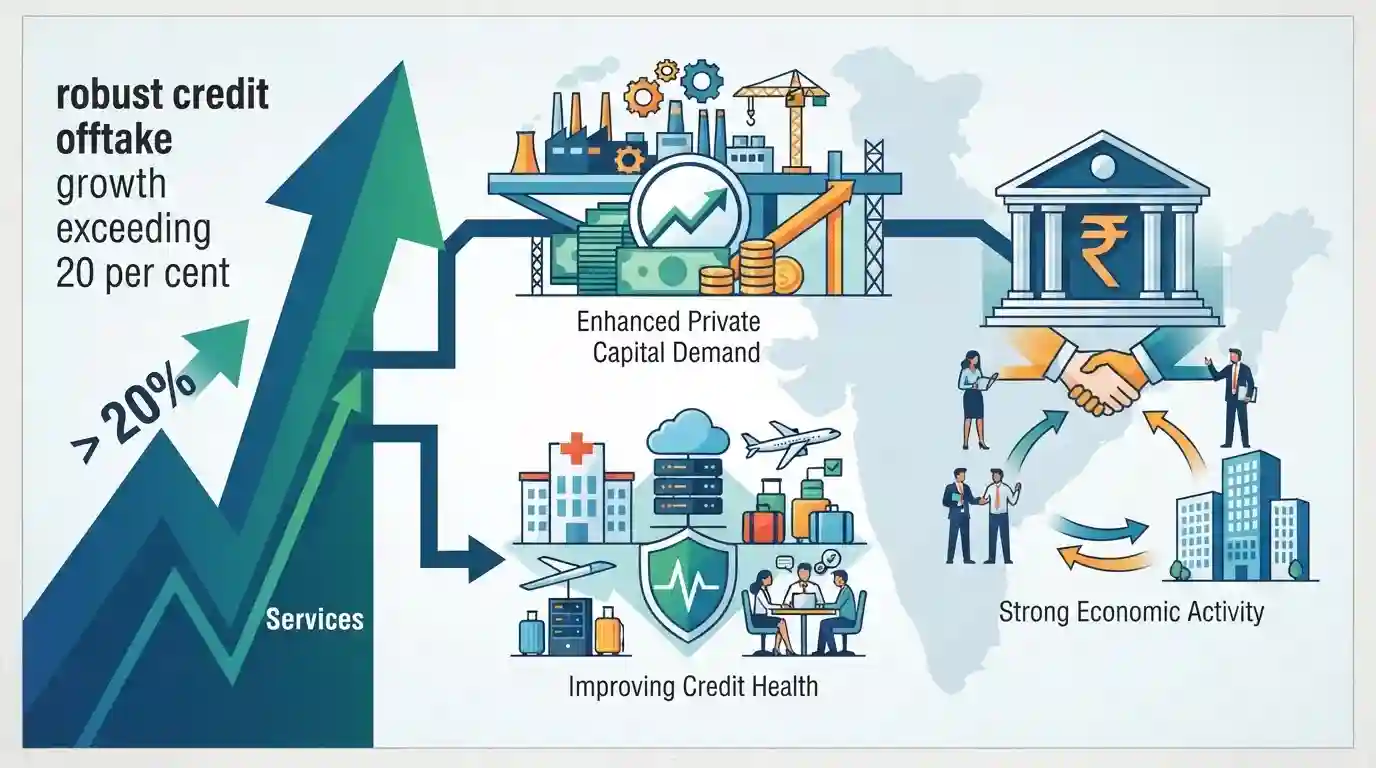
The industry and services sectors experienced robust credit offtake growth exceeding 20 per cent, showcasing strong economic activity, enhanced private capital demand, and improving credit health across commercial banks in India.
ముఖ్య అంశాలు
- Bank credit growth to the industry and services sectors witnessed robust growth of over 20 per cent, reflecting strong underlying economic momentum and credit demand.
- The surge in industrial and service sector credit offtake indicates revival in private corporate investments and working capital requirements.
- Highlights structural health improvements in the banking sector balance sheets, enabling higher credit expansion.
ముఖ్యమైన పదాలు
Reserve Bank of India

India's central banking institution, which controls the monetary policy of the Indian rupee, regulates the banking system, and releases vital macroeconomic indicators like sectoral credit deployment data.
UPSC context
UPSC GS Paper III (Indian Economy & Banking); crucial for questions on monetary policy, central banking, financial sector reforms, and economic indicators.
RBI
The central banking authority of India responsible for regulating commercial banks, managing liquidity, and publishing crucial financial stats like credit growth figures.
UPSC context
UPSC GS Paper III (Economy); tests knowledge of central bank mandates, regulatory architecture, and credit expansion monitoring in India.
ప్రిలిమ్స్ ఉచ్చు
Overall non-food bank credit expanded by 19.1 per cent, indicating total money supply growth in the economy.
Aspirants often confuse non-food bank credit expansion with overall monetary expansion or broad money (M3), forgetting that agricultural and personal loans also form components alongside industry and services.
అనుసంధానమైన స్థిర భావనలు
What are the key components and sectoral classifications of scheduled commercial bank credit deployment in India?
- Sectoral Categories: Four main sectors: Bank credit is broadly classified by the RBI into Agriculture and Allied Activities, Industry (Micro, Small, Medium, and Large), Services, and Personal Loans.
- Priority Mandates: Priority Sector Lending: Banks must allocate 40% of Adjusted Net Bank Credit (ANBC) to mandated sectors like agriculture, MSMEs, and weaker sections.
- Non-food Credit: Non-food Credit: Excludes food procurement credit extended to agencies like the FCI, representing the primary gauge of commercial credit demand in the economy.
అంతర-అంశ నమూనాలు
Bank Credit Growth and Monetary Transmission
Strong non-food bank credit growth directly impacts monetary policy transmission and liquidity management by the RBI.
MSME Credit Expansion and Industrial Employment
Surging credit offtake to MSEs and medium enterprises underpins the formalization and employment-generation goals of Make in India.

Expect statement-based questions pairing sectoral credit growth rates (services vs. industry) with bank balance sheet health indicators.
అనుసంధాన PYQలు · 2
అనుసంధాన PYQలు · 2
- 2023MainsGS3
Faster economic growth requires increased share of the manufacturing sector in GDP, particularly of MSMEs. Comment on the present policies of the Government in this regard.
- 2021MainsGS3
“Investment in infrastructure is essential for more rapid and inclusive economic growth.” Discuss in the light of India's experience.
