India Pragmatic Engagement Policy with Taliban Regime in Afghanistan
Source:Indian Express ↗
Why It Matters
This topic highlights a major evolution in India's foreign policy—transitioning from strict non-recognition of the Taliban to pragmatic engagement. It is highly relevant for GS2 (Neighborhood First policy, realism in international relations) and GS3 (transnational counter-terrorism strategies, border security).
Summary
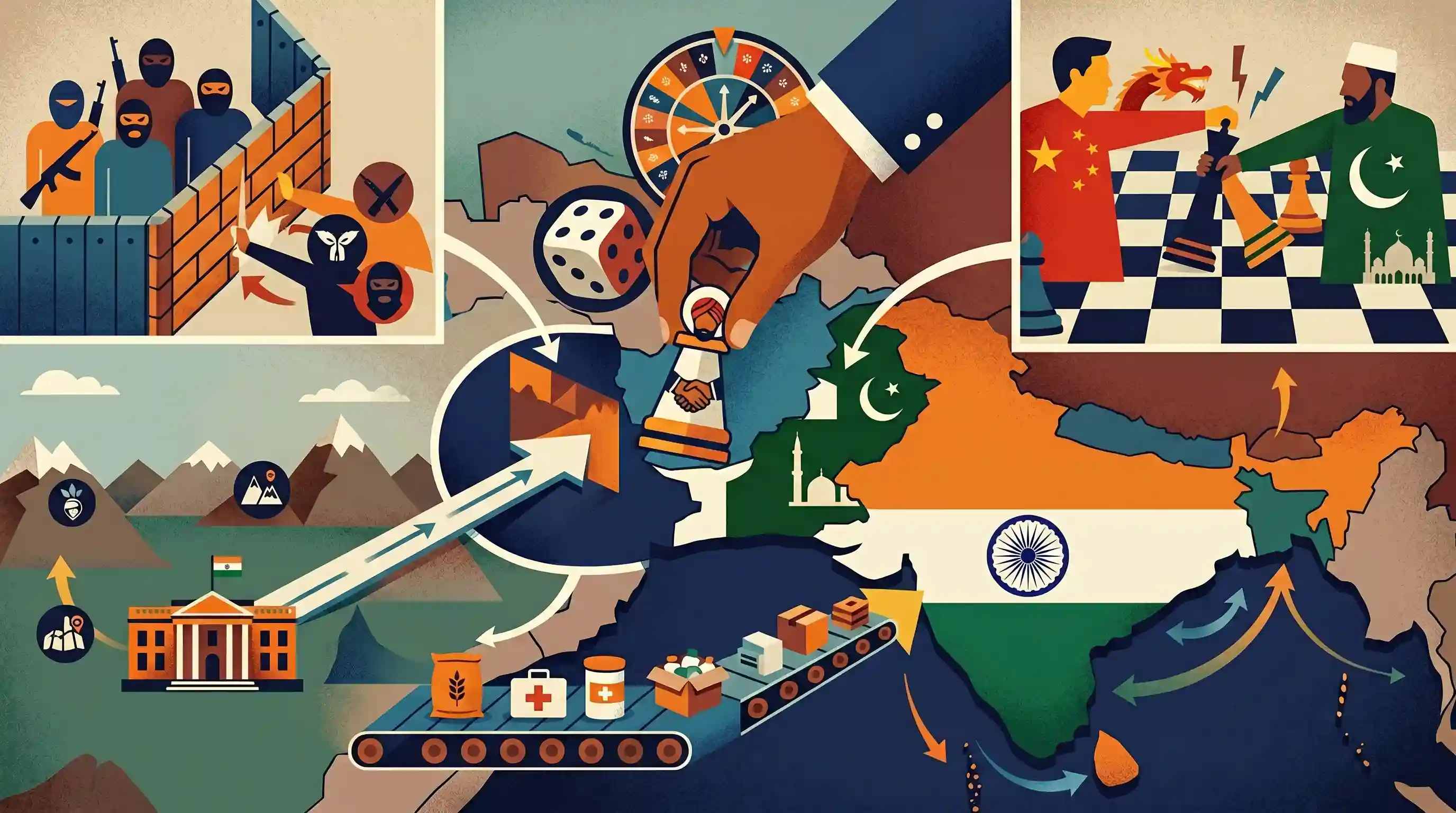
The article analyzes India's pragmatic shift towards engaging with the Taliban regime in Afghanistan, describing it as a calculated 'strategic gamble.' Driven by realpolitik rather than ideological considerations, India is seeking to safeguard its core geopolitical and security interests in its extended neighborhood. Key objectives include preventing Afghan territory from becoming a safe haven for anti-India terror groups, countering the strategic influence of Pakistan and China, and ensuring continued access to Central Asia. By maintaining a diplomatic presence in Kabul and deploying soft power through humanitarian assistance, New Delhi aims to build leverage and secure its strategic foothold amidst a rapidly changing regional security architecture.
Key Points
- India has shifted from a policy of 'principled distance' to pragmatic 'realpolitik' engagement with the Taliban regime in Afghanistan.
- The deployment of technical missions and diplomatic outreach signal New Delhi's intention to remain a relevant player in Afghan geopolitics.
- A primary security objective is to prevent Afghan soil from being utilized by anti-India terror groups, including Pakistan-backed outfits and ISIS-K.
- Geopolitically, India's engagement aims to counter Pakistan's pursuit of 'strategic depth' and check China's expanding economic and strategic footprint in the region.
- Maintaining a foothold in Afghanistan is crucial for India's broader connectivity goals, particularly regarding access to Central Asian Republics via the Chabahar Port.
Important Terms
Taliban

The de facto governing authority of Afghanistan since 2021. India has shifted toward pragmatic engagement with the group to protect its investments and prevent the country from becoming a terror haven.
UPSC context
GS Paper 2: India and its neighborhood-relations; focuses on 'Realpolitik' and diplomatic shifts in South Asian geopolitics.
Lashkar-e-Taiba (LeT)
A Pakistan-based terrorist group responsible for the 2008 Mumbai attacks. Its continued presence and training camps in Afghanistan are a primary security concern driving India's engagement with the Taliban.
UPSC context
GS Paper 3: Internal Security; tests knowledge of cross-border terrorism and non-state actors in the neighborhood.
Jaish-e-Mohammed (JeM)
A Pakistan-based terrorist organization responsible for the 2019 Pulwama attack. India seeks assurances from the Taliban that its territory will not be used as a base for JeM operations.
UPSC context
GS Paper 3: Internal Security; relevant for security challenges in border areas and counter-terrorism diplomacy.
ISIS-K
The Khorasan affiliate of the Islamic State; a radical rival to the Taliban. Its presence in Afghanistan creates a complex security dynamic where India and the Taliban share a common enemy.
UPSC context
GS Paper 3: Security challenges and their management; relates to regional instability and the evolving global terror landscape.
Ministry of External Affairs (MEA)
India's government department responsible for foreign relations. It manages the 'technical mission' in Kabul and oversees humanitarian aid as part of India's soft-power strategy in Afghanistan.
UPSC context
GS Paper 2: International Relations; essential for understanding the institutional framework of India’s foreign policy execution.
Prelims Trap
India has officially recognized the Taliban government in Afghanistan.
India has deployed a 'technical mission' and engages pragmatically with the Taliban for security and humanitarian reasons, but it has officially withheld formal diplomatic recognition of the Taliban regime.
Static Concepts Connected
How does the Zaranj-Delaram highway integrate with India's connectivity projects?
- Strategic Link: Built by India (BRO), it connects the Iranian border city of Zaranj to Delaram, linking into Afghanistan's Garland Highway network.
- Bypassing Pakistan: It allows Indian goods to reach Afghanistan and Central Asia via Iran's Chabahar port, completely avoiding overland transit blockades by Pakistan.
- Central Asia Access: It complements broader connectivity initiatives like the INSTC by providing a reliable eastern branch into landlocked Central Asian Republics.
What constitutes India's strategic 'Soft Power' footprint in Afghanistan?
- Infrastructure Diplomacy: Major investments include the Salma Dam (Afghan-India Friendship Dam) in Herat and the construction of the Afghan Parliament building in Kabul.
- Humanitarian Aid: New Delhi maintains goodwill through continued supply of wheat, vaccines, and essential medicines, prioritizing the Afghan people despite the regime change.
Cross-Topic Patterns
Afghan critical minerals and Chinese expansion
China's engagement with the Taliban is heavily driven by access to Afghanistan’s untapped lithium and copper. India’s renewed diplomatic presence acts as a strategic counterweight to this potential resource monopoly.
Regional instability and transnational terrorism
The power vacuum in Afghanistan and fractured Taliban-Pakistan relations elevate the threat of ISIS-K. UPSC often links cross-border terror sanctuaries with India's internal security and border management challenges.

Chabahar-Zaranj-Delaram connectivity + India's de-facto Taliban engagement likely forms a multi-statement IR question in 2026.
Linked PYQs · 3
Linked PYQs · 3
- 2024MainsGS2
Critically analyse India's evolving diplomatic, economic and strategic relations with the Central Asian Republics (CARs) highlighting their increasing significance in regional and global geopolitics.
- 2021MainsGS3
Analyse the complexity and intensity of terrorism, its causes, linkages and obnoxious nexus. Also suggest measures required to be taken to eradicate the menace of terrorism.
- 2020MainsGS3
Analyze internal security threats and transborder crimes along Myanmar, Bangladesh and Pakistan borders including Line of Control (LoC). Also discuss the role played by various security forces in this regard.
