India Crude Oil Imports from Russia Rebound Amid Domestic Demand
Source:The Hindu ↗
Why It Matters
This development is highly relevant for understanding India's strategic autonomy in foreign policy. It demonstrates how India balances its critical domestic energy security requirements against mounting geopolitical pressures from Western nations over its ties with Russia.
Summary
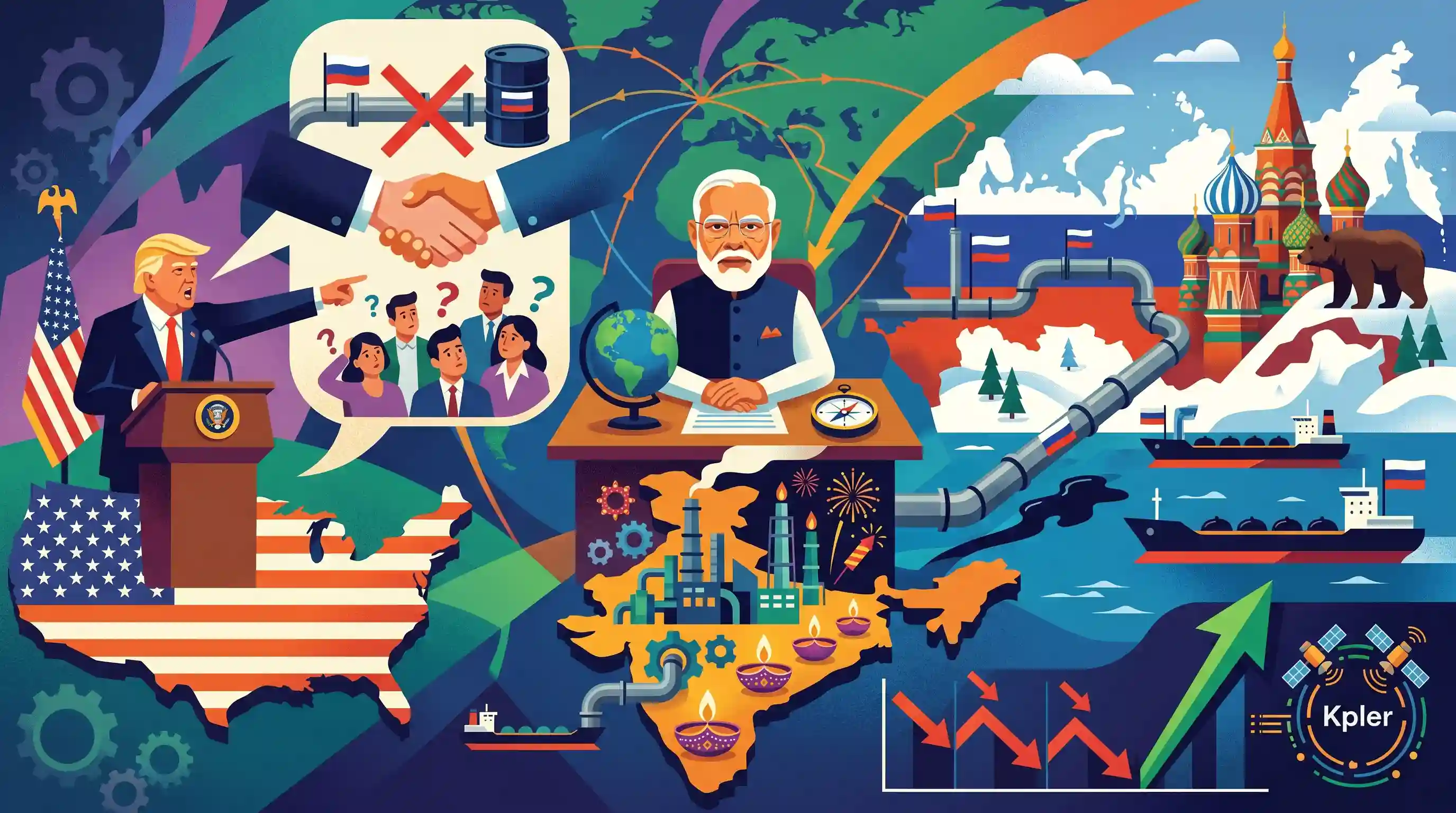
Ship-tracking data from Kpler indicates that India's crude oil imports from Russia rebounded in October 2025 as refineries ramped up production for festive demand, halting a three-month decline. The data captures India's energy procurement trends just before U.S. President Donald Trump's controversial statement claiming that PM Modi had agreed to stop Russian crude imports, highlighting the persistent geopolitical complexities surrounding India's energy security strategy.
Key Points
- India's crude oil imports from Russia rebounded in the first half of October 2025, reversing a three-month slide seen between July and September.
- The October rebound was primarily driven by domestic refineries resuming full-scale operations to meet heightened festive demand.
- Oil imports from Russia had previously slid from over 2 million barrels per day in June to 1.6 million bpd in September.
- The ship-tracking data pertains to the period just before U.S. President Donald Trump claimed that PM Narendra Modi had agreed to halt Russian crude imports, underscoring ongoing geopolitical pressures.
Important Terms
Kpler

A global provider of data-driven insights and real-time tracking for commodity markets, including crude oil, LNG, and dry bulk shipping.
UPSC context
GS Paper 3 (Economy/Energy); relevant for monitoring trade flows, import diversification, and energy supply chain disruptions.
Strategic Autonomy
A nation's ability to make independent sovereign decisions in foreign policy and defense without being constrained by external pressures or binding alliances.
UPSC context
GS Paper 2 (International Relations); core doctrine of Indian diplomacy testing multi-alignment and sovereign decision-making.
Energy Security
The uninterrupted availability of energy sources at an affordable price, encompassing physical availability, economic accessibility, and long-term sustainability.
UPSC context
GS Paper 3 (Infrastructure/Energy); critical for sustaining 8%+ GDP growth and managing 85%+ oil import dependency.
Multi-alignment
A practice of engaging with multiple global powers (e.g., U.S., Russia, China) on different issues to maximize national interest while avoiding exclusive alliances.
UPSC context
GS Paper 2 (Foreign Policy); tests India’s capacity to balance ties with competing superpowers like Russia and the USA.
Secondary Sanctions
Punitive measures imposed by one country on a third party for engaging in trade or transactions with a sanctioned target nation.
UPSC context
GS Paper 2 (Policies of developed countries); relevant for U.S. pressure on Indian refiners purchasing Russian crude.
Geopolitics of Energy Trade
The use of energy resources and trade routes as a tool of political influence or leverage in international relations and conflict.
UPSC context
GS Paper 2 (International Relations); covers how conflicts like the Ukraine war reshape global supply chains and trade alliances.
Prelims Trap
"India has officially ceased crude oil imports from Russia to comply with unilateral U.S. sanctions."
India does not recognize unilateral US sanctions. Import fluctuations are driven purely by commercial factors (discounts, domestic demand) and strategic autonomy, not official compliance with foreign sanctions.
Static Concepts Connected
What are the key pillars of India's crude oil security strategy?
- Import Diversification: Sourcing crude from over 30 countries across different regions to mitigate geopolitical supply shocks and avoid single-supplier dependence.
- Strategic Petroleum Reserves: Building underground rock caverns (e.g., Visakhapatnam, Mangalore, Padur) to buffer against short-term global supply disruptions.
- Overseas Equity Oil: PSUs like ONGC Videsh acquiring stakes in foreign oil and gas blocks to secure guaranteed equity oil supplies.
How do secondary sanctions impact third-party energy trade?
- Extraterritorial Reach: They penalize third-party countries (like India) for trading with a sanctioned state, threatening to cut their institutions off from the US financial system.
- Payment Friction: They force importing nations to bypass the SWIFT network and US Dollar, forcing reliance on alternative currencies or barter systems to clear trades.
Cross-Topic Patterns
Vostro Accounts & Oil Payments
The necessity to purchase discounted Russian oil under sanctions accelerated India's push for Special Rupee Vostro Accounts (SRVAs) and broader rupee internationalization efforts.
Strategic Autonomy in Multipolarity
Sustaining Russian imports despite US pressure is a classic application of strategic autonomy, a concept heavily tested in Mains alongside India's concurrent Quad and BRICS engagements.

Expect a multi-statement 2026 prelims question contrasting pre-2022 Middle Eastern crude dominance with current Russian import dynamics.
Linked PYQs · 2
Linked PYQs · 2
- 2025MainsGS2
"Energy security constitutes the dominant kingpin of India's foreign policy, and is linked with India's overarching influence in Middle Eastern countries.” How would you integrate energy security with India's foreign policy trajectories in the coming years?
- 2017MainsGS2
The question of India's Energy Security constitutes the most important part of India's economic progress. Analyze India's energy policy cooperation with West Asian countries.
