Ecommerce Growth in India and the Persistent Gender Digital Divide
Source:The Hindu ↗
Why It Matters
The article highlights the intersection of technological growth and social inclusion. ONDC's role as a Digital Public Infrastructure (DPI) in democratizing e-commerce is highly relevant for GS3, while the persistent gender digital divide and efforts towards women's economic empowerment are critical themes for GS1 (Society) and GS2 (Social Justice).
Summary
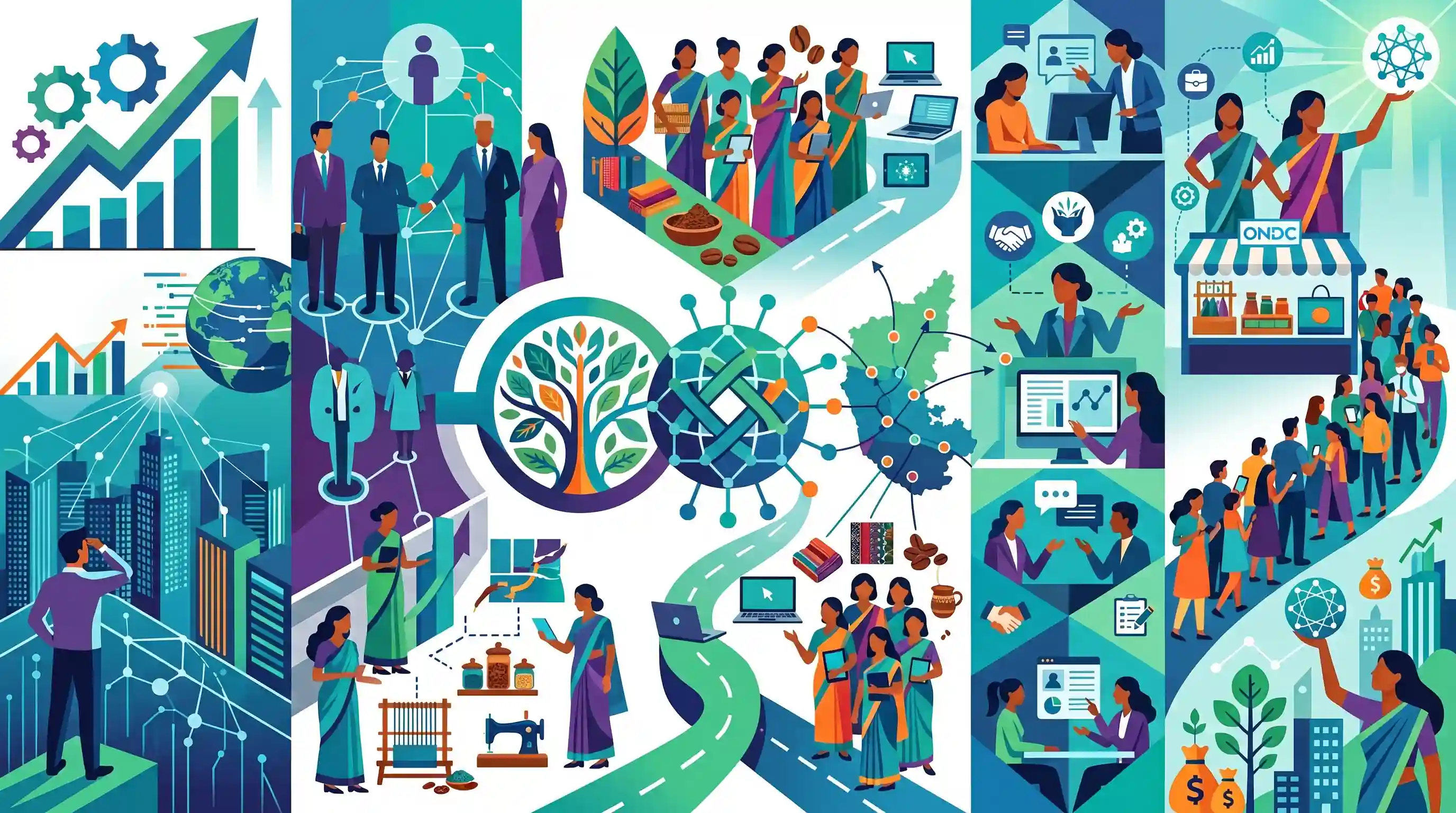
Despite India's rapidly growing e-commerce sector, which is projected to become the world's second-largest by 2034, a significant gender digital divide persists. Many small and medium enterprises, especially those led by women, lack the digital expertise needed to access online markets. To address this, Nasscom Foundation and the Open Network for Digital Commerce (ONDC) have launched an initiative to onboard approximately 200 women-led firms in Karnataka onto the ONDC network. The initiative aims to leverage ONDC's digital public infrastructure to provide a level playing field, build capacities, and empower women entrepreneurs with sustainable market linkages for broader economic growth.
Key Points
- India's e-commerce market is projected to surpass the U.S. and become the second-largest globally by 2034.
- Nasscom Foundation highlighted a persistent 'gender digital divide' in India's booming e-commerce sector, with many women-led MSMEs lacking the digital expertise to thrive online.
- To bridge this divide, Nasscom Foundation and ONDC onboarded around 200 women-led enterprises across 22 districts in Karnataka onto the ONDC Network.
- ONDC acts as a Digital Public Infrastructure (DPI) that provides a level playing field, sustainable market linkages, and access to wider markets for small and medium sellers.
Important Terms
Open Network for Digital Commerce (ONDC)

A DPIIT-led initiative to democratize e-commerce using open-source protocols. It enables interoperability between buyers and sellers across different platforms, shifting from platform-centric to network-centric models like UPI for payments.
UPSC context
GS Paper 3 (Economy/IT); tests understanding of market democratization and digital infrastructure innovation.
Digital Public Infrastructure (DPI)
Foundational digital systems (e.g., Aadhaar, UPI, ONDC) built on open standards. They facilitate population-scale delivery of essential services, fostering innovation, financial inclusion, and transparent governance as a global public good.
UPSC context
GS Paper 3 (S&T/Economy); tests knowledge of "India Stack" and technology as a public good.
Gender Digital Divide
The gap between men and women in accessing and using ICT. In India, it stems from socio-economic factors like patriarchal norms and lower mobile ownership, hindering women's economic participation.
UPSC context
GS Paper 1 (Social Issues); evaluates socio-economic barriers to women’s empowerment in the digital age.
MSMEs (Micro, Small, and Medium Enterprises)
Small-scale businesses classified by investment and turnover (e.g., "Micro" involves <₹1cr investment, <₹5cr turnover). They are the "backbone of the economy," contributing significantly to GDP, employment, and exports.
UPSC context
GS Paper 3 (Economy); core topic for manufacturing, industrial growth, and inclusive economic development.
Nasscom Foundation
The non-profit social impact arm of NASSCOM that leverages technology for social good. It focuses on digital literacy, skilling, and empowering marginalized communities, including women entrepreneurs.
UPSC context
GS Paper 2/3 (Governance/Tech); tests role of civil society in digital inclusion and social development.
Prelims Trap
"ONDC is a government-owned e-commerce platform akin to a state-run Amazon."
ONDC is not a centralized platform or app; it is an open-source protocol (like UPI) established as a Section 8 non-profit company. It connects existing platforms.
Static Concepts Connected
What defines India's Digital Public Infrastructure (DPI) ecosystem?
- Definition: Interoperable, open-source digital building blocks designed to enable societal-scale functions and services.
- India Stack: Historically built on Aadhaar (identity), UPI (payments), and DEPA (data exchange). ONDC expands this to retail commerce.
- Market Impact: DPI breaks monopolies by shifting markets from a closed, platform-centric model to an open-network architecture.
What are the revised composite criteria for MSME classification?
- Micro: Investment in Plant & Machinery/Equipment < ₹1 crore AND Annual Turnover < ₹5 crore.
- Small: Investment < ₹10 crore AND Annual Turnover < ₹50 crore.
- Medium: Investment < ₹50 crore AND Annual Turnover < ₹250 crore.
Cross-Topic Patterns
DPI + Women's Empowerment
Linking DPIs like ONDC to women's entrepreneurship highlights technology's role in bypassing traditional intermediaries and market barriers, merging GS3 technology with GS1/GS2 social justice.
ONDC + OCEN credit access
Digitizing women-led MSMEs on open networks creates verifiable digital footprints, directly enabling collateral-free, cash-flow-based lending via the Open Credit Enablement Network (OCEN).

A multi-statement question combining ONDC’s Section 8 protocol architecture with its impact on MSME formalization is highly likely in 2026.
Linked PYQs · 4
Linked PYQs · 4
- 2023MainsGS3
Faster economic growth requires increased share of the manufacturing sector in GDP, particularly of MSMEs. Comment on the present policies of the Government in this regard.
- 2023MainsGS3
What is the status of digitalization in the Indian economy? Examine the problems faced in this regard and suggest improvements.
- 2024MainsGS1
Distinguish between gender equality, gender equity and women's empowerment. Why is it important to take gender concerns into account in programme design and implementation?
- 2021MainsGS1
Examine the role of 'Gig Economy' in the process of empowerment of women in India.
