Talent Deficit in India Defence Startup and Indigenization Ecosystem
Source:The Hindu ↗
কেন এটি গুরুত্বপূর্ণ
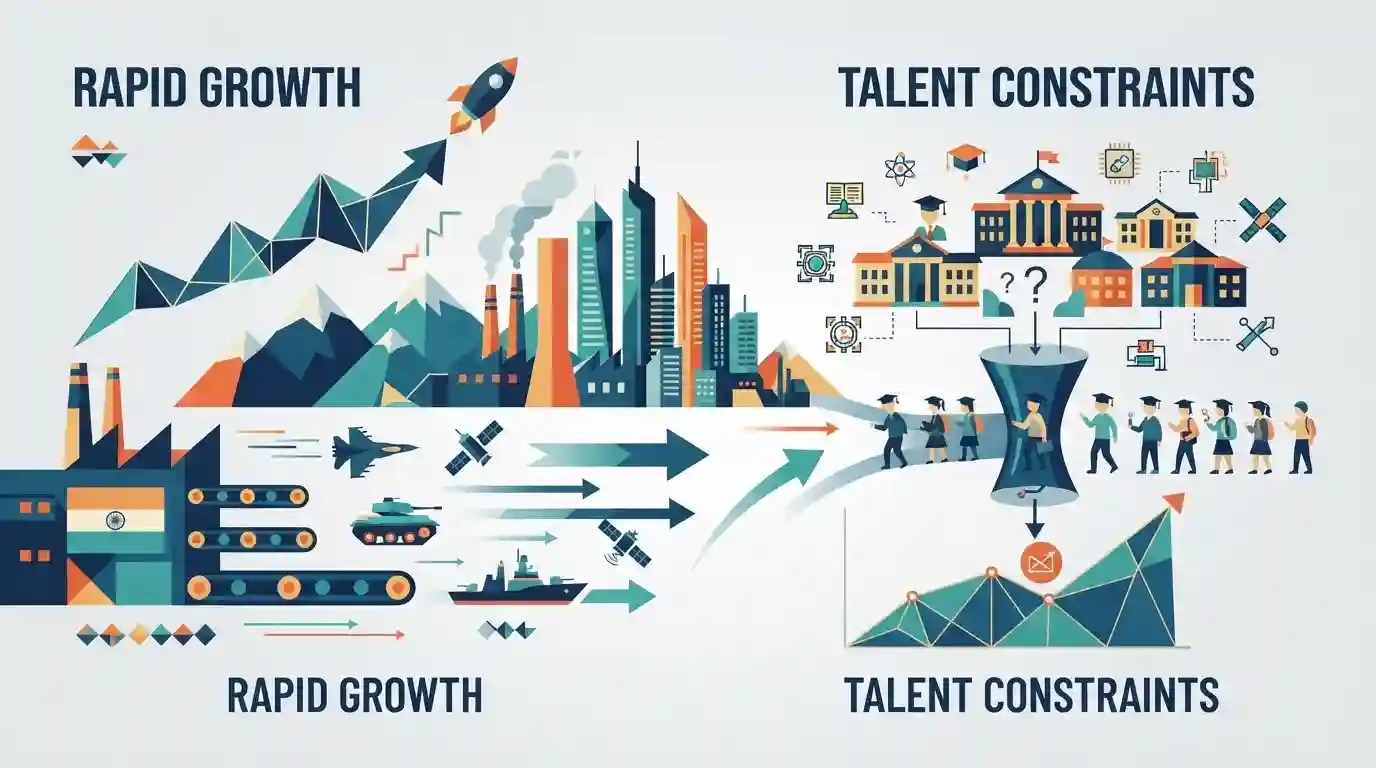
It highlights a crucial structural bottleneck—talent deficit—in achieving India's strategic goal of Aatmanirbhar Bharat (self-reliance) in defence manufacturing and advanced technology development.
সারসংক্ষেপ
The article analyses how India's rapid growth in defence start-ups and indigenous manufacturing under programs like 'Make in India' is severely constrained by a lack of a matching talent pipeline, skilled technical manpower, and specialized educational infrastructure.
মূল বিষয়
- India's burgeoning defence start-up ecosystem is facing a severe bottleneck due to a shortage of specialized technical talent and trained workforce.
- While initiatives like iDEX and policy pushes for indigenization have successfully boosted entrepreneurship and product development in the defence sector, academic curricula and training pipelines have failed to keep pace.
- Bridging this gap requires closer industry-academia collaboration, specialized skill development programmes tailored for military technologies, and focused research infrastructure.
গুরুত্বপূর্ণ শব্দ
Make in India

A flagship national program launched in 2014 to transform India into a global manufacturing hub by encouraging domestic production, reducing import dependence, and fostering indigenous industrial capabilities across sectors like defense.
UPSC context
UPSC Mains GS Paper III (Economy / Security): Important for evaluating self-reliance, indigenization, manufacturing growth, and supply chain vulnerabilities.
iDEX (Innovations for Defence Excellence)
The executive flagship framework of the Ministry of Defence launched in 2018 to foster innovation, co-development, and co-production in defense and aerospace by engaging startups, MSMEs, and academia.
UPSC context
UPSC Mains GS Paper III (Security and Defense Indigenization): Evaluates private sector and startup participation in modernizing military technology.
Skill India
A comprehensive national campaign launched in 2015 to train and upskill India's youth in market-relevant technical and vocational competencies to enhance employability and address workforce shortages.
UPSC context
UPSC Mains GS Paper III (Human Resources / Employment): Tests initiatives addressing skill gaps, demographic dividends, and specialized manpower deficits.
সংযুক্ত স্থির ধারণা
What are the key institutional mechanisms and schemes supporting defence innovation and indigenization in India?
- iDEX Initiative:: Launched by the Ministry of Defence to foster innovation and technology development in defence and aerospace by engaging start-ups and MSMEs.
- DISC Programme:: A sub-scheme of iDEX providing financial grants up to ₹1.5 crore to start-ups for developing solutions to specific military problems.
- Make-I & Make-II:: A specialized procurement category introduced in DAP to prioritize indigenous design, development, and manufacturing of defence equipment.
আন্তঃবিষয় প্যাটার্ন
Defence Indigenization + Human Resource Constraints
The rapid push for indigenization through start-ups strains both the manufacturing supply chain and the specialised engineering talent pool required for high-tech military hardware.
Skill Development Schemes + Advanced Manufacturing
Bridging the deep-tech skills gap in defence manufacturing directly depends on the execution and scaling of national flagship skilling initiatives.

Expect a statement-based question linking defence indigenization schemes (like iDEX) with systemic bottlenecks in specialized technical manpower.
সংযুক্ত PYQ · 2
সংযুক্ত PYQ · 2
- 2015MainsGS3
Success of 'Make in India' programme depends on the success of 'Skill India' programme and radical labour reforms." Discuss with logical arguments.
- 2023MainsGS3
The use of unmanned aerial vehicles (UAVs) by our adversaries across the borders to ferry arms/ammunitions, drugs, etc., is a serious threat to the internal security. Comment on the measures being taken to tackle this threat.
