पचहत्तर वर्ष पूरे होने पर सामाजिक न्याय और अधूरे संवैधानिक लक्ष्य
स्रोत:द हिंदू ↗
क्यों मायने रखता है
75वें वर्ष में गणतंत्र की प्रगति का मूल्यांकन करना UPSC Mains (GS2 राजव्यवस्था और निबंध दोनों) के लिए एक अत्यधिक संभावित विषय है, विशेष रूप से डॉ. बी.आर. अंबेडकर द्वारा परिकल्पित सामाजिक और आर्थिक लोकतंत्र जैसे संवैधानिक आदर्शों की पूर्ति के संबंध में।
सारांश
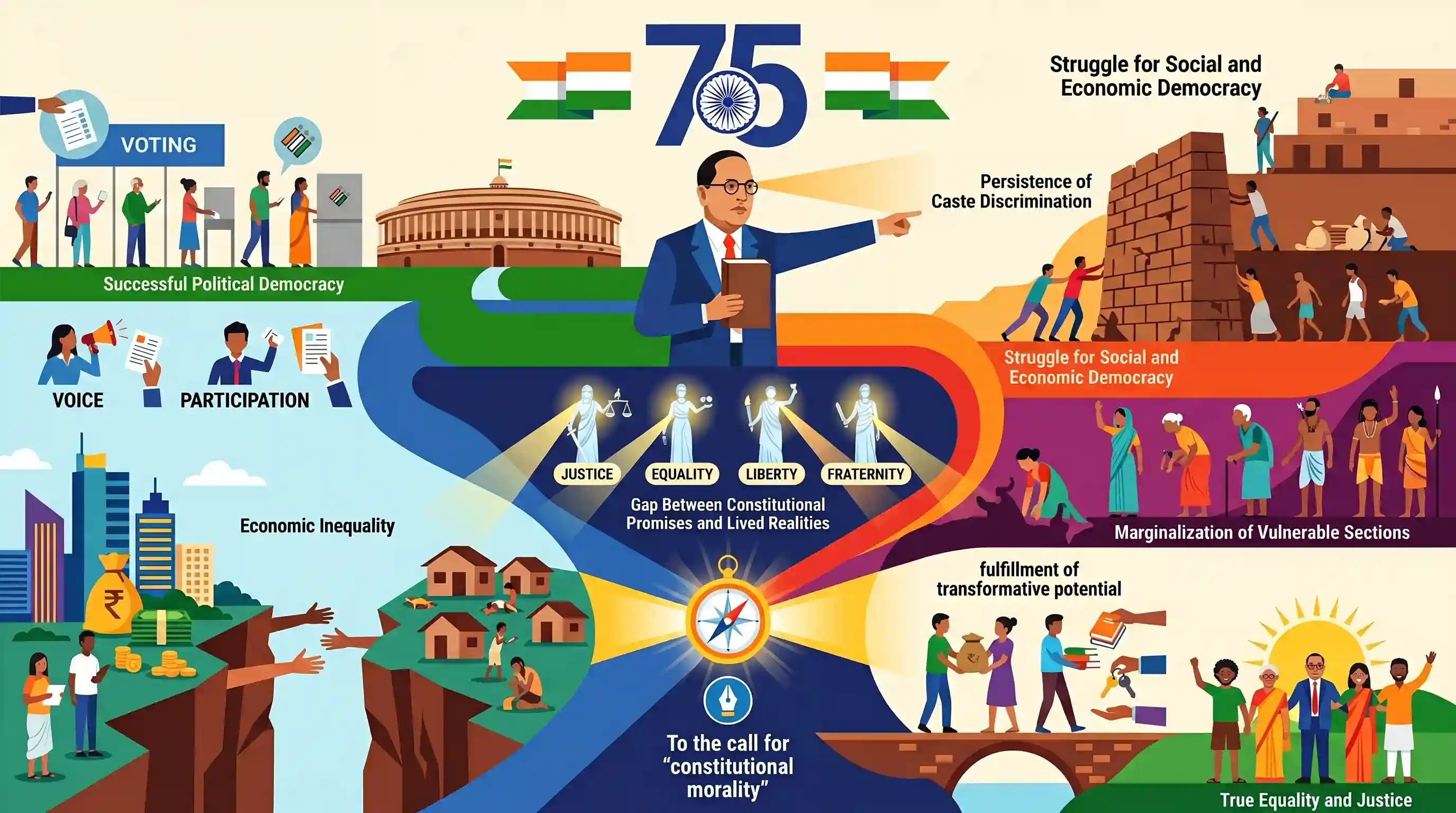
The article reflects on the 75th anniversary of the Indian Republic, assessing its trajectory through the lens of Dr. B.R. Ambedkar's vision. It emphasizes Ambedkar’s "unfinished agenda," pointing out that while India has successfully sustained political democracy, it still struggles to achieve social and economic democracy. The persistence of caste discrimination, economic inequality, and the marginalization of vulnerable sections highlights the gap between constitutional promises and lived realities. The piece calls for a deeper adherence to "constitutional morality" to fulfill the transformative potential of the Constitution and ensure true equality and justice for all citizens.
मुख्य बिंदु
- डॉ. बी.आर. अंबेडकर के राष्ट्र के लिए आधारभूत विज़न के संदर्भ में, 75 वर्षों में भारतीय गणराज्य की प्रगति का मूल्यांकन करता है।
- राजनीतिक लोकतंत्र (एक व्यक्ति, एक वोट) और सामाजिक/आर्थिक लोकतंत्र (एक व्यक्ति, एक मूल्य) के बीच अंबेडकर द्वारा किए गए अंतर को रेखांकित करता है, और यह उल्लेख करता है कि बाद वाला अभी भी अधूरा है।
- जातिगत भेदभाव, संरचनात्मक असमानता और वंचित समुदायों के हाशिएकरण जैसी निरंतर बनी रहने वाली चुनौतियों को रेखांकित करता है।
- संविधान के परिवर्तनकारी आदर्शों और जमीनी हकीकत के बीच के अंतराल को पाटने के लिए संवैधानिक नैतिकता को अपनाने की आवश्यकता पर बल देता है।
- अंबेडकर के अधूरे एजेंडे को पूरा करने के लिए सामाजिक न्याय और न्यायसंगत विकास के प्रति एक नई प्रतिबद्धता का आह्वान।
महत्वपूर्ण शब्द
Constitutional Morality

Adherence to the core values and spirit of the Constitution, such as justice and equality, beyond its literal text. It guides governance and prevents arbitrary power.
UPSC context
GS II (राजव्यवस्था/न्यायपालिका) और GS IV (नीतिशास्त्र)। लोकतांत्रिक मूल्यों और न्यायिक व्याख्याओं की समझ का परीक्षण करता है।
सामाजिक लोकतंत्र
एक ऐसी सामाजिक व्यवस्था जहाँ स्वतंत्रता, समानता और बंधुत्व जीवन के मौलिक सिद्धांत हैं, जिसका उद्देश्य जाति व्यवस्था जैसे पदानुक्रमों को समाप्त करना है।
UPSC context
GS II (सामाजिक न्याय)। डॉ. अंबेडकर के दृष्टिकोण और समावेशी शासन के ज्ञान का परीक्षण करता है।
आर्थिक लोकतंत्र
संसाधनों और अवसरों के न्यायसंगत वितरण को सुनिश्चित करने वाली एक प्रणाली जो शोषण को रोकने का प्रयास करती है, और जिसका लक्ष्य आर्थिक जीवन में 'एक व्यक्ति, एक मूल्य' (one man, one value) के आदर्श को प्राप्त करना है।
UPSC context
GS II (DPSP) और GS III (समावेशी विकास)। संवैधानिक सिद्धांतों और आर्थिक न्याय के बीच संबंधों का परीक्षण करता है।
भारत का संविधान
भारत का सर्वोच्च कानून, जो देश को एक संप्रभु, समाजवादी, धर्मनिरपेक्ष, लोकतांत्रिक गणराज्य के रूप में स्थापित करता है। यह शासन के लिए ढांचा प्रदान करता है और मौलिक अधिकारों की रक्षा करता है।
UPSC context
GS II (Polity)। ऐतिहासिक आधार, विशेषताओं और संशोधनों का परीक्षण करने वाला मुख्य विषय।
संविधान सभा
वह निर्वाचित निकाय जिसने 1946 और 1949 के बीच भारतीय संविधान का मसौदा तैयार किया। इसकी अध्यक्षता डॉ. राजेंद्र प्रसाद ने की थी, जिसमें डॉ. अंबेडकर ने प्रारूप समिति (Drafting Committee) का नेतृत्व किया था।
UPSC context
GS II (Historical Underpinnings). Tests knowledge of the framing process and key personalities.
भारतीय गणतंत्र
Refers to the sovereign state status India achieved on January 26, 1950, marked by the commencement of the Constitution and the end of dominion status.
UPSC context
GS I (स्वतंत्रता के बाद का सुदृढ़ीकरण) और GS II (प्रस्तावना)। भारत की लोकतांत्रिक यात्रा के महत्वपूर्ण पड़ावों के लिए प्रासंगिक।
प्रारंभिक ट्रैप
'संवैधानिक नैतिकता' की अवधारणा भारत के संविधान में स्पष्ट रूप से परिभाषित है।
संविधान में 'संवैधानिक नैतिकता' (Constitutional Morality) का स्पष्ट रूप से उल्लेख या इसे परिभाषित नहीं किया गया है। यह एक न्यायिक नवाचार है जिसकी जड़ें अंबेडकर के संविधान सभा के भाषणों में निहित हैं, और इसे मूल रूप से इतिहासकार जॉर्ज ग्रोट से लिया गया है।
संबंधित अवधारणाएँ
जाति के प्रति दृष्टिकोण में अंबेडकर और गांधी एक-दूसरे से किस प्रकार भिन्न थे?
- Ambedkar's approach: Advocated for the complete "Annihilation of Caste" through state-led legal safeguards, political empowerment, and dismantling the systemic religious framework.
- Gandhi's approach: वर्ण व्यवस्था को उसके अंतर्निहित व्यावसायिक विभाजन को नष्ट किए बिना, भीतर से सुधारने के लिए नैतिक अनुनय, हृदय परिवर्तन और रचनात्मक कार्यों (हरिजन उत्थान) का सहारा लिया।
- मुख्य विचलन: Ambedkar saw caste as inherently oppressive requiring systemic destruction; Gandhi viewed untouchability as a societal distortion of a functional ideal.
भारतीय राजव्यवस्था में 'संवैधानिक नैतिकता' (Constitutional Morality) से क्या तात्पर्य है?
- उत्पत्ति: इतिहासकार जॉर्ज ग्रोट द्वारा गढ़ा गया, इसे भारत में डॉ. बी.आर. अंबेडकर द्वारा इस बात पर बल देने के लिए लोकप्रिय बनाया गया कि लोकतांत्रिक मूल्यों को सचेत रूप से विकसित किया जाना चाहिए।
- मूल अर्थ: Strict adherence to core constitutional principles (equality, liberty, fraternity) over majoritarian societal norms, religious customs, or prevailing public morality.
- न्यायिक अनुप्रयोग: सुप्रीम कोर्ट ने संवैधानिक आदर्शों के पक्ष में भेदभावपूर्ण परंपराओं को निरस्त करने के लिए इसका व्यापक रूप से उपयोग किया है (जैसे कि, नवतेज सिंह जोहर, सबरीमाला)।
अंतर-विषय पैटर्न
सामाजिक-आर्थिक लोकतंत्र और DPSP
Ambedkar’s "life of contradictions" speech underpins the Directive Principles (Part IV), framing the ongoing post-independence struggle to translate political equality into equitable wealth distribution and economic justice.
चुनावी लोकतंत्र में जाति का राजनीतिकरण
GS1/GS2 जुड़ाव: जाति का उन्मूलन नहीं हुआ है, बल्कि यह राजनीतिक लामबंदी और दबाव समूहों के एक उपकरण के रूप में परिवर्तित हो गई है, जो आरक्षण के उप-वर्गीकरण (sub-categorization) की समकालीन मांगों के साथ-साथ अधूरे एजेंडे की जटिलताओं को दर्शाती है।

GS2 मुख्य परीक्षा में अम्बेडकर के सामाजिक-आर्थिक लोकतंत्र के दृष्टिकोण और SC/ST के समकालीन उप-वर्गीकरण (sub-categorization) की तुलना करने वाले प्रश्न की उम्मीद करें।
संबद्ध PYQ · 5
संबद्ध PYQ · 5
- 2025MainsGS2
"Constitutional morality is the fulcrum which acts as an essential check upon the high functionaries and citizens alike...." In view of the above observation of the Supreme Court, explain the concept of constitutional morality and its application to ensure balance between judicial independence and judicial accountability in India.
- 2021MainsGS2
‘Constitutional Morality’ is rooted in the Constitution itself and is founded on its essential facets. Explain the doctrine of ‘Constitutional Morality’ with the help of relevant judicial decisions.
- 2015MainsGS1
Mahatma Gandhi and Dr. B.R. Ambedkar, despite having divergent approaches and strategies, had a common goal of amelioration of the downtrodden. Elucidate.
- 2024MainsGS1
Despite comprehensive policies for equity and social justice, underprivileged sections are not yet getting the full benefits of affirmative action envisaged by the Constitution. Comment.
- 2018MainsGS1
Caste system is assuming new identities and associational forms. Hence, caste system cannot be eradicated in India." Comment.
